
Grilled Picanha Recipe
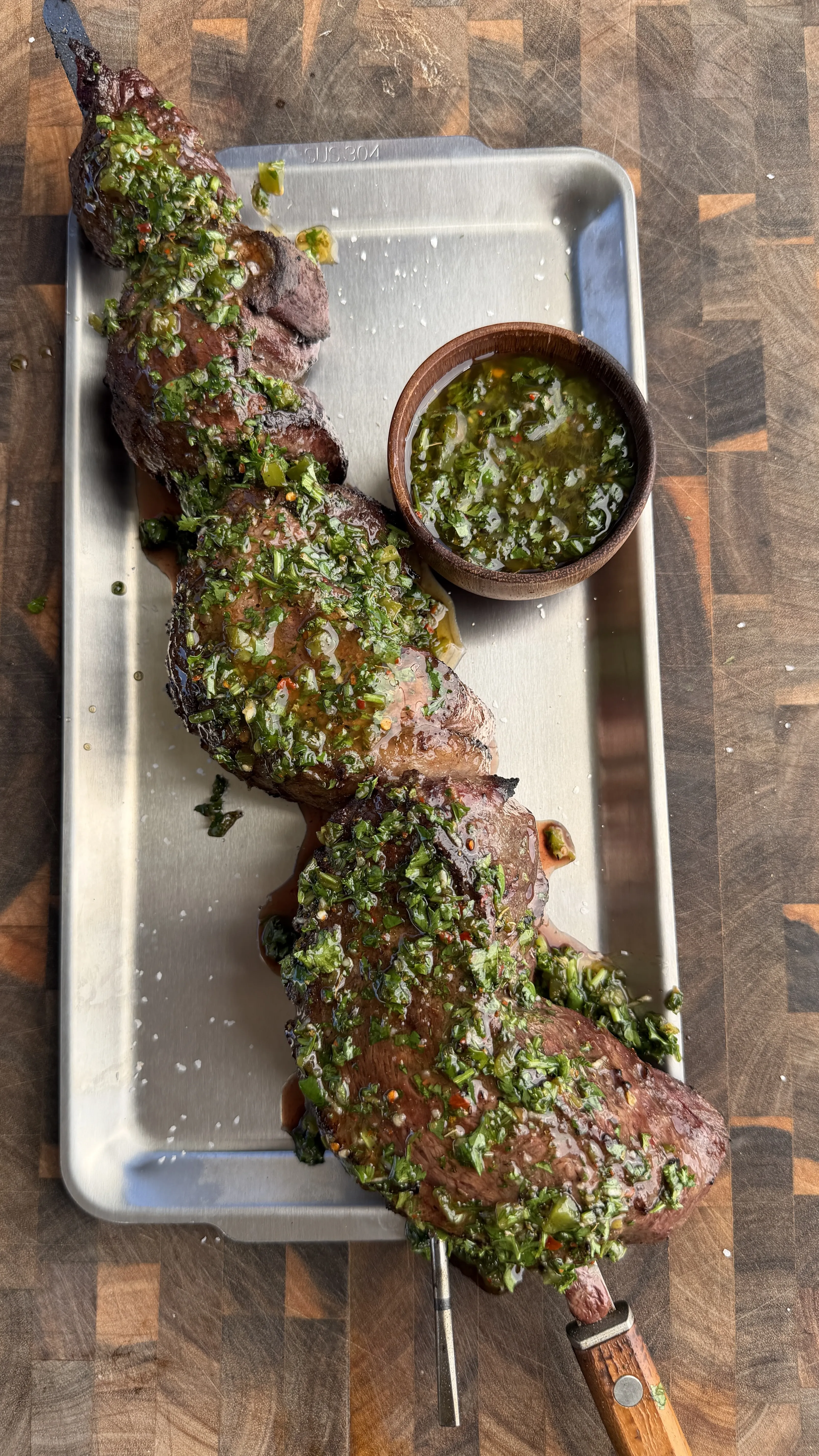
This grilled picanha recipe takes a whole 3-pound top sirloin cap, scores the fat in a crosshatch pattern, slices it into 1.5-inch steaks, then threads the steaks onto a large skewer in the traditional Brazilian style. The picanha cooks over open fire until it hits 120°F internal, then rests up to a perfect 130°F medium-rare while the rendered fat finishes crisping. A bright Cuban-inspired chimichurri made with parsley, cilantro, charred jalapeños, garlic, and lime gets spooned over the sliced steaks. The recipe serves 4 to 6 people in about 30 minutes total cook time and brings churrascaria-style steakhouse flavor to a backyard fire.
Why Picanha Is the King of Brazilian BBQ
The Cut Explained (Top Sirloin Cap)
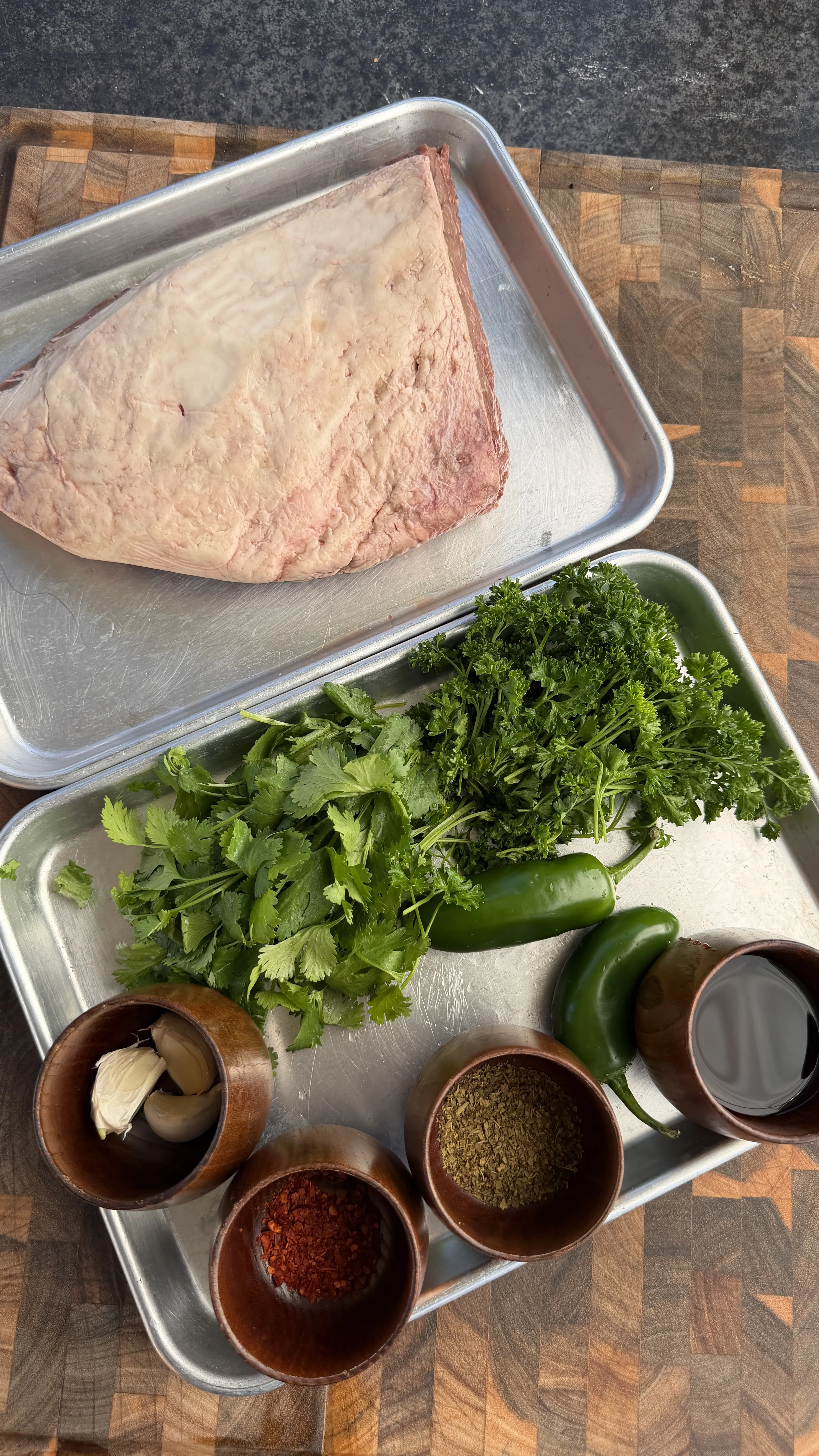
Picanha comes from the top sirloin section of the cow, specifically the cap that sits on top of the larger sirloin muscle. In the United States, this cut goes by several names including top sirloin cap, sirloin cap, rump cover, or coulotte. The triangular shape, thick fat cap on one side, and concentrated beefy flavor make it a centerpiece cut in Brazilian churrascarias. Consequently, picanha delivers more flavor per pound than ribeye or strip while costing significantly less, which is a big part of why it’s exploded in popularity over the past few years.
Why the Fat Cap Matters for Flavor
The thick fat cap covering one entire side of the picanha is not trim. It is the entire reason this cut works for open-fire cooking. Specifically, the fat renders slowly as the meat cooks, basting the steak from the outside in and developing a deeply caramelized crust as the rendered fat hits the open flame. Furthermore, the fat cap insulates the meat from drying out during the high-heat cook. As a result, do not trim the fat cap before cooking. Score it instead, which lets the fat render evenly without curling the steaks.
How to Buy and Prep a Whole Picanha
What to Look for at the Butcher
A proper whole picanha weighs between 2 and 3.5 pounds and is triangular in shape with a thick fat cap covering one entire side. Anything labeled “picanha” that weighs more than 4 pounds is usually a different cut (often labeled but mis-trimmed) or includes extra muscle that should not be part of the picanha. Look for a fat cap between 3/4 inch and 1 inch thick across the surface. Costco, Brazilian and Latin American markets, and online butchers (Porter Road, Snake River Farms, ButcherBox) reliably stock proper picanha. Avoid pre-trimmed picanha with the fat cap removed — that defeats the entire purpose.
Scoring the Fat Cap for Even Rendering
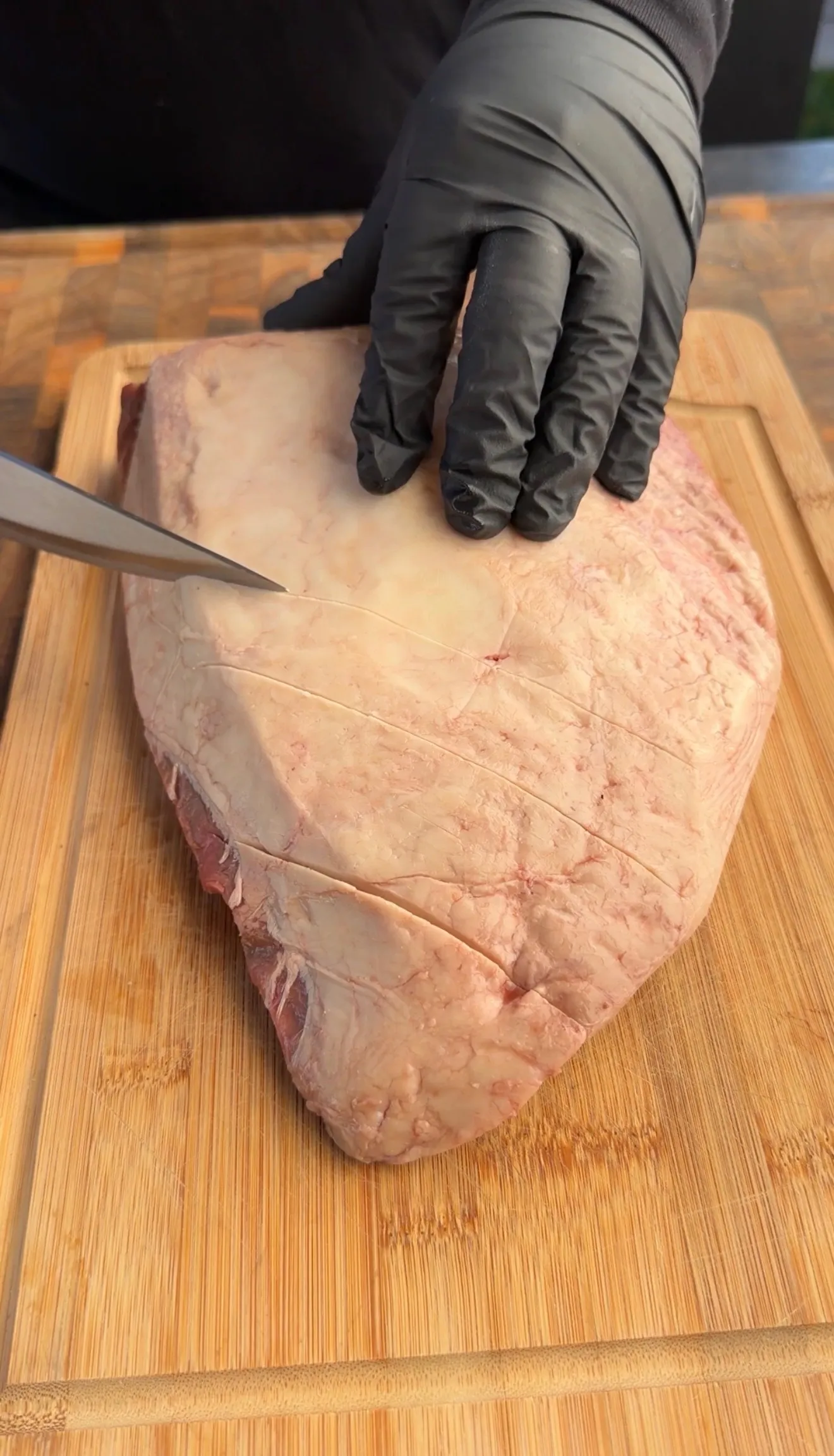
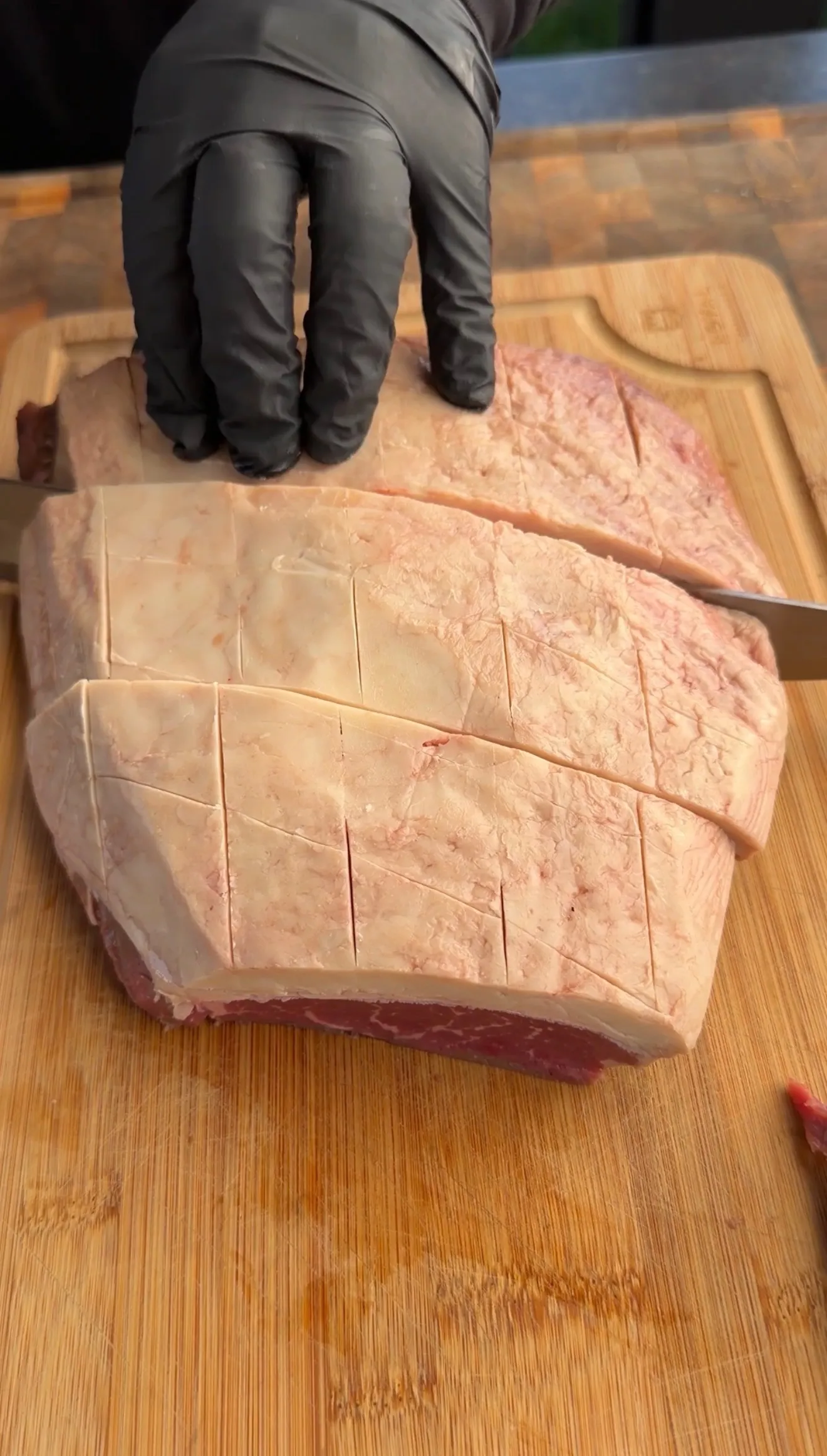
Before slicing into steaks, score the fat cap in a 1-inch crosshatch pattern with a sharp knife. Cut through the fat but stop just before reaching the meat. Therefore, the scoring lines let the heat penetrate the fat layer evenly so it renders gradually throughout the cook instead of forming a thick rubbery layer that stays raw on top while the inside finishes. Moreover, the scored pattern creates a beautiful caramelized geometric finish on the outside of each steak after cooking.
The Brazilian Skewer Technique for Open Fire
Slicing Into Steaks Before Skewering
After scoring the fat cap, slice the picanha against the grain into 1.5-inch thick steaks. A 3-pound whole picanha yields about 3 steaks at this thickness. Specifically, slicing before cooking (rather than cooking the whole roast and slicing after) is the traditional Brazilian churrascaria method. The thicker individual steaks build a better crust during the open-fire cook and finish faster and more evenly than a whole roast would.
How to Thread the Steaks the Right Way
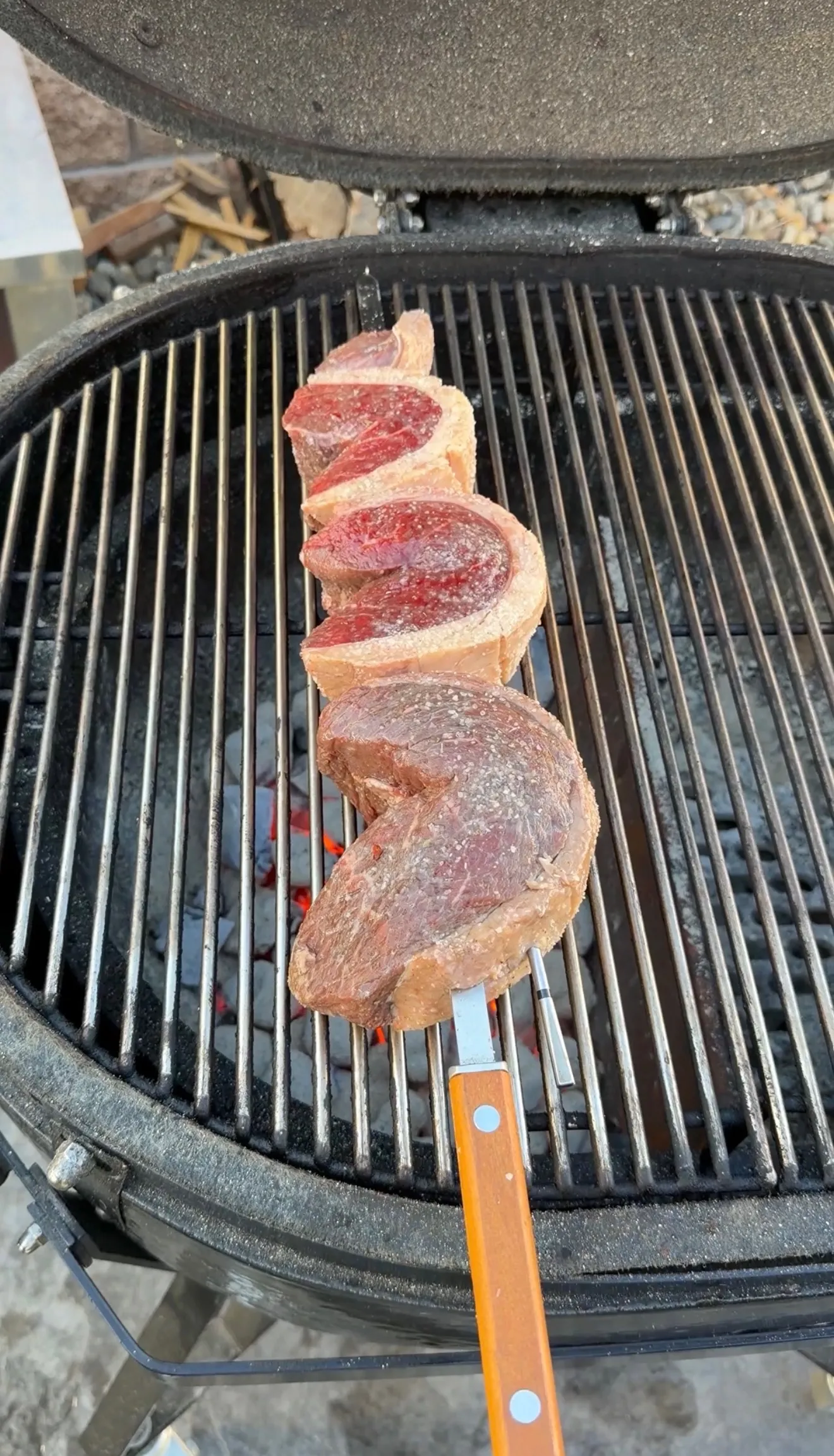
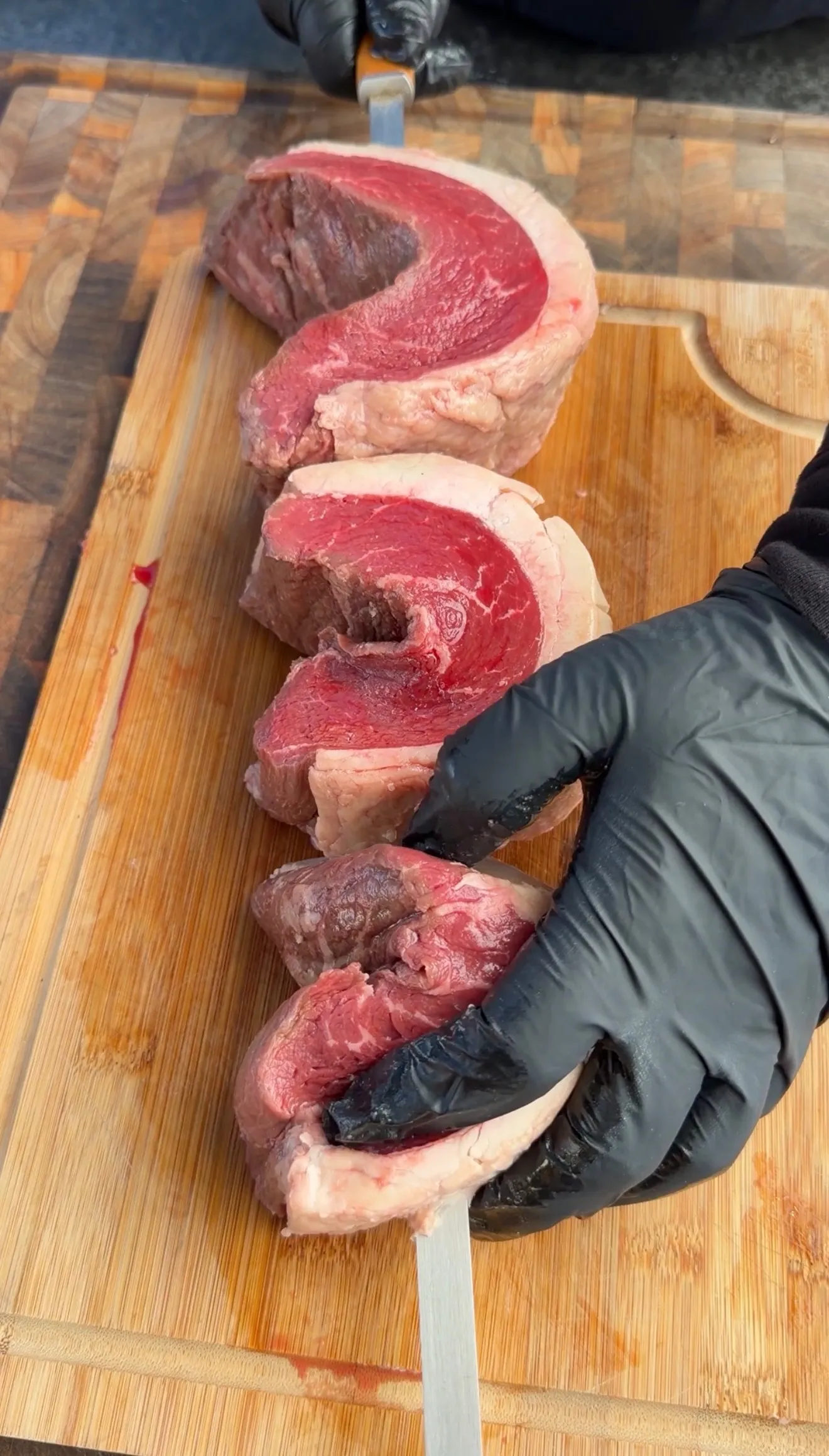
Bend each steak into a horseshoe shape with the fat cap facing outward, then thread a large skewer through both ends so the steak holds its curved position. This shape exposes maximum surface area to the fire and lets the rendered fat drip down the meat surface. As a result, every part of the steak gets basted by its own fat during the cook. Additionally, if you do not have a large Brazilian-style skewer, place one steak per smaller skewer and cook them flat on the grill grates instead.
Cooking Over Open Fire to 120°F Pull Temp
Why 120°F (Not 130°F) Is the Right Pull Temperature
Standard medium-rare beef pulls at 130°F internal temp. Picanha pulls 10°F earlier at 120°F because the thick fat cap continues to transfer heat into the meat during the rest. Specifically, the rendered fat holds its temperature significantly higher than the meat itself, so a picanha pulled at 120°F will climb to 130°F (true medium-rare) by the time it has rested 5 to 10 minutes. Therefore, pulling at the standard 130°F pushes the finished steak into medium-well territory and dries out the meat.
Managing Open Fire Heat Without Burning
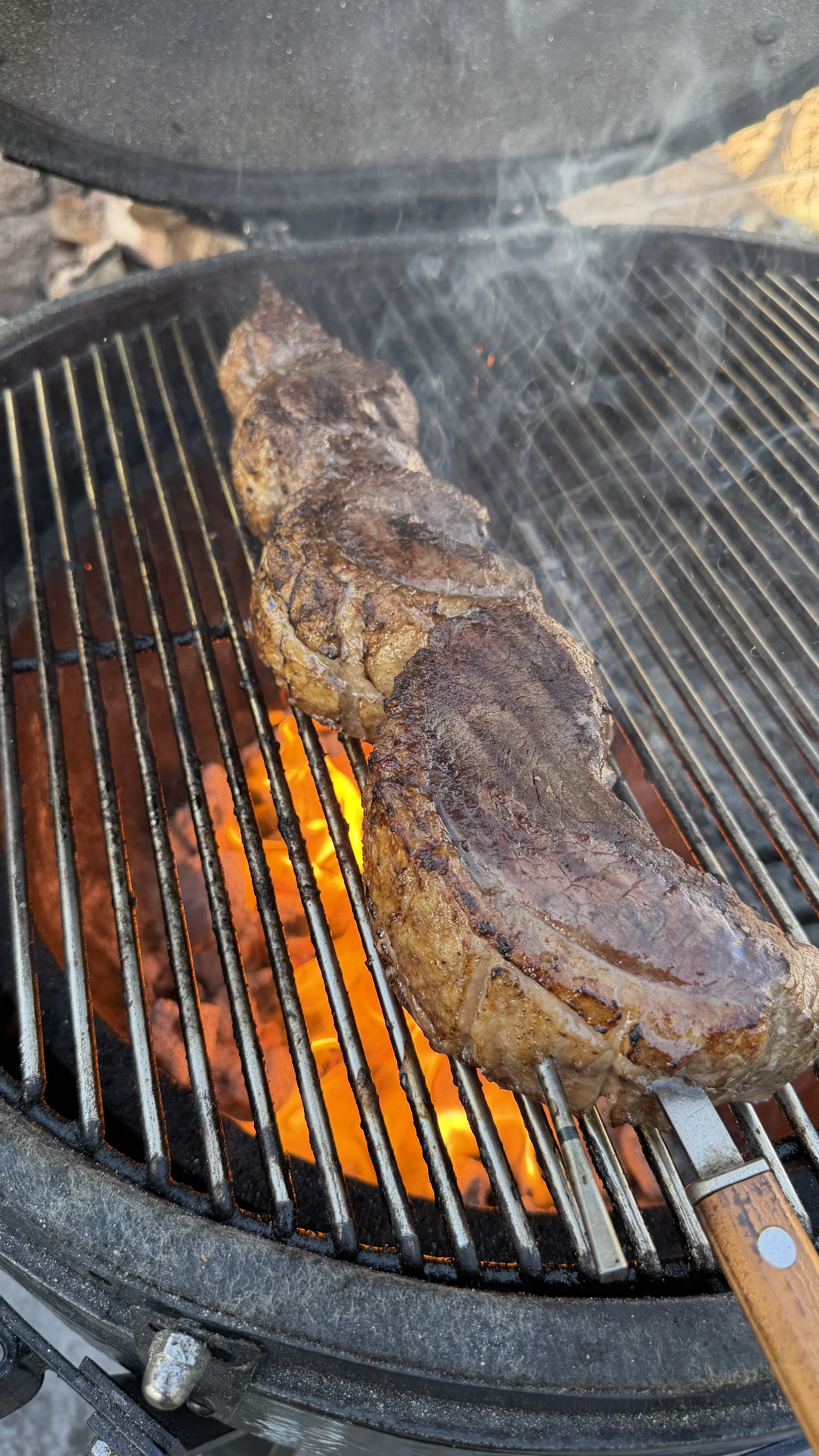
Cooking over open fire means dealing with unpredictable flame and heat zones. Rotate the skewer every 2 to 3 minutes to expose all sides to the flame evenly and prevent any one face from charring before the inside finishes. Moreover, lift the skewer higher above the fire if a section of the fat cap is rendering too fast and dripping into the flames (which causes flare-ups that scorch the meat). The picanha should sit roughly 8 to 12 inches above the active flames for proper cooking — close enough to char, far enough to render gradually.
The Charred Jalapeño Chimichurri That Sets This Apart
Why This Chimichurri Uses Parsley AND Cilantro
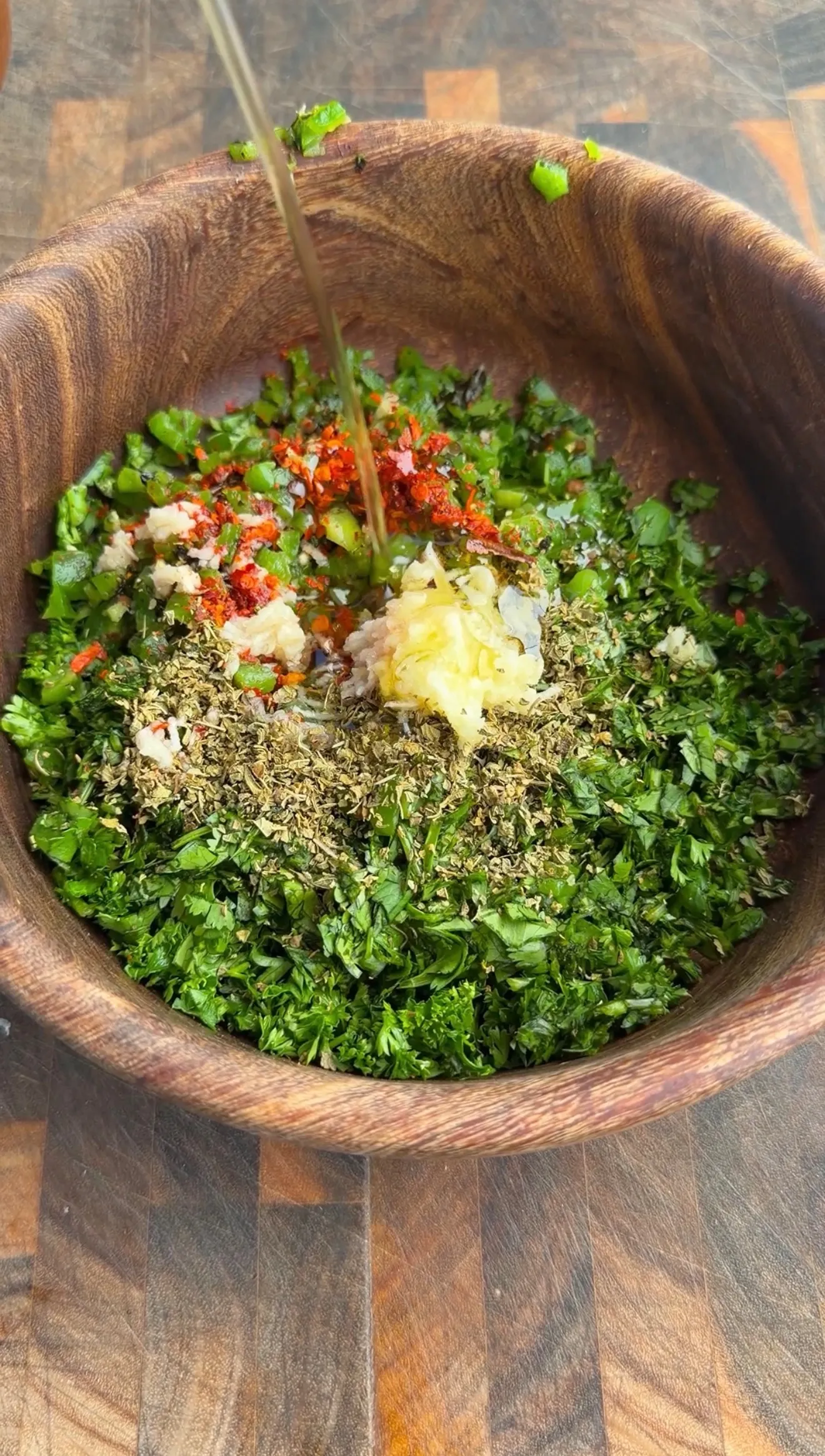
Traditional Argentine chimichurri uses only parsley as the herb base, with dried oregano and red pepper flakes for heat. This version takes a Cuban-inspired approach by combining parsley with cilantro in a 2-to-1 ratio. As a result, the cilantro adds bright citrus notes that complement the lime juice in the sauce and create a more vibrant overall flavor that pairs differently with the picanha than a classic Argentine chimichurri would. Both versions are excellent — this one is built for a Latin-fusion palate rather than strict Argentine tradition.
Charring the Jalapeños Adds Smoky Depth
Most chimichurri recipes call for either raw chili or dried red pepper flakes for the heat element. Charring 2 fresh jalapeños directly over the open fire before dicing them does two things differently. First, the char blisters the skin and removes the sharp raw bite that fresh jalapeño can carry. Second, the smokiness from the flames absorbs into the pepper flesh, adding a third layer of complexity beyond just heat. Consequently, the charred jalapeño chimichurri tastes richer and more BBQ-appropriate than the raw-pepper version.
Step-by-Step: How to Make Open Fire Picanha
Step 1: Score the Fat Cap
Place the whole picanha roast fat-cap side up on a cutting board. Using a sharp knife, score the fat in a 1-inch crosshatch pattern. Cut through the fat layer but stop just before reaching the meat below. The scoring lets the heat penetrate the fat for even rendering during the cook.
Step 2: Slice Into Steaks
Slice the picanha against the grain into 1.5-inch thick steaks. A 3-pound roast yields about 3 steaks at this thickness. Look for the grain direction on the meat side of the roast, then cut perpendicular to those lines.
Step 3: Skewer Brazilian-Style
Bend each steak into a horseshoe shape with the fat cap facing outward. Thread a large skewer through both ends of each steak so the curved shape holds. If you do not have a large Brazilian-style skewer, place one steak per smaller skewer or cook the steaks flat on the grill grates.
Step 4: Season Generously With Salt
Season all sides of the steaks with the 2 tablespoons of coarse kosher salt. Picanha needs more salt than other steaks because of the thick fat cap that the salt also has to penetrate. Coarse-grain salt sticks better to the meat than fine table salt and creates better crust during the cook.
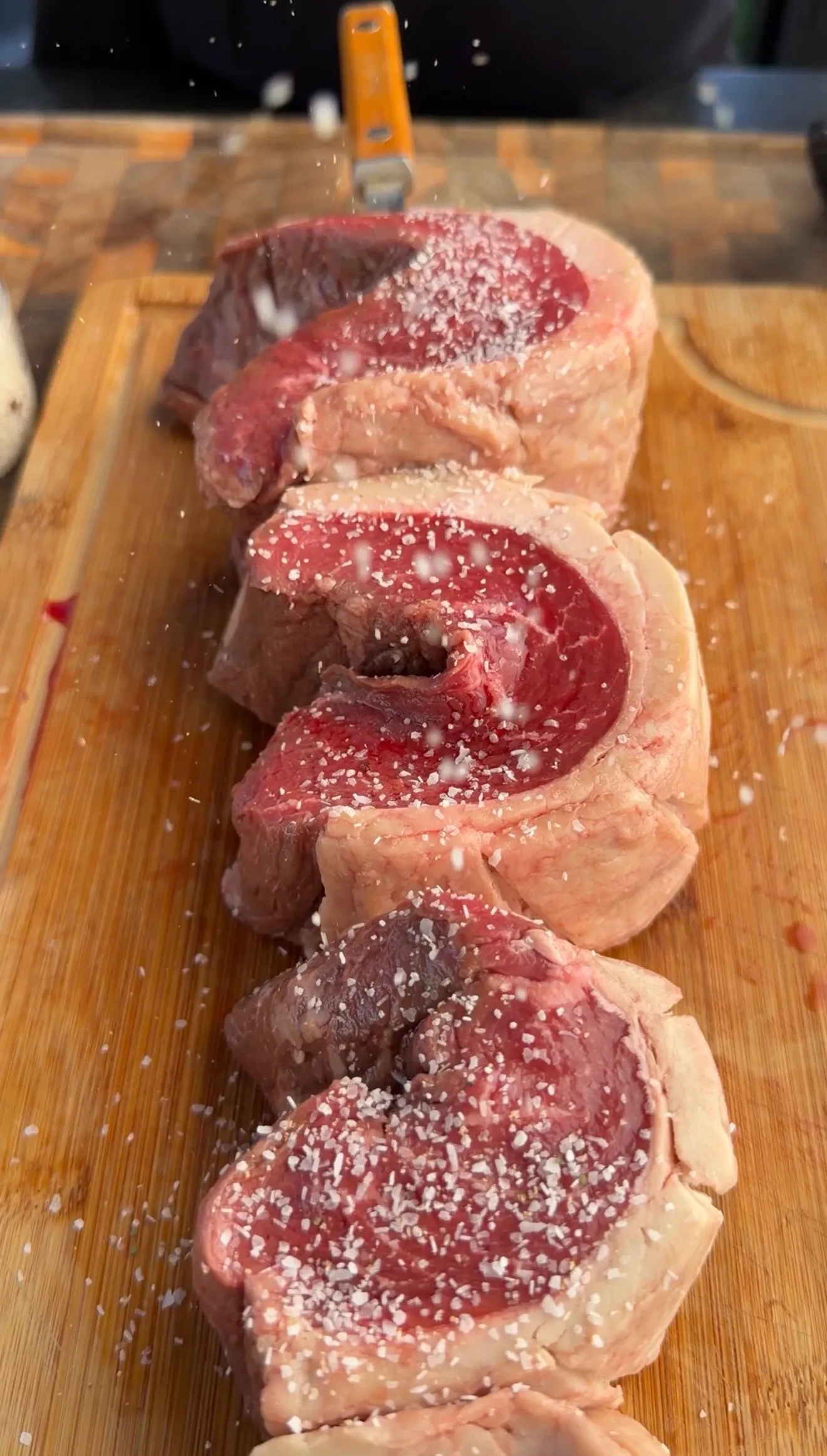
Step 5: Cook Over Open Fire
Position the skewer 8 to 12 inches above an open fire (a charcoal or wood fire with active flames). Rotate the skewer every 2 to 3 minutes to expose all sides to the heat evenly. Cook until the internal temperature in the thickest part of a steak reads 120°F. Total cook time is typically 15 to 20 minutes depending on flame intensity.
Step 6: Rest the Picanha
Remove the skewer from the fire and let the picanha rest for 5 to 10 minutes. The internal temperature will climb from 120°F to roughly 130°F during the rest, landing at a perfect medium-rare. The fat cap will continue to crisp from residual heat.
Step 7: Char the Jalapeños and Build the Chimichurri
While the picanha rests, char the 2 jalapeños directly over the open fire until the skin is blistered and lightly blackened on all sides. Remove from the fire, let cool briefly, then finely dice. Combine the diced jalapeños with the parsley, cilantro, minced garlic, olive oil, red wine vinegar, lime juice, kosher salt, black pepper, and red pepper flakes (if using) in a bowl. Mix well.
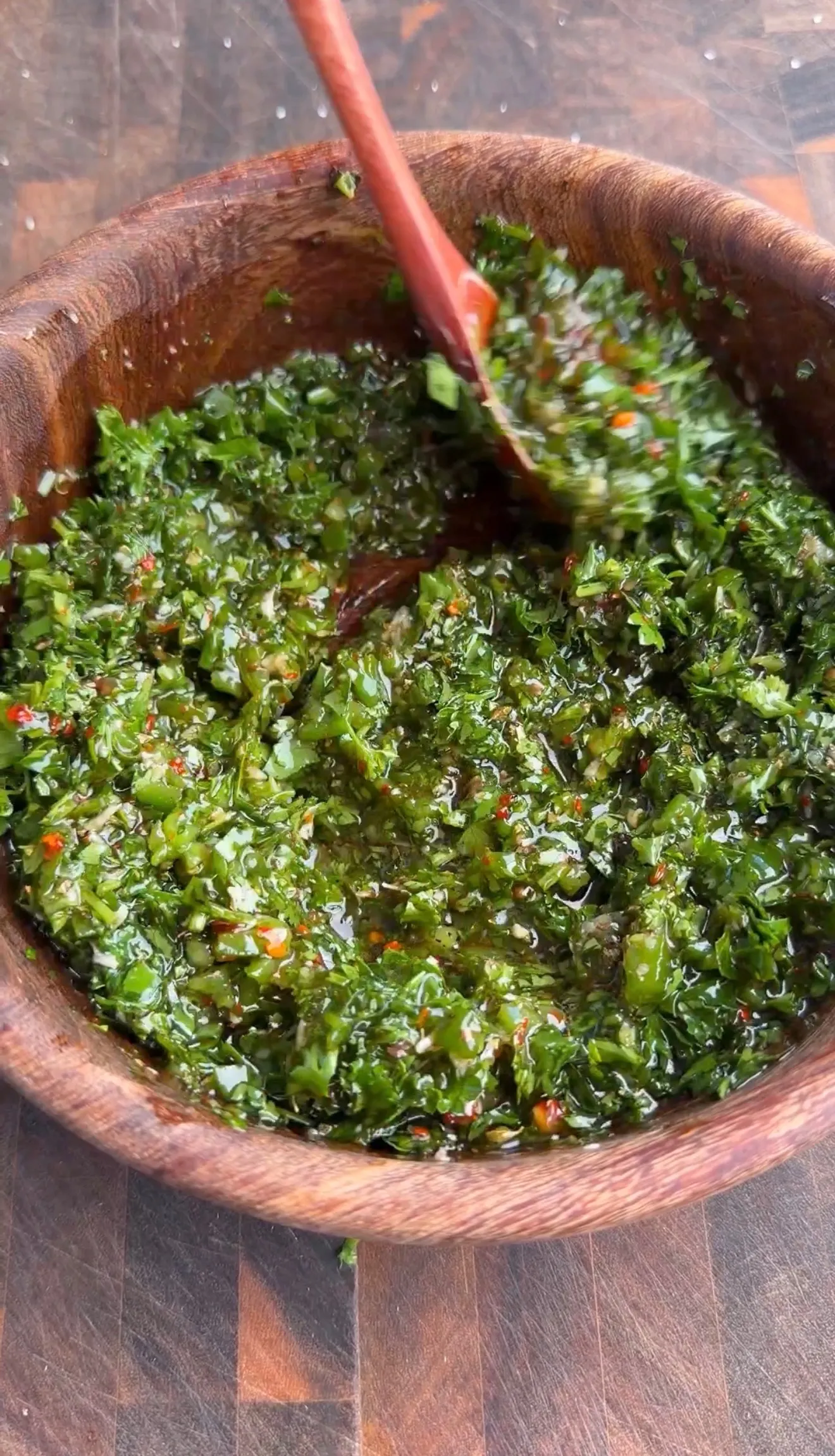
Step 8: Slice Against the Grain and Serve
Remove the rested steaks from the skewer and slice each one against the grain into 1/4-inch slices. Arrange on a serving platter and spoon the charred jalapeño chimichurri generously over the top. Serve immediately with extra chimichurri on the side.
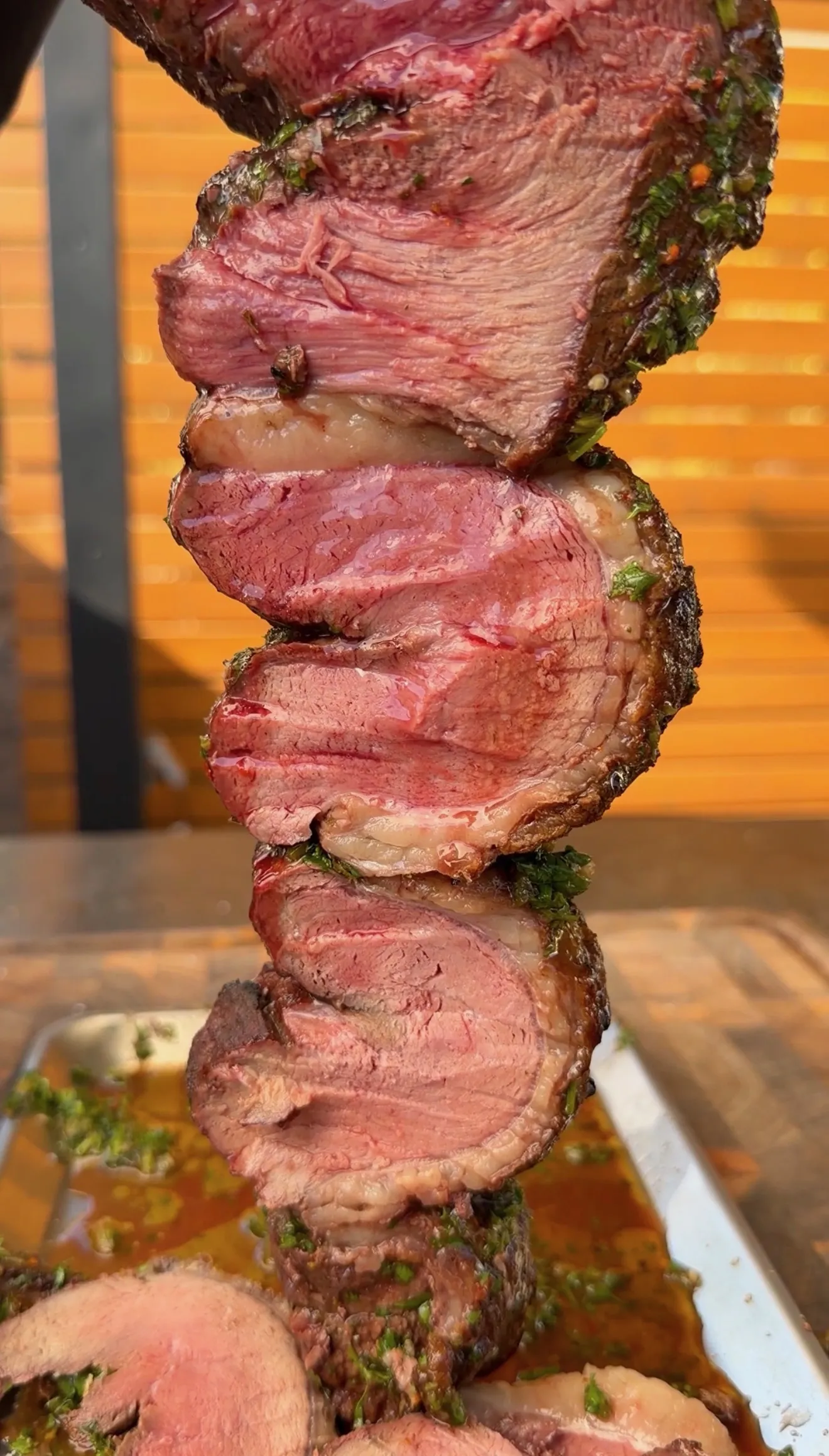
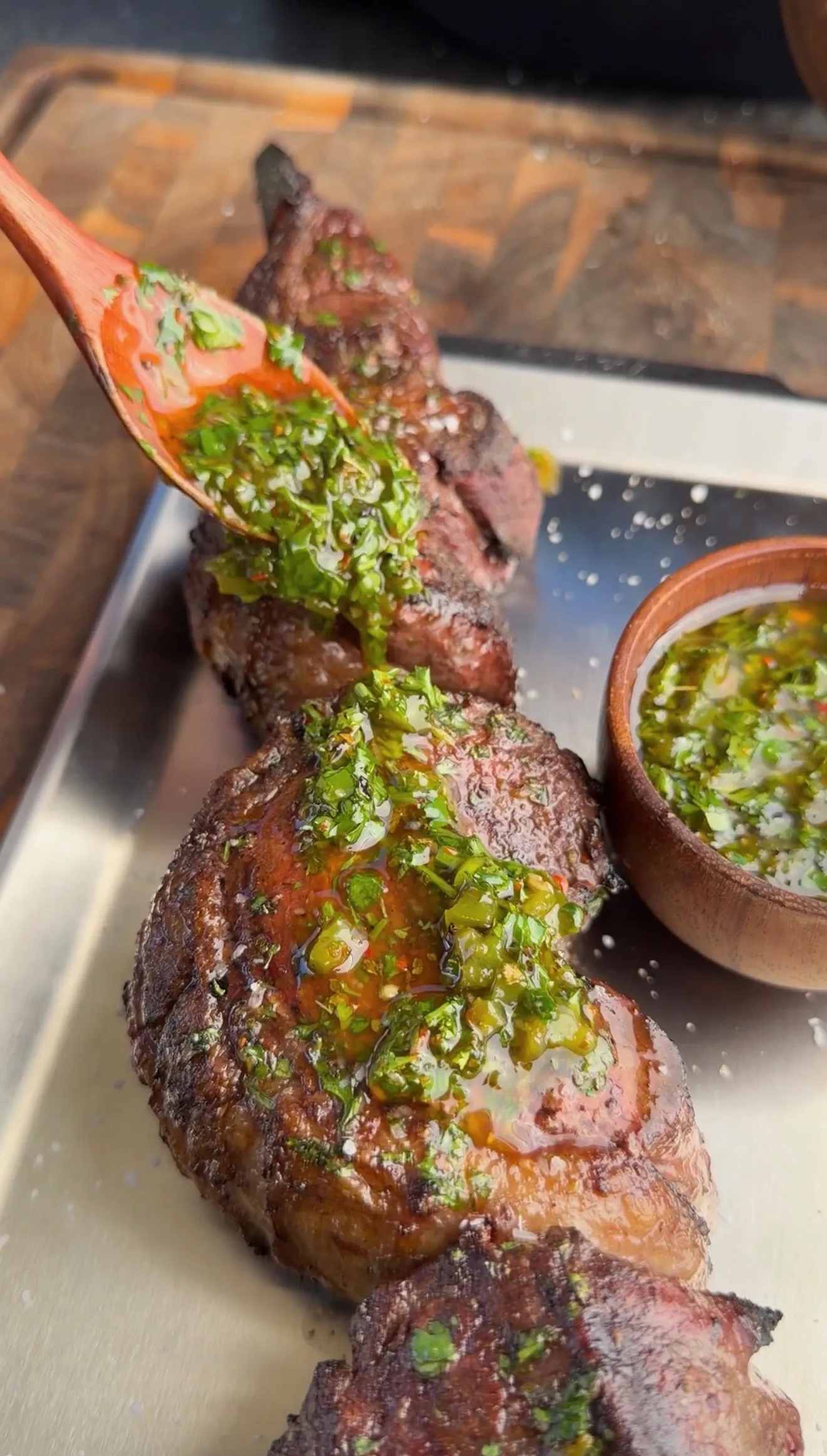
Open Fire Picanha with Charred Jalapeño Chimichurri
Ingredients
Equipment
Method
- Place the whole picanha fat-cap side up on a cutting board. Score the fat in a 1-inch crosshatch pattern with a sharp knife, cutting through the fat but stopping before the meat.
- Slice the picanha against the grain into 1.5-inch thick steaks. A 3-pound roast yields about 3 steaks.
- Bend each steak into a horseshoe shape with the fat cap facing outward. Thread a large Brazilian-style skewer through both ends so the curve holds. If using smaller skewers, place one steak per skewer.
- Season all sides generously with the 2 tablespoons of coarse kosher salt. Picanha needs more salt than other steaks because of the thick fat cap.
- Position the skewer 8 to 12 inches above an open fire (charcoal or wood with active flames). Rotate every 2 to 3 minutes to expose all sides evenly. Cook until the internal temperature in the thickest part reads 120°F, about 15 to 20 minutes.
- Remove the skewer from the fire and rest the picanha for 5 to 10 minutes. Carryover cook will bring the internal temperature from 120°F to 130°F (medium-rare) during the rest.
- While the picanha rests, char the 2 jalapeños directly over the open fire until the skin is blistered and lightly blackened on all sides. Cool briefly, then finely dice.
- In a bowl, combine the diced charred jalapeños with the parsley, cilantro, minced garlic, olive oil, red wine vinegar, lime juice, kosher salt, black pepper, and red pepper flakes (if using). Mix well.
- Remove the rested steaks from the skewer and slice each against the grain into 1/4-inch slices. Arrange on a platter and spoon the charred jalapeño chimichurri generously over the top. Serve immediately with extra chimichurri on the side.
Notes
Tried this recipe?
Let us know how it was!Grilled Picanha — FAQ
Everything you need to nail the cut, the cook, and the chimichurri.
Setup & Basics
Picanha is the top sirloin cap — the muscle that sits on top of the larger top sirloin. In the United States, it goes by several names depending on the butcher: top sirloin cap, sirloin cap, rump cover, rump cap, or coulotte (the French term). It’s triangular, has a thick fat cap on one side, and weighs typically 2 to 3.5 pounds when whole. The cut is the centerpiece of Brazilian churrascaria-style BBQ and has become increasingly popular in the US over the past five years.
Several reliable sources. Costco stocks whole picanha in many warehouse locations, often labeled “top sirloin cap” or sometimes as “picanha.” Brazilian and Latin American grocery stores almost always have it. Online butchers like Porter Road, Snake River Farms, Crowd Cow, and ButcherBox carry quality picanha shipped to your door. Standard grocery store butchers usually don’t stock it but can often order it on request. Avoid pre-trimmed picanha with the fat cap removed — the fat is the entire reason this cut works.
No, but the traditional large Brazilian-style espeto skewer (24+ inches long, sword-shaped) is ideal for cooking all 3 steaks at once and rotating them evenly over the fire. If you don’t have one, use two smaller skewers per steak (parallel skewers prevent the steak from spinning), or skip the skewer entirely and place the steaks directly on the grill grates. You’ll lose the traditional churrascaria presentation but the flavor is identical. Espeto skewers cost $15 to $30 online and are worth the investment if you plan to make picanha regularly.
No, and that’s intentional. Traditional Argentine chimichurri uses only parsley as the herb base, with dried oregano and red pepper flakes for heat, plus olive oil, red wine vinegar, and garlic. This version takes a Cuban-inspired approach by adding cilantro to the parsley and using charred fresh jalapeños instead of dried chili. The cilantro and lime juice give it a brighter, more Latin-fusion flavor that complements the picanha differently than a strict Argentine chimichurri would. For traditional Argentine style, skip the cilantro and lime, use 1 teaspoon dried oregano, and double the red pepper flakes.
Technique & Troubleshooting
Three likely causes. First, you sliced with the grain instead of against it. Picanha has a clear grain direction running across the meat. Slice perpendicular to those lines for tender bites. Second, you overshot the pull temperature. Picanha pulls at 120°F (not 130°F like other steaks) because the fat cap continues transferring heat during the rest. Pulling at 130°F overshoots into medium-well territory. Third, you didn’t trim or score correctly. If the fat cap was completely trimmed off before cooking, the meat dried out without its insulation. If the cap was left whole without scoring, the top stayed rubbery.
Yes. Set up a two-zone fire on a charcoal grill (coals on one side, empty on the other) or light all burners on high on a gas grill. Place the steaks directly on the grate over the hot zone, lid open. Sear 3 to 4 minutes per side until you build a deep crust, rotating once per side for grill marks. Pull at 120°F internal and rest. The lid stays open to mimic the open-fire effect — closing the lid traps too much heat and shifts the cook closer to roasting. You’ll lose some of the live-fire char and smoke, but the picanha still cooks beautifully this way. For extra smoke flavor, add a foil packet of hardwood chips over the direct burner.
Ready to Level Up?
Take your backyard cooking from good to legendary.
This is where I keep all my most-used smokers, knives, and favorite cooking tools.
Shop My Gear CollectionExplore More Recipes
Find more diverse flavors at CWFeats.com