French Dip Sandwich
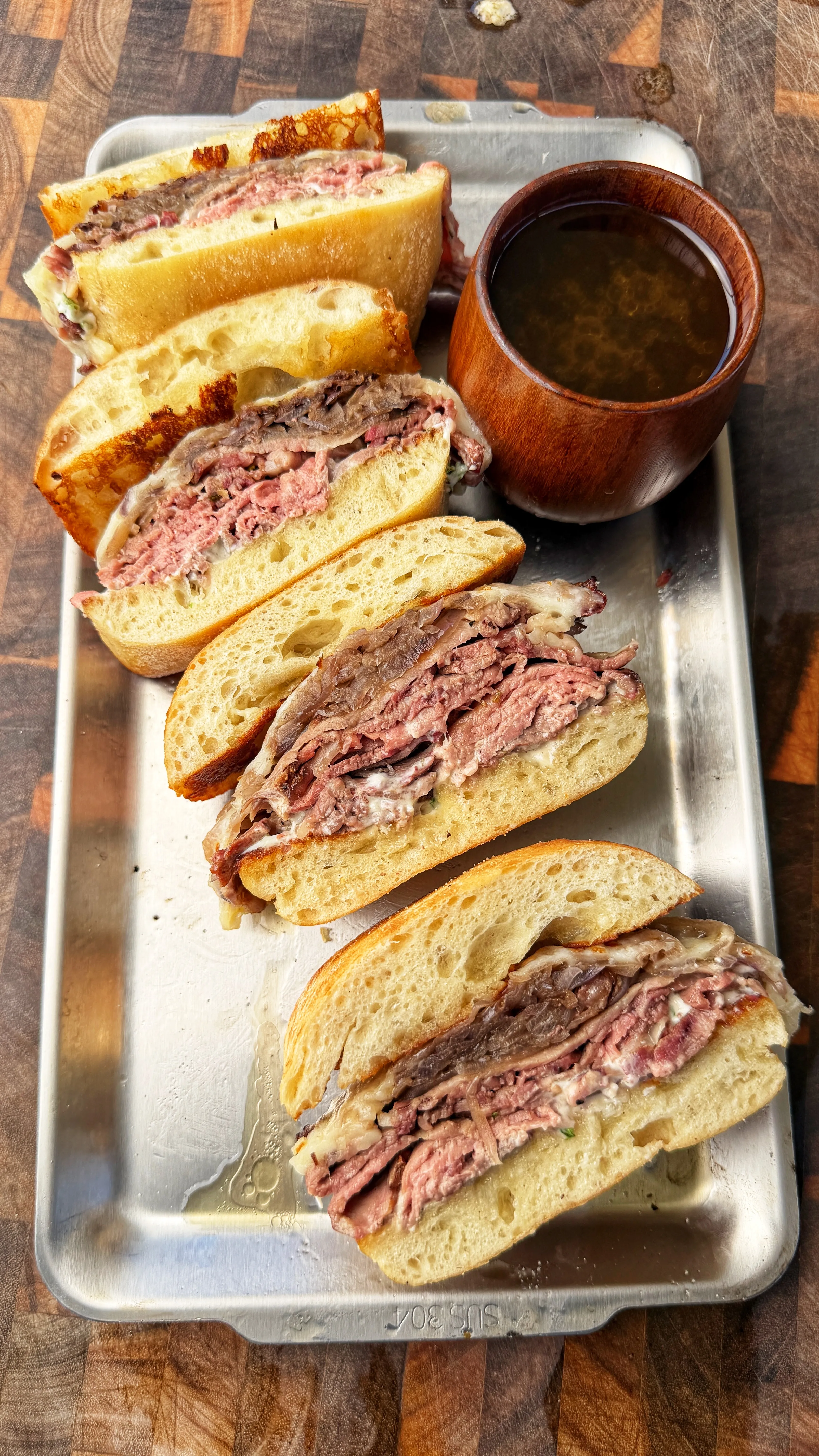
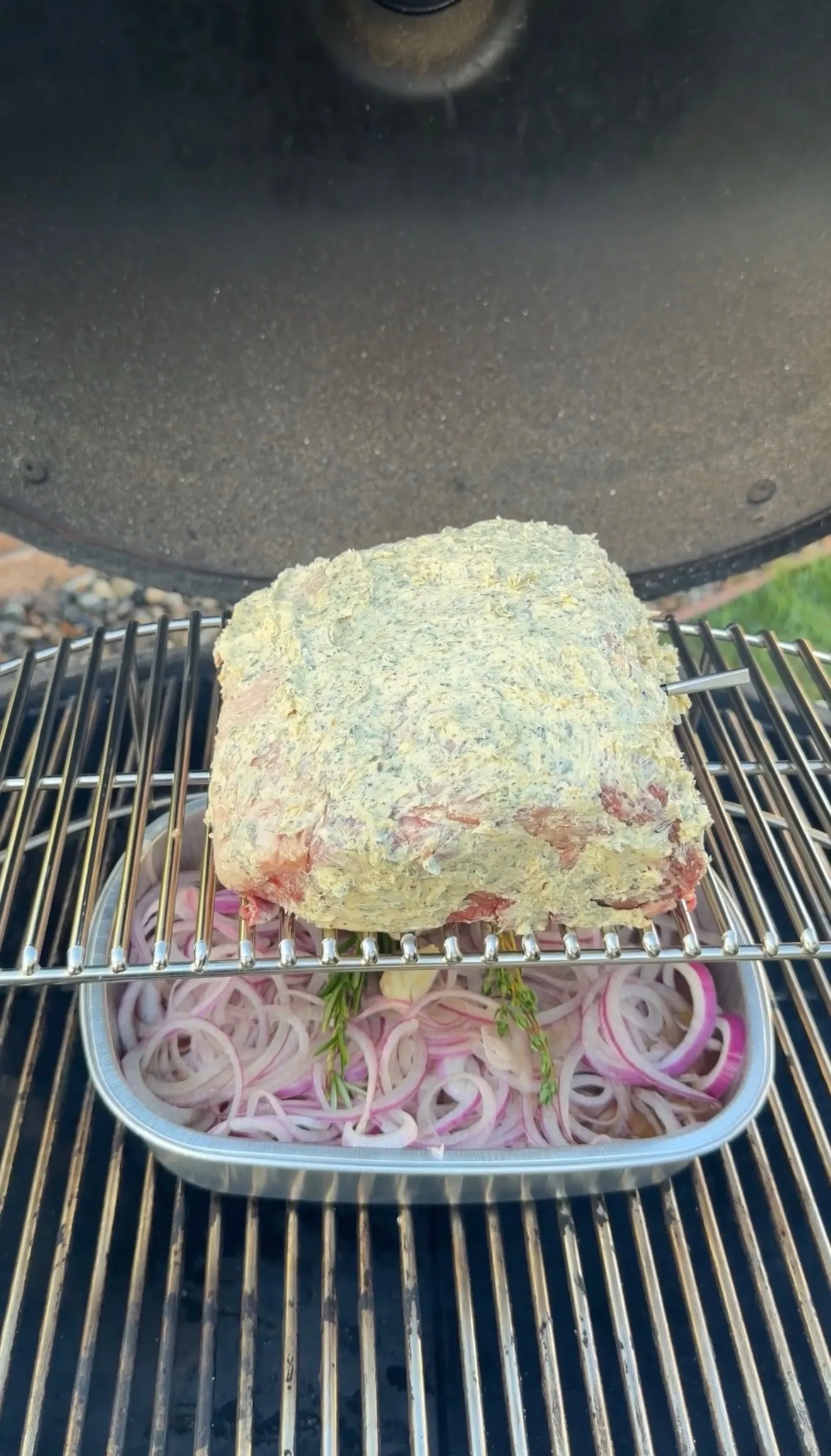
This smoked prime rib french dip sandwich starts with a 4-pound boneless prime rib coated in garlic herb compound butter and smoked at 275°F over a foil pan filled with shaved red onions, beef broth, garlic, rosemary, thyme, and Worcestershire. Every drop of rendered beef fat and herb butter falls into that pan during the 2 to 3 hour cook, building an au jus richer than anything made on a stovetop. The roast gets pulled at 125°F internal for medium-rare, rested 15 to 20 minutes, and shaved thin. Each sandwich stacks the sliced prime rib, caramelized onions from the drip pan, and provolone on toasted ciabatta with a garlic horseradish aioli, then hits the broiler until the cheese bubbles. Serve with warm au jus for dipping. The recipe makes 6 to 8 sandwiches and doubles as the best possible use for leftover holiday prime rib.
The Drip-Pan Au Jus Technique That Makes This French Dip Different
Why the Au Jus Cooks Under the Roast
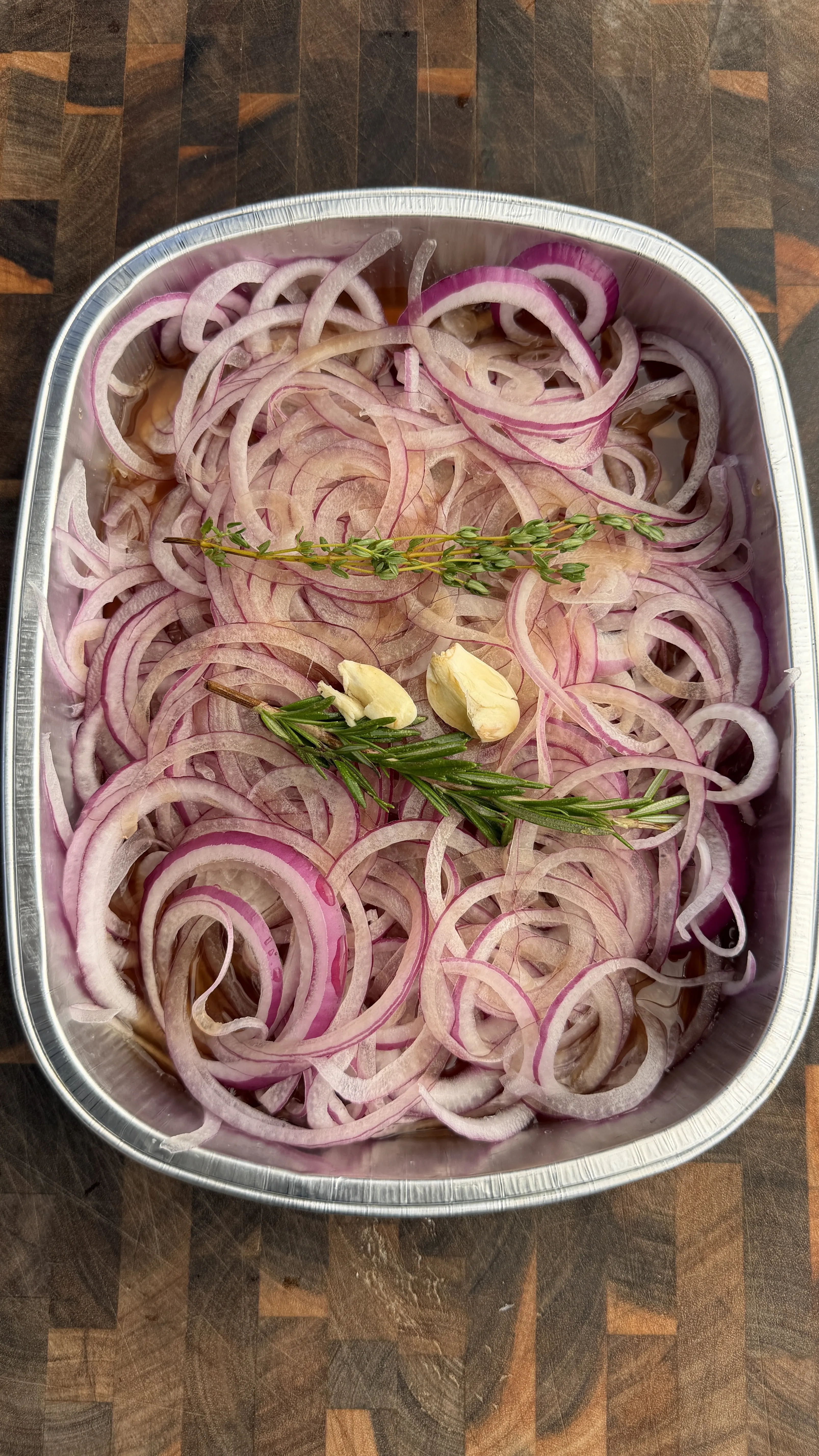
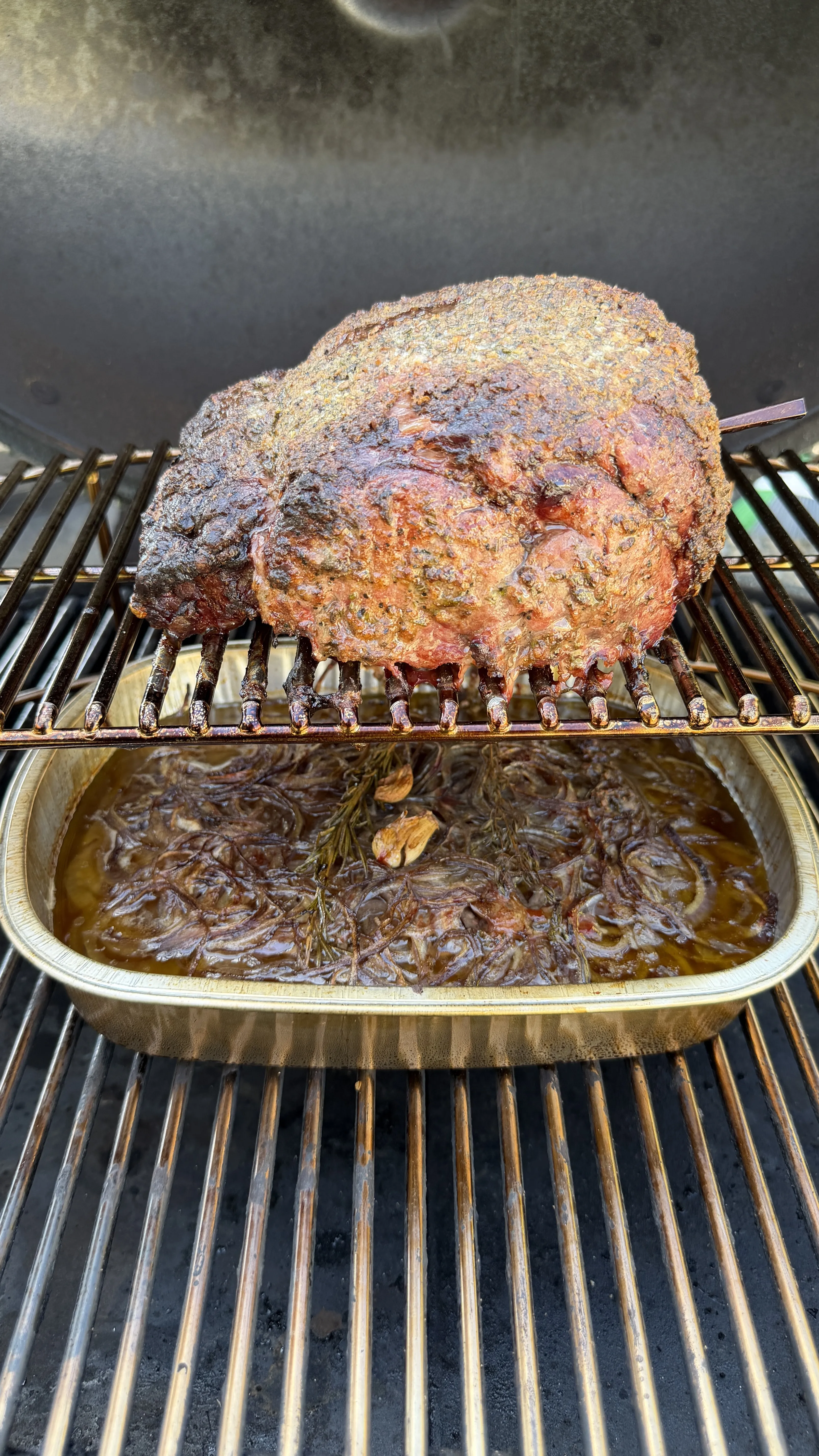
Standard french dip recipes make au jus on the stovetop with beef broth, drippings, and seasonings simmered in a saucepan. This recipe builds the au jus inside the smoker instead. The foil pan filled with shaved red onions, beef broth, garlic, rosemary, thyme, and Worcestershire sits directly under the prime rib for the entire 2 to 3 hour cook. Consequently, every drop of rendered beef fat and melting garlic herb butter falls into the pan and concentrates into the broth. As a result, the finished au jus carries smoke flavor, beef fat richness, and herb butter depth that no stovetop version can replicate.
The Onions Pull Double Duty
The 2 shaved red onions in the drip pan serve two separate purposes. First, they flavor the au jus as they slowly soften and sweeten in the broth over the long cook. Second, after straining the au jus, those same onions go directly onto the sandwiches as a caramelized onion layer. Therefore, nothing in the pan gets wasted. Moreover, shaving the onions thin on a mandolin matters here — thin slices break down fully in the broth and develop the soft, jammy texture you want on the sandwich, while thick-cut onions stay crunchy and raw-tasting after the same cook time.
Building the Garlic Herb Compound Butter
Why Compound Butter Beats a Dry Rub Alone
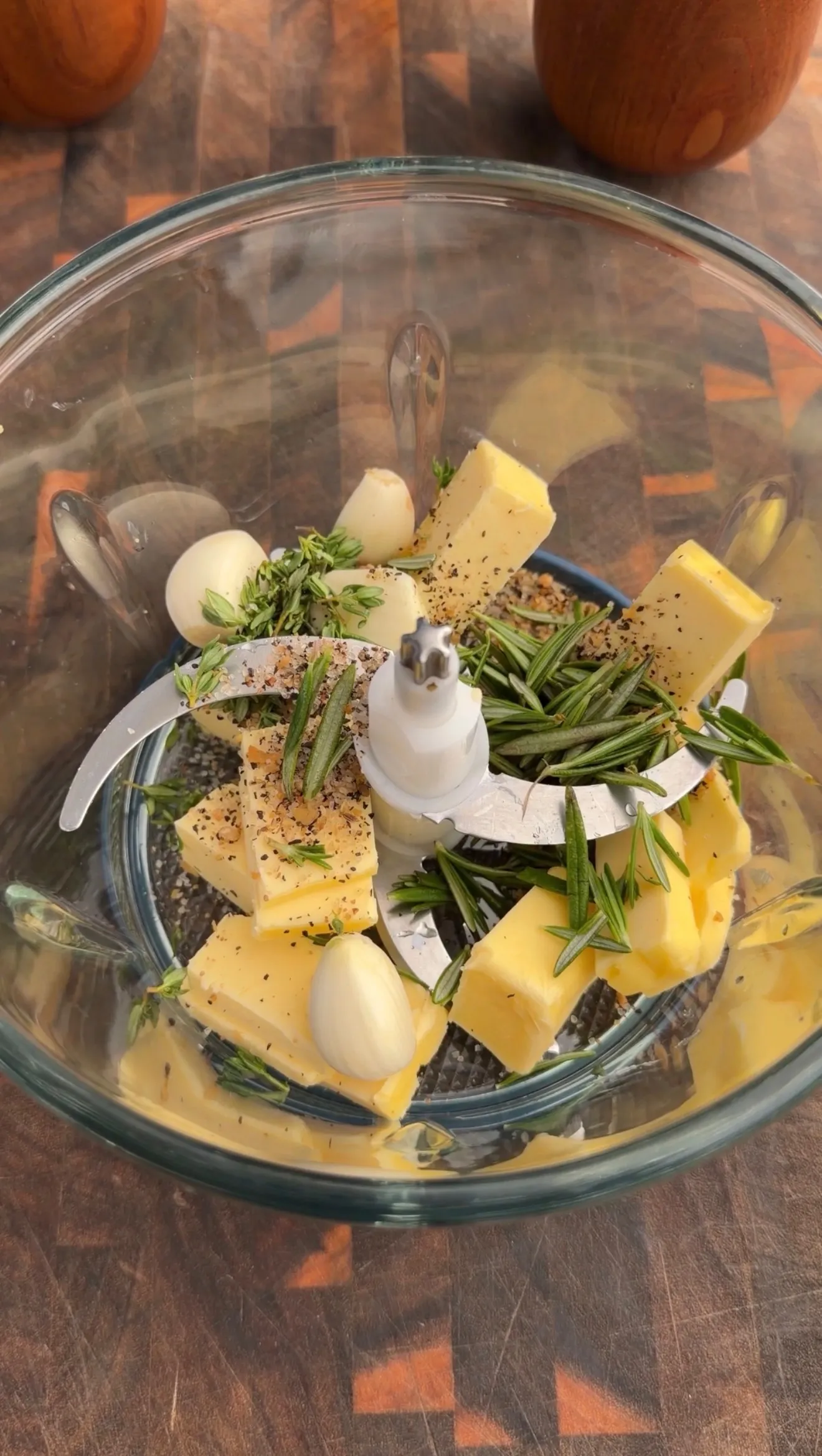
Coating the prime rib in compound butter instead of just dry seasoning does three things. First, the butter fat conducts heat into the surface of the roast and promotes even browning across the entire crust. Second, the butter acts as glue that holds the garlic, rosemary, thyme, and steak seasoning against the meat for the full cook instead of letting it fall off. Third, as the butter melts during the smoke, it bastes the roast continuously and drips into the au jus pan below, feeding flavor into both the meat and the dipping sauce at once. Specifically, this recipe uses 1 stick of unsalted butter blended with 4 minced garlic cloves, 1 tablespoon each of chopped fresh rosemary and thyme, and the same steak seasoning used on the roast.
Fresh Herbs vs Dried for the Butter
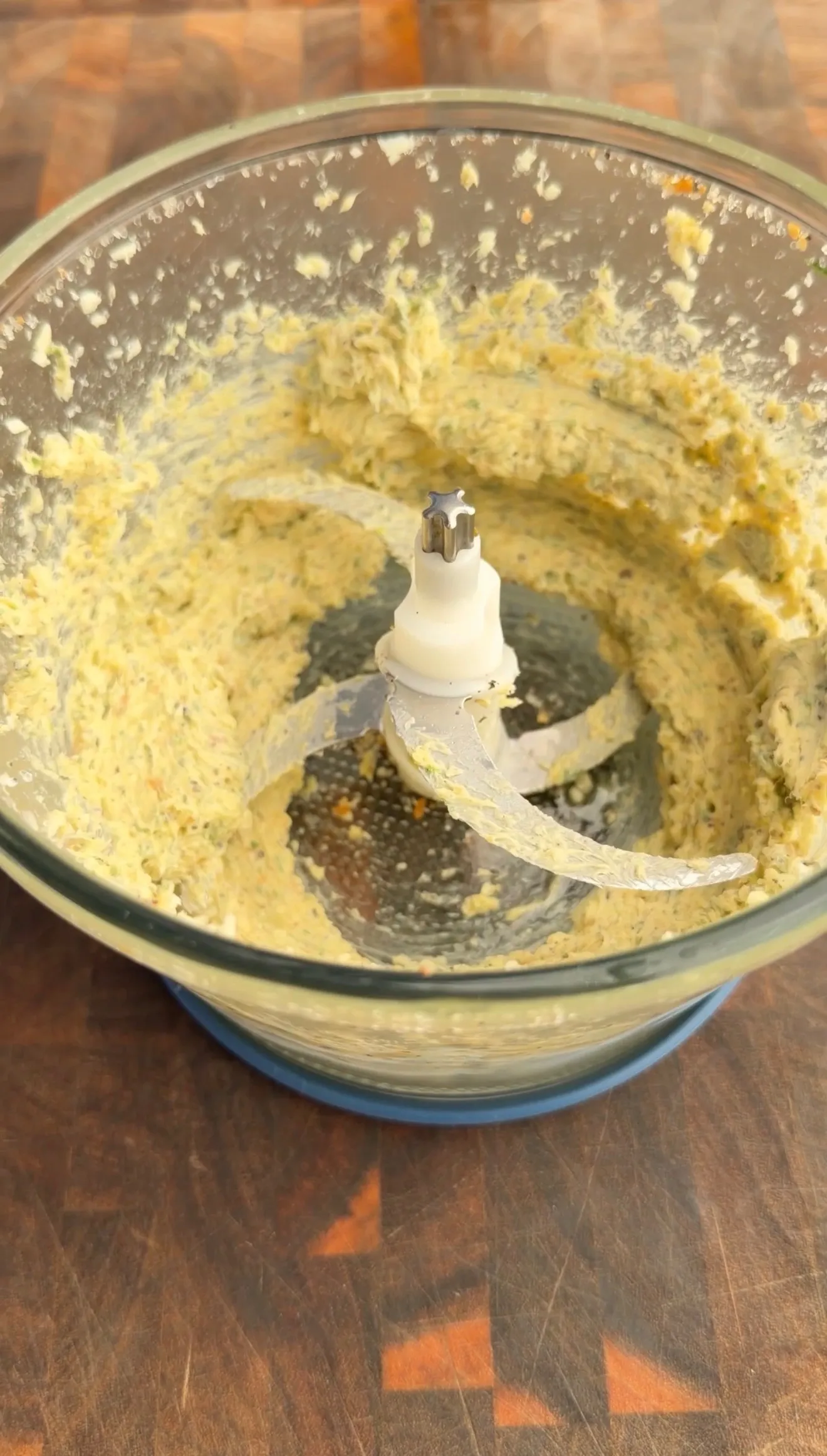
Use fresh rosemary and thyme in the compound butter, not dried. Fresh herbs release their aromatic oils gradually as the butter melts during the smoke, layering herb flavor into the crust over hours. Dried herbs burn and turn bitter under prolonged smoker heat, and they lack the oil content to infuse the butter properly. Additionally, blending everything in a food processor (rather than mixing by hand) breaks the garlic and herbs down fine enough to spread evenly across the roast without clumping. The smoother the butter, the more even the crust.
Smoking at 275°F to a 125°F Pull
Why 275°F Is the Right Smoker Temperature
The 275°F smoker temperature splits the difference between low-and-slow (225°F) and roasting (325°F+) on purpose. At 225°F, a 4-pound prime rib takes 4+ hours and the compound butter renders off before the crust sets. At 325°F or higher, the exterior overcooks before the center reaches temperature, creating a thick gray band of well-done meat around the medium-rare core. Therefore, 275°F cooks the roast in a manageable 2 to 3 hours, sets the herb butter crust properly, and keeps the gray band thin so nearly the entire slice stays rosy pink. Applewood is the recommended smoke wood since the mild sweetness complements beef without overpowering the herb butter.
The 125°F Pull and Carryover Logic
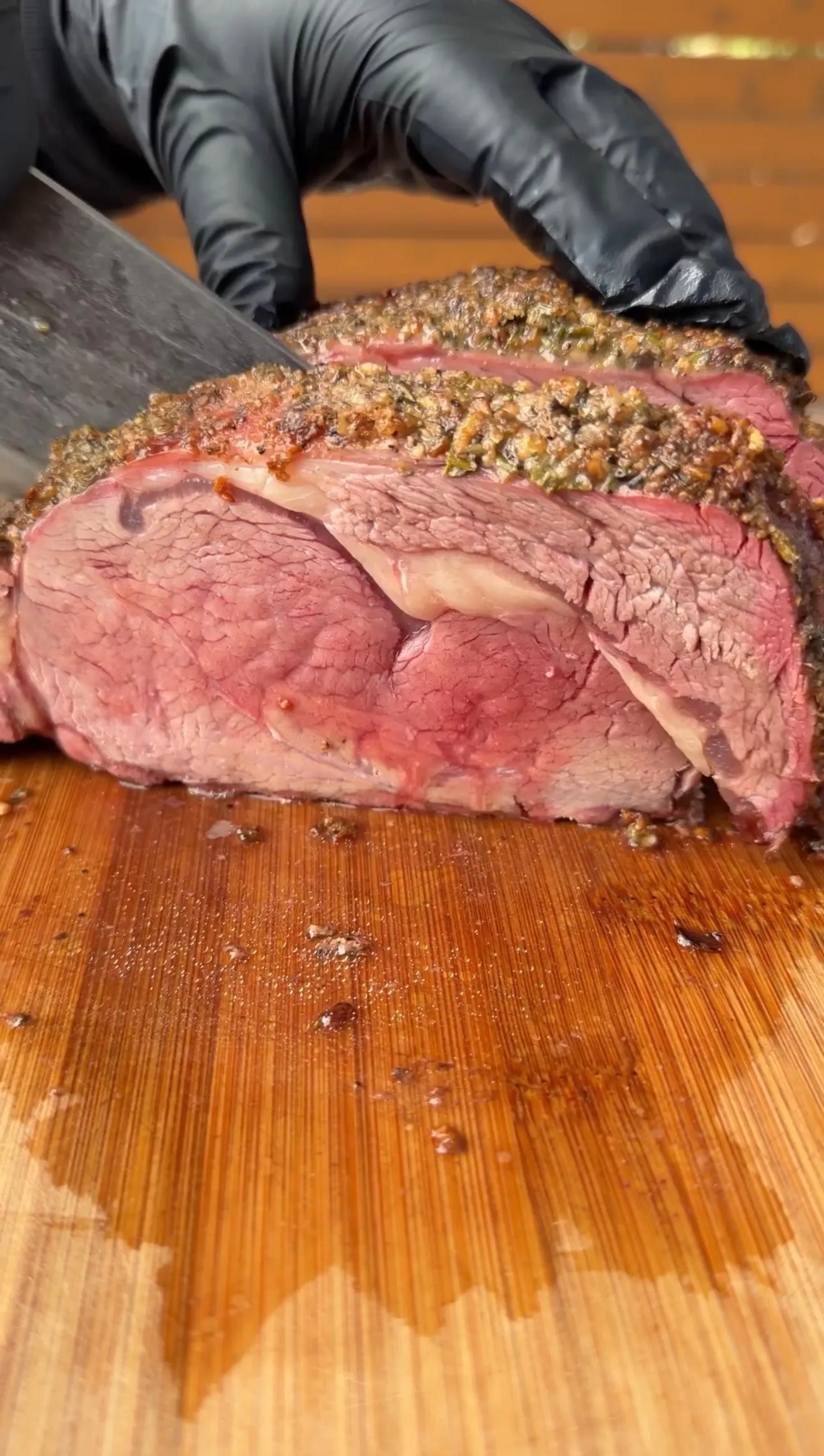
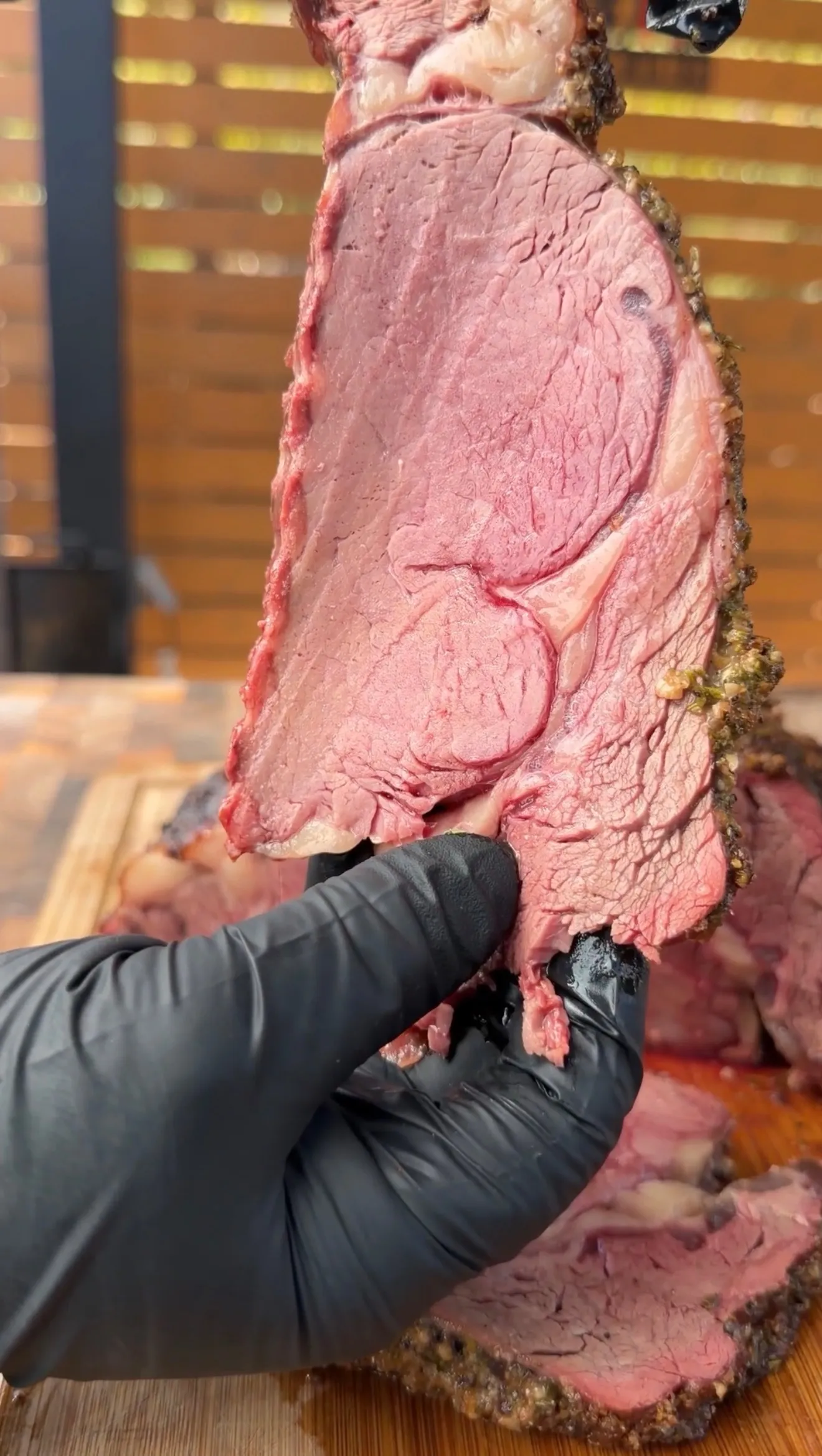
Pull the prime rib when the internal temperature in the thickest part reads 125°F. During the 15 to 20 minute rest, carryover cooking raises the internal temperature roughly 5 degrees, landing the roast at 130°F — true medium-rare. Pulling at 130°F or higher overshoots into medium territory by the time the rest finishes. Moreover, the rest is non-negotiable for slicing quality: shaving the roast immediately off the smoker squeezes the juices out onto the cutting board, while a properly rested roast holds its moisture through the thin slicing this sandwich requires.
The Garlic Horseradish Aioli and Broiler Finish
Why Horseradish Belongs on a Prime Rib Sandwich
Horseradish and prime rib is a steakhouse pairing with a functional purpose. The sharp sinus-clearing heat of the horseradish cuts through the richness of the fatty beef and resets the palate between bites. This aioli builds on that classic by combining 1 cup of mayonnaise with 2 grated garlic cloves, the juice of half a lemon, 1 tablespoon of prepared horseradish, and chopped fresh parsley. As a result, the sauce delivers creamy fat, sharp heat, bright acid, and fresh herb in one layer. Furthermore, refrigerating the aioli while the roast smokes gives the garlic and horseradish time to meld into the mayo instead of tasting raw and harsh.
The Broiler Step Most French Dips Skip
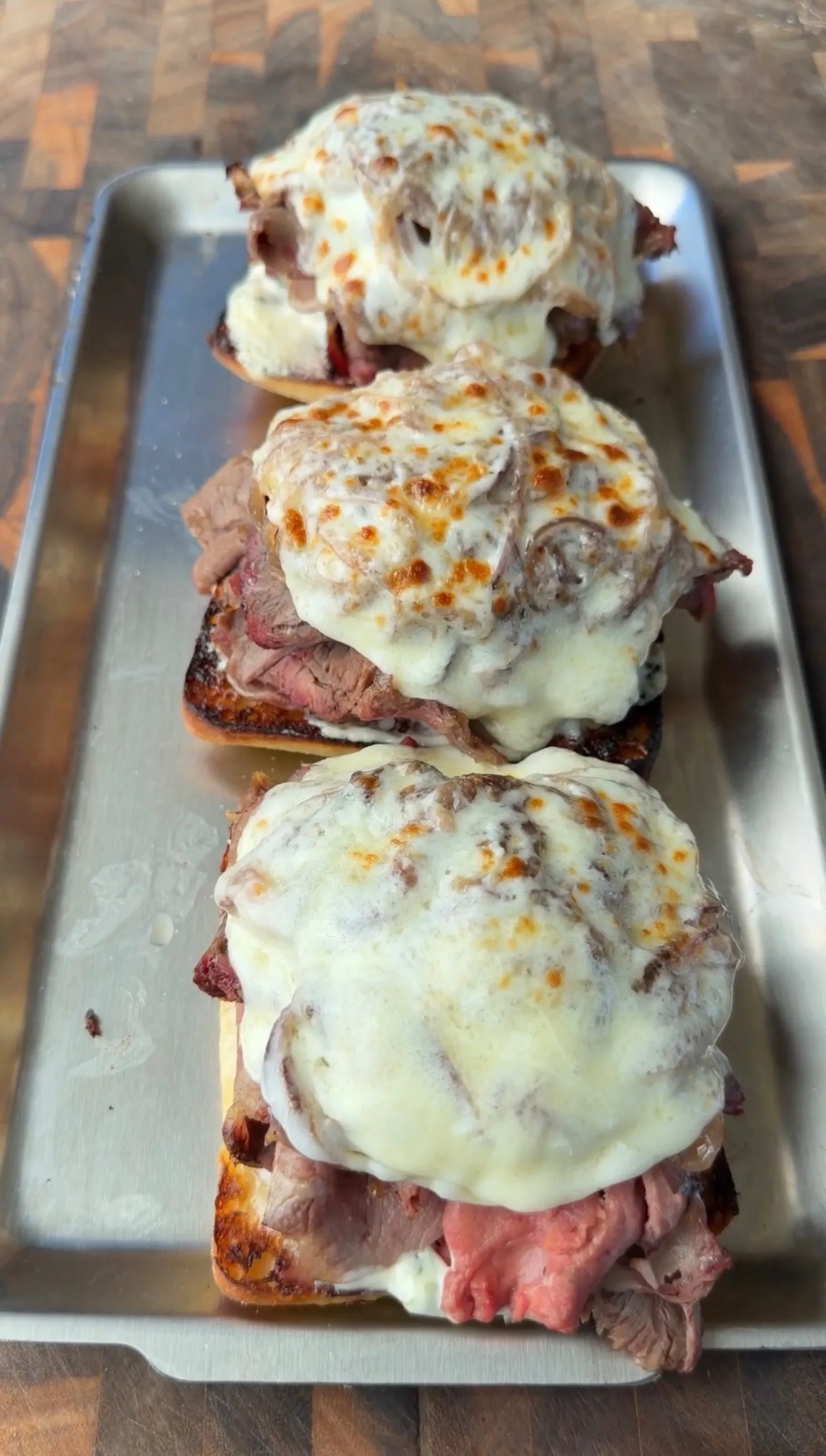
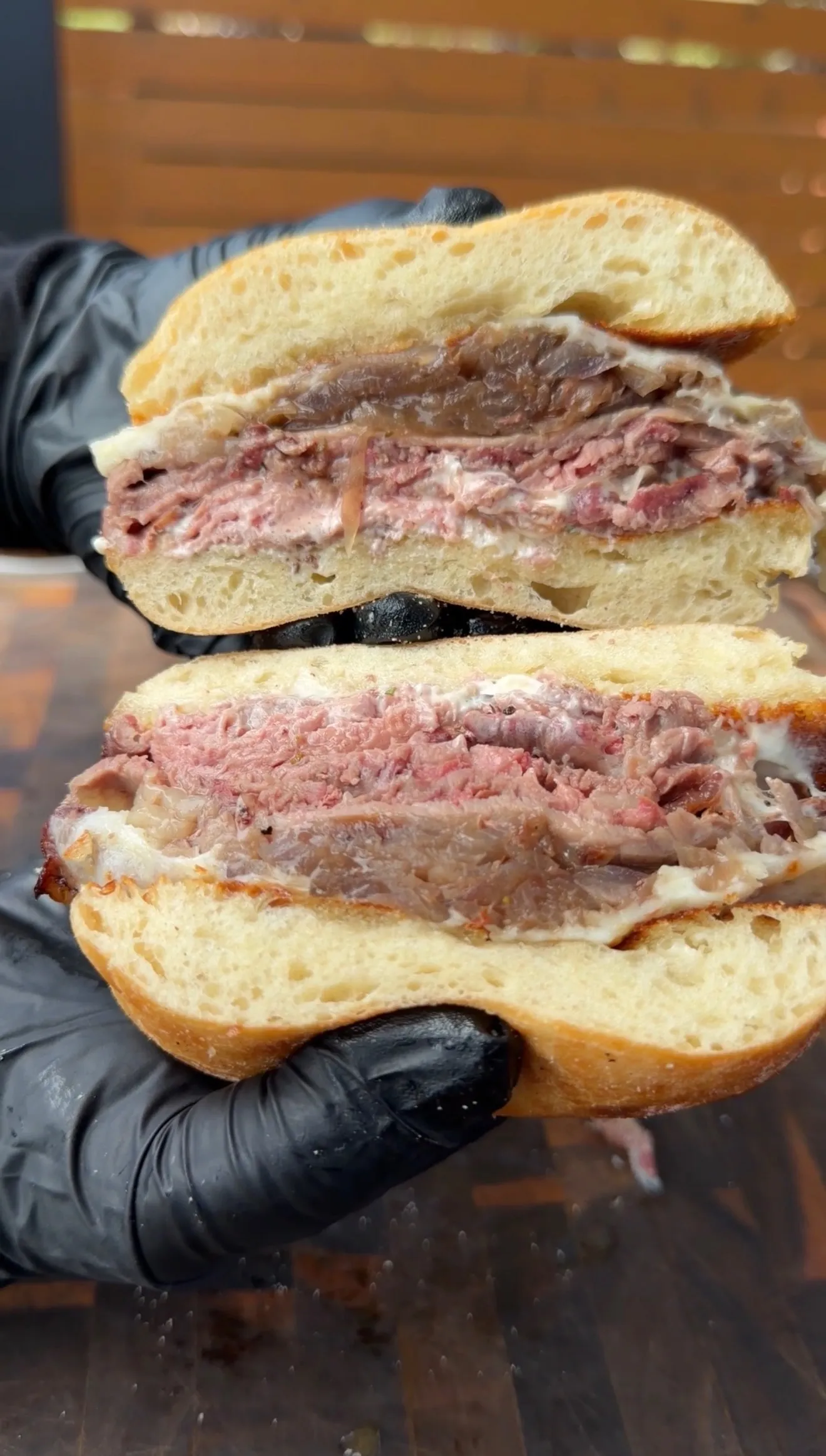
After stacking the sliced prime rib, caramelized onions, and 2 slices of provolone on the toasted ciabatta bottom, the open-faced sandwich goes under the broiler until the cheese melts, bubbles, and browns lightly at the edges. Most french dip recipes just lay cold cheese on warm meat and call it done, which leaves the provolone semi-melted at best. Specifically, the broiler takes 1 to 2 minutes and transforms the cheese into a molten layer that fuses the beef and onions together. Watch it closely — the line between bubbly-browned and burnt is about 30 seconds under a broiler.
Slicing Thin and the Leftover Prime Rib Angle
Why Shaved-Thin Slices Make the Sandwich
A french dip lives or dies on slice thickness. Thick slices of prime rib resist the bite and pull out of the sandwich in one piece, while paper-thin shaved slices compress into tender layers that bite through cleanly and soak up the au jus on the dip. A meat slicer produces the most consistent results, but a long, sharp carving knife works if you slice patiently with smooth, full-length strokes. Additionally, chilling the rested roast for 20 to 30 minutes in the refrigerator firms the meat and makes hand-slicing dramatically easier — slightly firm beef shaves clean while warm beef tears.
The Day-After-Holiday Prime Rib Solution
This recipe works two ways. Smoke a fresh prime rib specifically for sandwiches, or use leftover prime rib from a holiday dinner. For the leftover route, skip the smoking steps and build the au jus on the stovetop instead: simmer the shaved red onions, beef broth, garlic, rosemary, thyme, and Worcestershire in a saucepan for 20 to 25 minutes, then strain. Slice the cold leftover prime rib thin, dip the slices briefly in the warm au jus to reheat them gently (30 to 60 seconds), and build the sandwiches as directed. Consequently, the leftover version delivers most of the same payoff in under 45 minutes, which makes it the answer to the December 26th question of what to do with half a prime rib roast.
Step-by-Step: How to Make This Smoked Prime Rib French Dip Sandwich
Step 1: Blend the Garlic Herb Compound Butter
In a food processor, combine the softened stick of butter, 4 minced garlic cloves, 1 tablespoon chopped rosemary, 1 tablespoon chopped thyme, and a generous pinch of the steak seasoning. Blend until smooth and fully incorporated with no visible butter chunks. The smoother the butter, the more evenly it spreads across the roast.
Step 2: Coat the Prime Rib
Season the 4-pound boneless prime rib on all sides with the steak seasoning (about 1 teaspoon per pound). Then generously coat the entire roast with the garlic herb compound butter, covering every surface. Place the buttered roast on a raised rack so air and smoke can circulate underneath.
Step 3: Build the Au Jus Pan
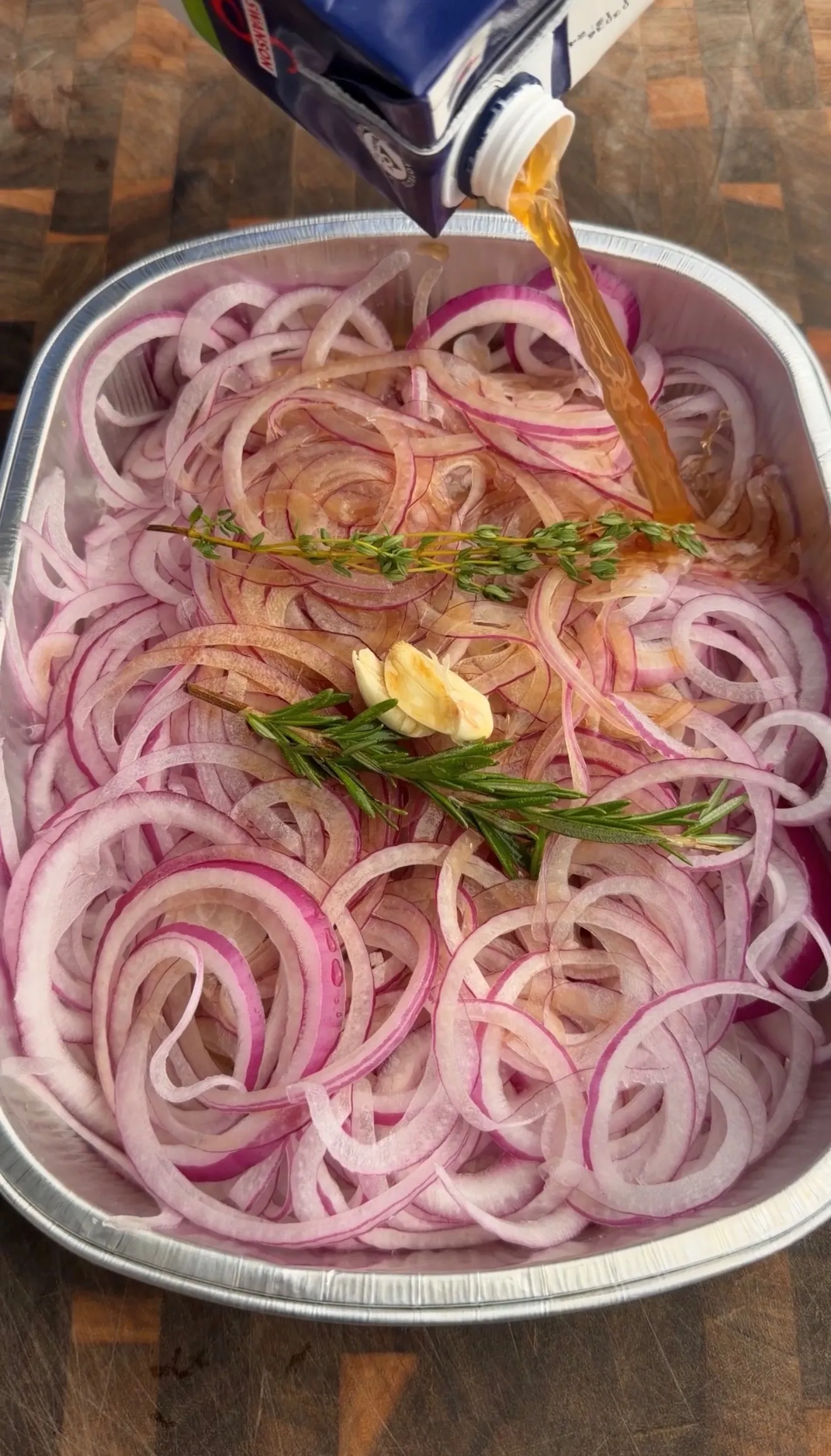
Fill a foil pan with the 2 shaved red onions, 2 cups of beef broth, 1 garlic clove, 1 sprig of rosemary, 1 sprig of thyme, and 1 tablespoon of Worcestershire sauce. This pan goes directly underneath the roast in the smoker to catch every drop of rendered fat and butter during the cook.
Step 4: Smoke at 275°F to 125°F Internal
Preheat the smoker to 275°F with applewood for smoke. Place the foil pan on the grate and position the prime rib directly above it. Smoke until the internal temperature in the thickest part of the roast reaches 125°F, about 2 to 3 hours depending on the exact size and shape of the roast. Use a leave-in probe thermometer to track without opening the smoker.
Step 5: Rest the Roast and Strain the Au Jus
Remove the roast and let it rest for 15 to 20 minutes. Carryover cooking brings the internal temperature to roughly 130°F for medium-rare. While it rests, strain the liquid from the foil pan through a fine mesh strainer. Reserve the strained au jus for dipping and set the caramelized onions aside for the sandwich build.
Step 6: Mix the Garlic Horseradish Aioli
In a bowl, combine the 1 cup of mayonnaise, 2 grated garlic cloves, juice of half a lemon, 1 tablespoon of prepared horseradish, and 1 tablespoon of chopped parsley. Mix until smooth and refrigerate until assembly. Making the aioli ahead (even while the roast smokes) lets the garlic and horseradish mellow into the mayo.
Step 7: Shave the Prime Rib Thin
Using a meat slicer, shave the rested prime rib into very thin slices. Without a slicer, use the sharpest long knife you have and slice as thin as possible with smooth, full-length strokes. For easier hand-slicing, chill the rested roast in the refrigerator for 20 to 30 minutes first — slightly firm beef shaves cleanly while warm beef tears.
Step 8: Build, Broil, and Serve With Au Jus
Toast the ciabatta buns until golden and crispy. Spread a generous layer of the garlic horseradish aioli on each bottom bun, pile on the shaved prime rib, and top with the caramelized red onions from the drip pan. Add 2 slices of provolone per sandwich and place under the broiler for 1 to 2 minutes until the cheese is melted, bubbly, and lightly browned at the edges. Spread a little more aioli on the top bun, close the sandwich, and serve immediately with a ramekin of warm au jus for dipping.
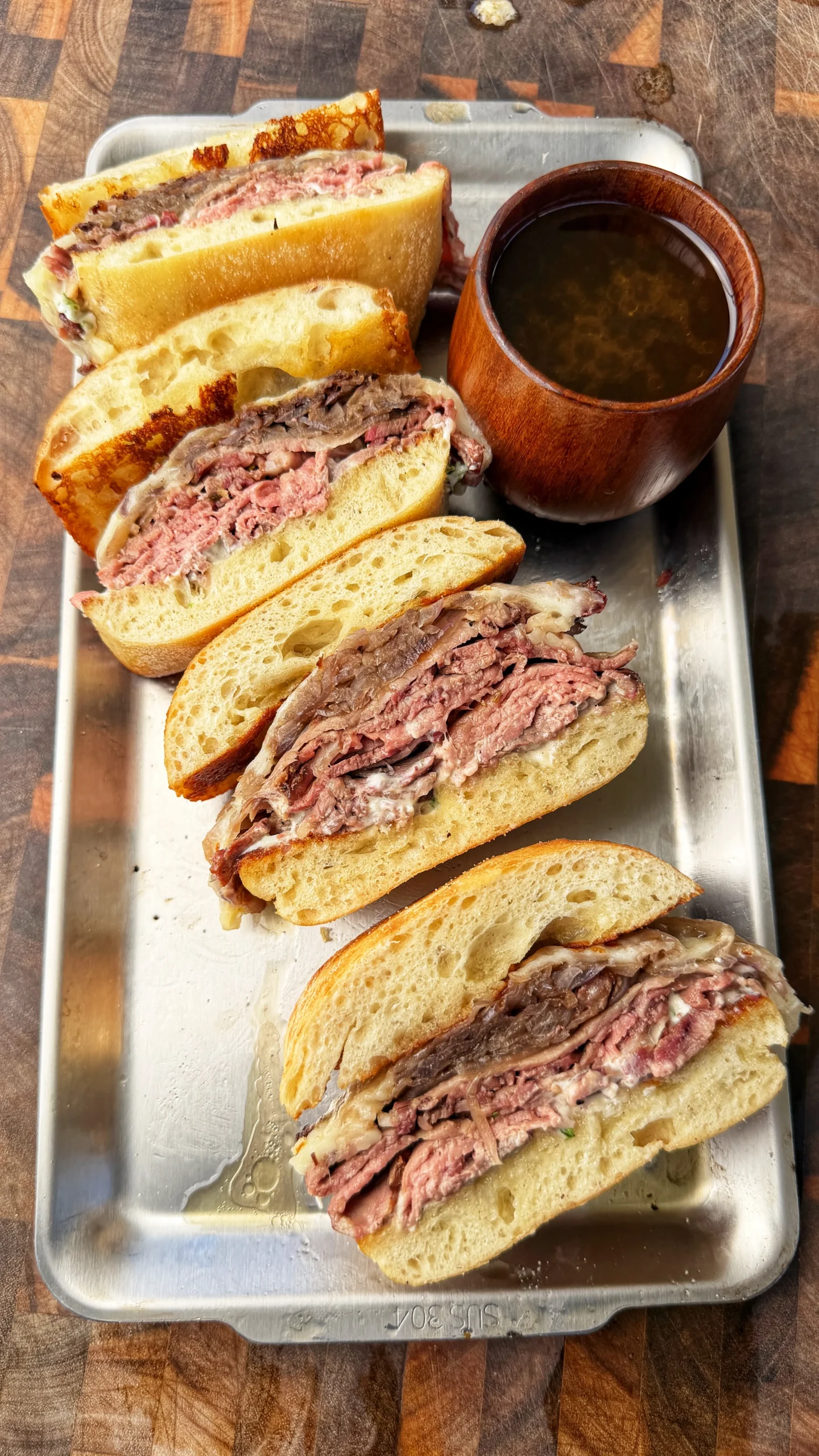
Garlic Herb Butter Smoked Prime Rib French Dip Sandwich
Ingredients
Equipment
Method
- In a food processor, combine the softened butter, minced garlic, rosemary, thyme, and a pinch of steak seasoning. Blend until smooth to create the garlic herb compound butter.
- Season the prime rib on all sides with steak seasoning (about 1 teaspoon per pound), then generously coat the entire roast with the compound butter. Place on a raised rack.
- Fill a foil pan with the shaved red onions, beef broth, garlic clove, rosemary sprig, thyme sprig, and Worcestershire sauce. This pan catches all the drippings during the cook.
- Preheat the smoker to 275°F with applewood. Place the foil pan on the grate and position the prime rib directly above it. Smoke until the internal temperature reaches 125°F, about 2 to 3 hours depending on the size of the roast.
- Remove the roast and rest for 15 to 20 minutes. Carryover cooking brings the internal temperature to roughly 130°F for medium-rare.
- Strain the liquid from the foil pan through a fine mesh strainer. Reserve the au jus for dipping and set the caramelized onions aside for the sandwich build.
- In a bowl, combine the mayonnaise, grated garlic, lemon juice, horseradish, and parsley. Mix until smooth and refrigerate until ready to use.
- Using a meat slicer, shave the rested prime rib into very thin slices. Without a slicer, chill the roast 20 to 30 minutes first, then slice as thin as possible with a long, sharp knife using smooth full-length strokes.
- Toast the ciabatta buns until golden and crispy. Spread garlic horseradish aioli on each bottom bun, pile on the shaved prime rib, and top with the caramelized red onions from the drip pan.
- Add 2 slices of provolone per sandwich and broil for 1 to 2 minutes until the cheese is melted, bubbly, and lightly browned. Spread more aioli on the top bun, close the sandwich, and serve immediately with warm au jus for dipping.
Notes
Tried this recipe?
Let us know how it was!Smoked Prime Rib French Dip — FAQ
Everything you need to nail the smoke, the au jus, and the sandwich build.
Setup & Basics
Ask for a 4-pound boneless ribeye roast (also labeled “boneless prime rib roast” or “ribeye roast” depending on the store). Technically, “prime rib” refers to the standing rib roast cut, and “Prime” is also a USDA grade — the two are different things. A Choice-grade ribeye roast works great for this recipe and costs significantly less than Prime-grade. The boneless version slices cleaner for sandwiches than bone-in. Around the holidays, most grocery stores stock these prominently; the rest of the year, you may need to ask the meat counter to cut one from a whole ribeye.
Yes — this is one of the best uses for leftover prime rib. Skip the smoking steps entirely. Build the au jus on the stovetop instead: simmer the shaved red onions, beef broth, garlic, rosemary, thyme, and Worcestershire in a saucepan for 20 to 25 minutes, then strain (keeping the onions for the sandwich). Slice the cold leftover prime rib as thin as possible — cold meat actually slices easier than warm. Then dip the slices in the warm au jus for 30 to 60 seconds to gently reheat them without overcooking. Build and broil as directed. The whole leftover version takes under 45 minutes.
Yes, with trade-offs. Top sirloin roast is the best budget alternative — it smokes well at the same 275°F to a 125°F pull and slices thin, though it’s leaner and less rich than ribeye. Eye of round is the classic deli roast beef cut and costs the least, but it’s very lean, so slice it extra thin and lean harder on the au jus dip for moisture. Chuck roast is NOT a good substitute here — it needs low-and-slow cooking to 200°F+ to break down, and at 130°F it stays tough and chewy. If budget is the constraint, top sirloin gets you 80% of the experience at half the price.
The bread needs two qualities for a french dip: a crust sturdy enough to survive the au jus dip without disintegrating, and an interior soft enough to compress around the meat. Best substitutes in order: French rolls or hoagie rolls (the traditional french dip choice), baguette sections (crustier, very dip-resistant), or telera rolls (soft but structured). Avoid brioche and potato rolls — they’re too soft and fall apart on the first dip. Whatever you choose, toasting is mandatory. The toasted surface is the moisture barrier that buys you time against both the aioli and the jus.
Technique & Troubleshooting
Two fixes depending on the problem. Weak flavor: After straining, simmer the au jus in a saucepan for 10 to 15 minutes to reduce and concentrate it. Reducing by a quarter to a third dramatically intensifies the beef and smoke flavor. Add a splash more Worcestershire or a pinch of beef bouillon if it still tastes flat. Too thin in texture: Au jus is supposed to be thin — it’s a dipping broth, not a gravy. If you prefer body, whisk in 1 teaspoon of cornstarch mixed with 1 tablespoon of cold water and simmer 2 minutes. Also check your smoker setup: if the pan wasn’t directly under the roast, you missed the drippings that provide most of the richness. Position matters.
Yes. Set the oven to 275°F and place the foil pan with the au jus ingredients on a lower rack, with the butter-coated roast on a raised rack directly above it (or set the rack inside the pan itself). Roast until the internal temperature hits 125°F, about 2 to 2.5 hours — the oven cooks slightly faster than a smoker since there’s no airflow loss. Rest, strain, slice, and build exactly as directed. You lose the applewood smoke flavor, so compensate by adding 1/2 teaspoon of smoked paprika to the compound butter and a few drops of liquid smoke to the au jus if you want it. The drip-pan technique still works in the oven and still makes a better au jus than the stovetop version.