
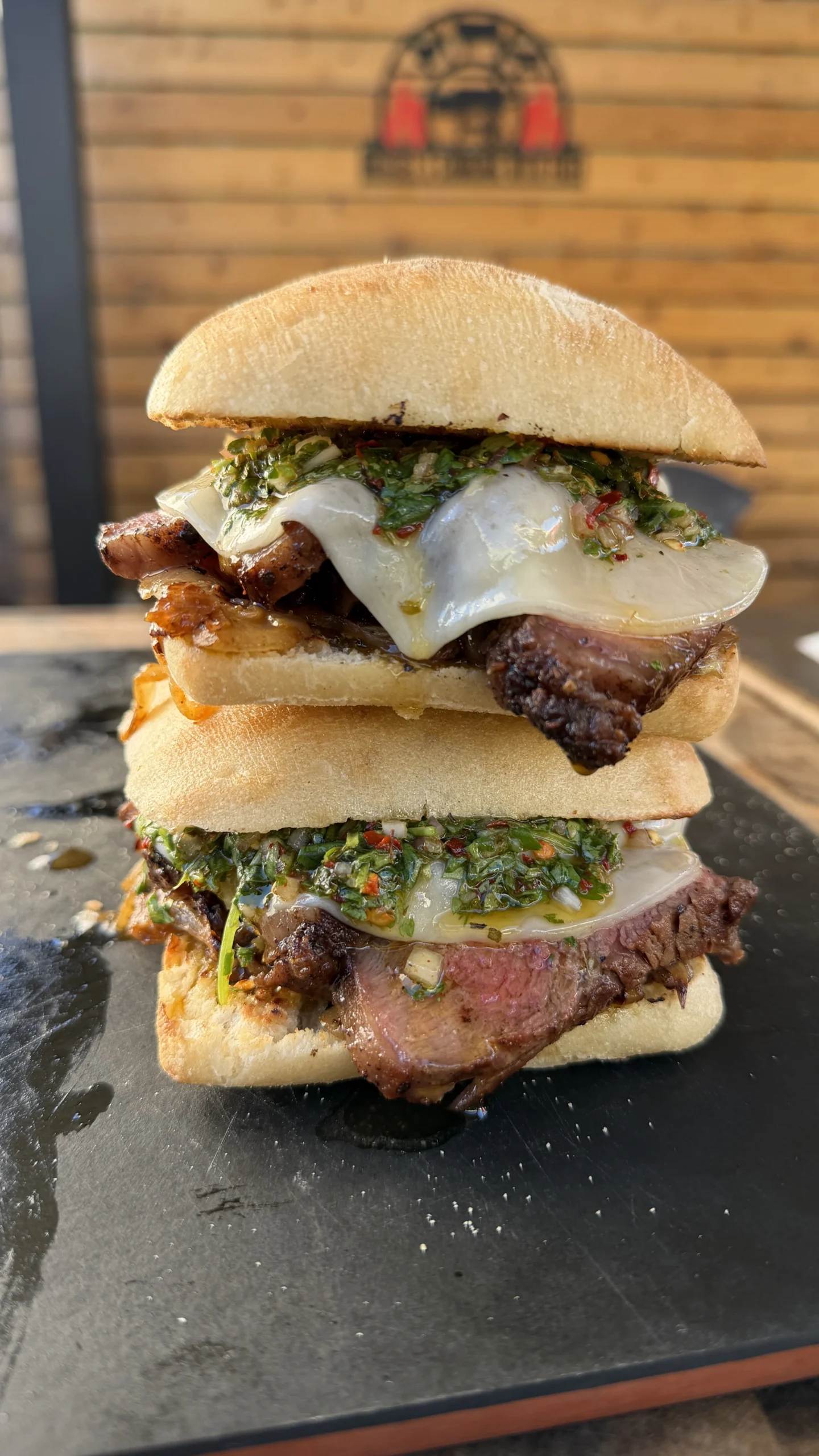
Grilled Strip Steak Sandwich with Mint Chimichurri
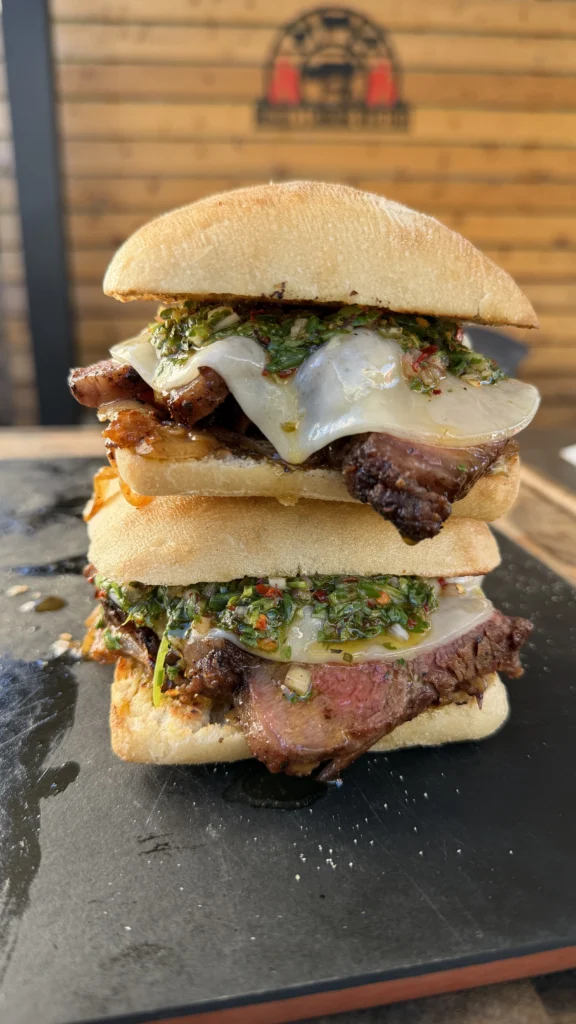
Strip steak sandwich recipe uses two 10-12 oz New York strip steaks coated in olive oil, seasoned with kosher salt and black pepper, grilled over high heat at 450-500°F with flips every 1-2 minutes until internal temperature reaches 120°F, then rested for 8-10 minutes to reach final 130-135°F medium-rare through carryover cooking. Slice thin against the grain and layer on grilled ciabatta rolls with caramelized onions cooked for 10-12 minutes, melted provolone cheese, and mint chimichurri made from fresh parsley, mint, oregano, garlic, shallot, red pepper flakes, lemon juice, and olive oil that sits for 15-30 minutes to bloom. The mint adds bright, fresh contrast to the rich beef while the chimichurri provides herbaceous, garlicky flavor that elevates the sandwich beyond basic steak and cheese. This steak sandwich with chimichurri delivers restaurant quality in handheld form, perfect for casual dinners, game day, or anytime you want impressive sandwiches that taste as good as they look.
The whole process takes about 45 minutes from start to finish. Spend 20 minutes making chimichurri and caramelizing onions while steaks come to room temperature. Grill steaks for 8-12 minutes depending on exact thickness. Rest for 8-10 minutes while you toast ciabatta and melt cheese. The mint chimichurri is what makes this sandwich special, providing fresh herbal notes that cut through the richness of strip steak and caramelized onions. The lemon juice adds brightness without overwhelming the beef. Serving on ciabatta provides sturdy structure that holds up to juicy steak and sauce without getting soggy.
What Makes Mint Chimichurri Different from Regular Chimichurri?
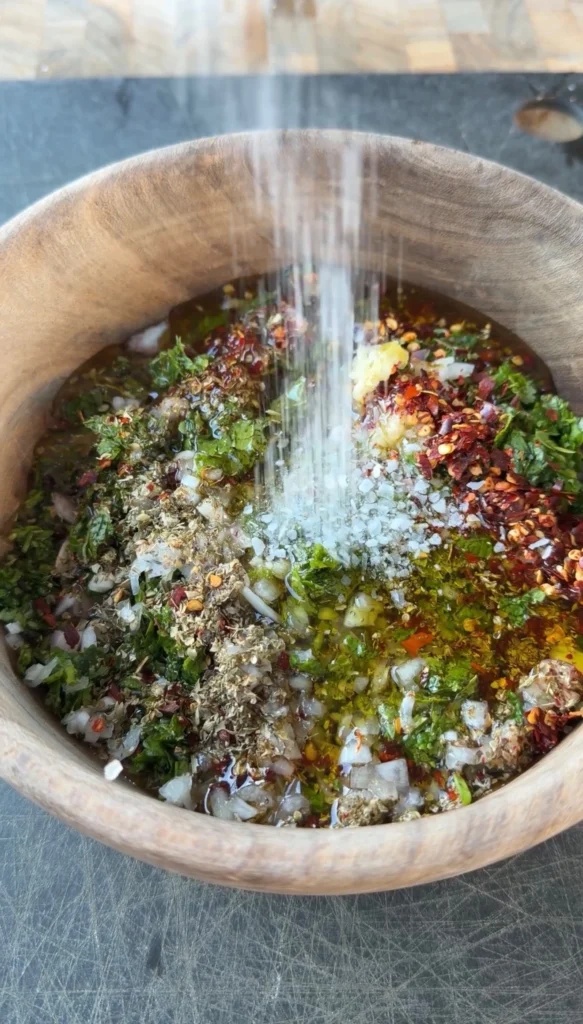
Mint chimichurri adds fresh, bright notes that traditional parsley-only chimichurri lacks. The mint provides cooling, aromatic quality that balances rich, fatty meats like strip steak. Traditional Argentine chimichurri uses only parsley, oregano, garlic, and vinegar or lemon juice. Adding mint creates a more complex flavor profile that’s both herbaceous and refreshing, making it ideal for sandwiches where you want brightness without heavy acidity.
The mint also complements the lemon juice better than parsley alone. Lemon and mint are natural flavor partners, creating a fresh, Mediterranean-inspired profile. In traditional chimichurri, the vinegar provides all the brightness. Adding lemon juice with mint creates layered acidity that’s less sharp and more nuanced. The mint’s natural sweetness rounds out the lemon’s tartness.
Using the ratio of 1/2 cup parsley to 1/4 cup mint ensures parsley remains the dominant herb while mint provides accent. Too much mint overpowers the other flavors and makes the chimichurri taste like mojito sauce. The right balance gives you herbal depth from parsley, freshness from mint, and aromatic complexity from oregano. All three herbs working together create something better than any single herb could achieve.
The mint also makes the chimichurri more versatile beyond steak sandwiches. Regular chimichurri is strongly associated with Argentine beef. Mint chimichurri works equally well on lamb, chicken, pork, or grilled vegetables. The fresh mint makes it feel lighter and more appropriate for sandwiches where traditional chimichurri might be too heavy.
What Temperature Should Strip Steak Be for Sandwiches?
Pull strip steak from the grill at 120°F internal temperature for perfect medium-rare after resting. During the 8-10 minute rest, carryover cooking brings the final temperature to 130-135°F. At this doneness, the steak is pink throughout with warm red center, tender texture, and maximum juiciness. Strip steak has moderate marbling that renders properly at medium-rare while keeping the meat tender for slicing.
Check temperature by inserting an instant-read thermometer horizontally into the thickest part of the steak, holding it parallel to the cutting board. For strip steaks that are thicker on one end, check the thickest area. Don’t check near the edges which cook faster. When the thickest part hits 120°F, pull immediately. Temperature rises quickly in the final minutes, so check frequently once you’re within 10 degrees of target.
For sandwiches specifically, medium-rare is ideal because you’re slicing the steak thin. Well-done or even medium steak becomes dry and chewy when sliced thin for sandwiches. The thin slices don’t retain moisture the way a thick steak does. Medium-rare steak sliced thin stays juicy and tender, creating better eating experience. The pink interior also looks more appealing layered in a sandwich compared to gray overcooked meat.
For people who prefer more doneness, pull at 130°F for medium (final 135-140°F after rest). Beyond this, strip steak begins losing its optimal texture. The moderate marbling can’t compensate for overcooking like ribeye’s heavy marbling can. If guests insist on well-done, use a fattier cut or save strip steak for those who appreciate proper doneness.
How Do You Caramelize Onions Without Burning Them?
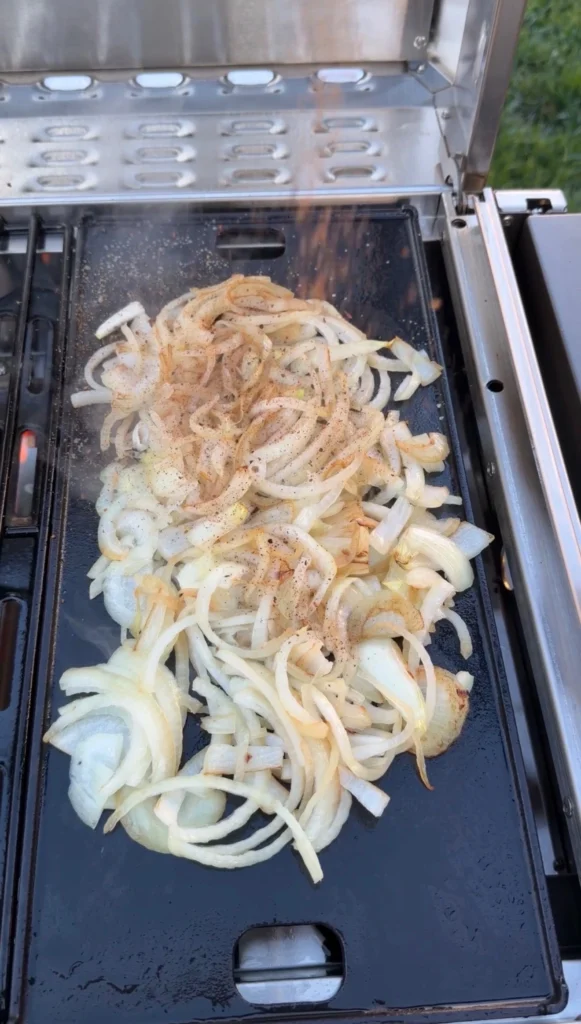
Caramelizing onions requires medium heat, not high heat, and patience over 10-12 minutes. High heat burns the exterior before the interior softens and releases sugars. Medium heat (around 300-325°F on a griddle) allows the onions to slowly soften, release moisture, and caramelize without burning. The sugars brown gradually, creating sweet, complex flavor without bitterness.
Slice onions uniformly thin so they cook at the same rate. Thick slices stay crunchy while thin pieces burn. Use a sharp knife or mandolin to create consistent 1/8 inch slices. Toss them with olive oil and a pinch of salt before cooking. The salt draws out moisture, helping them soften faster. The oil prevents sticking and conducts heat evenly.
Stir occasionally, not constantly. Let the onions sit for 2-3 minutes between stirs so they develop color on the contact surface. Constant stirring prevents browning because the onions never stay in contact with heat long enough. Aim for stirring every 2-3 minutes. This gives you caramelization without burning while ensuring even cooking.
If the onions start sticking or getting too dark, add a splash of water (1-2 tablespoons) and scrape the browned bits off the griddle. This technique, called deglazing, incorporates the flavorful browned bits into the onions while preventing burning. The water evaporates quickly, leaving deeply flavored caramelized onions. Properly caramelized onions should be deep golden brown, soft, sweet, and jammy without any black or burnt spots.
Should You Slice Strip Steak Thin or Thick for Sandwiches?
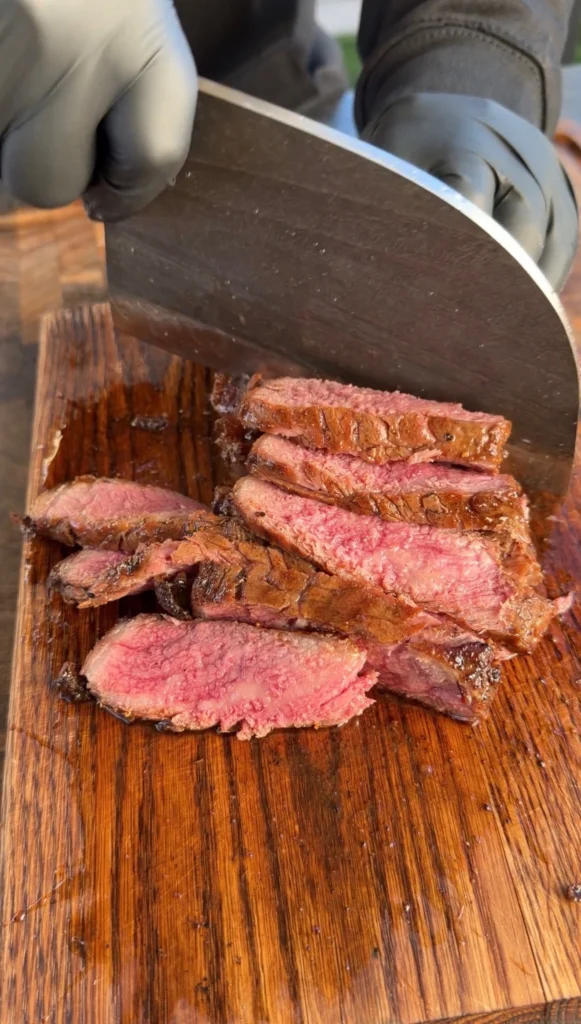
Slice strip steak thin for sandwiches, approximately 1/4 inch thick or slightly thinner. Thin slices are easier to bite through in sandwich form without pulling the entire filling out in one bite. Thick slices require hard biting that can make messy sandwiches where everything slides out. Thin slices also stack better, allowing you to layer meat generously while maintaining manageable sandwich height.
Thin slicing also distributes the steak’s flavor more evenly throughout the sandwich. Each bite gets multiple thin slices rather than one thick piece. This creates more surface area for the chimichurri to coat. The caramelized onions and provolone integrate better with thin slices too, creating balanced flavor in every bite rather than alternating bites of mostly meat or mostly toppings.
Always slice against the grain for maximum tenderness. The grain refers to the direction of muscle fibers running through the meat. For strip steak, the grain typically runs lengthwise. Cutting perpendicular to these fibers creates short fiber segments that are easy to chew. Cutting with the grain leaves long fibers that are tough and stringy. Look at the meat and identify which direction the lines run, then cut perpendicular.
Use a very sharp knife for clean slicing. A dull knife tears the meat rather than cutting cleanly, creating ragged slices that don’t stack well and look messy. Let the knife do the work with long, smooth strokes rather than sawing. Consistent pressure creates uniform slices. Aim for 12-16 thin slices from two 10-12 oz strip steaks, enough for 2-3 loaded sandwiches.
Strip Steak Sandwich
Mint chimichurri, caramelized onions, provolone
Ingredients
Strip Steaks
- 2 New York strip steaks (10-12 oz each)
- 1 tablespoon olive oil
- 1½ teaspoons kosher salt
- 1 teaspoon freshly cracked black pepper
Mint Chimichurri
- ½ cup fresh parsley, finely chopped
- ¼ cup fresh mint, finely chopped
- 2 tablespoons fresh oregano, finely chopped (or 1 tbsp dried)
- 2 cloves garlic, minced
- 2 tablespoons finely diced shallot or red onion
- ½ teaspoon red pepper flakes
- 2 tablespoons fresh lemon juice
- ½ cup extra virgin olive oil
- ¾ teaspoon kosher salt
- ½ teaspoon black pepper
Caramelized Onions
- 1 large yellow onion, thinly sliced
- 1 tablespoon olive oil
- Pinch of salt
Sandwich Assembly
- 2-3 ciabatta rolls, split
- 6 slices provolone cheese
Let the mint chimichurri sit for 15-30 minutes after mixing. This resting time allows the garlic and shallot flavors to mellow while the herbs bloom and the lemon juice brightens everything. The flavors marry together and become more balanced compared to freshly mixed chimichurri that can taste harsh.
Step-by-Step Instructions
Step 1: Make the Mint Chimichurri
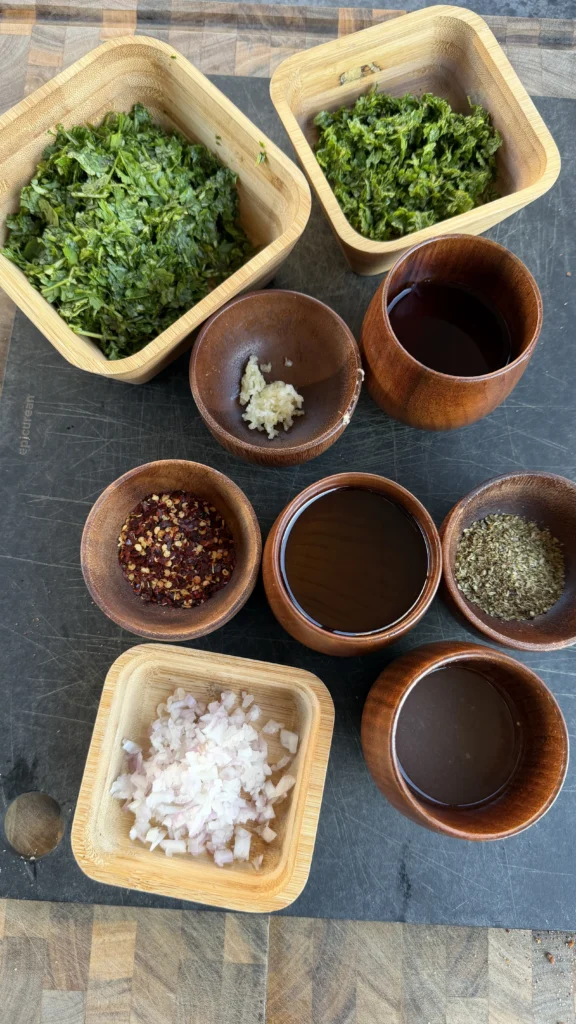
Finely chop 1/2 cup fresh parsley, 1/4 cup fresh mint, and 2 tablespoons fresh oregano. The herbs should be chopped very fine, almost minced, for best texture. Remove any tough stems before chopping. If using dried oregano, use only 1 tablespoon since dried herbs are more concentrated. Fresh oregano is strongly preferred for brightest flavor.
Mince 2 cloves of garlic very fine. Large garlic pieces taste too harsh in the sauce. Finely dice 2 tablespoons shallot or red onion. Shallot is slightly milder than red onion but both work well. The pieces should be tiny, about the size of a grain of rice. Add the chopped herbs, minced garlic, diced shallot, and 1/2 teaspoon red pepper flakes to a medium bowl.
Add 2 tablespoons fresh lemon juice and 1/2 cup extra virgin olive oil. Use good quality olive oil since it’s a prominent flavor. Stir everything together until well combined. Season with 3/4 teaspoon kosher salt and 1/2 teaspoon black pepper. Stir again. Taste and adjust seasoning if needed – it should taste bright, herby, and balanced.
Set the chimichurri aside for 15-30 minutes before using. This resting time is crucial for flavors to develop and mellow. The raw garlic and shallot will soften, the herbs will bloom, and everything will marry together. Chimichurri made right before using tastes harsh. After resting, it’s balanced and delicious. You can make it up to 2 hours ahead.
Step 2: Caramelize the Onions
Thinly slice 1 large yellow onion into strips about 1/8 inch thick. Try to keep the slices uniform so they cook evenly. Heat 1 tablespoon olive oil on a griddle, flat-top, or large skillet over medium heat. Let the oil heat for 1-2 minutes until shimmering but not smoking.
Add the sliced onions and a pinch of salt to the hot oil. Spread them out in an even layer. Let them cook for 2-3 minutes without stirring, then stir to redistribute. The onions will start releasing moisture and softening. Continue cooking, stirring every 2-3 minutes, for a total of 10-12 minutes.
The onions should gradually turn from white to translucent to golden brown. They’ll reduce in volume significantly as moisture evaporates. Toward the end, they should be soft, sweet, and caramelized with deep golden color. If they start sticking or getting too dark, add a splash of water and scrape the browned bits off the cooking surface.
Remove the caramelized onions from heat when they’re soft and deeply golden with no white or crunchy pieces remaining. They should smell sweet and slightly nutty. Set aside. They’ll stay warm enough, or you can reheat briefly before assembling sandwiches.
Step 3: Season the Strip Steaks
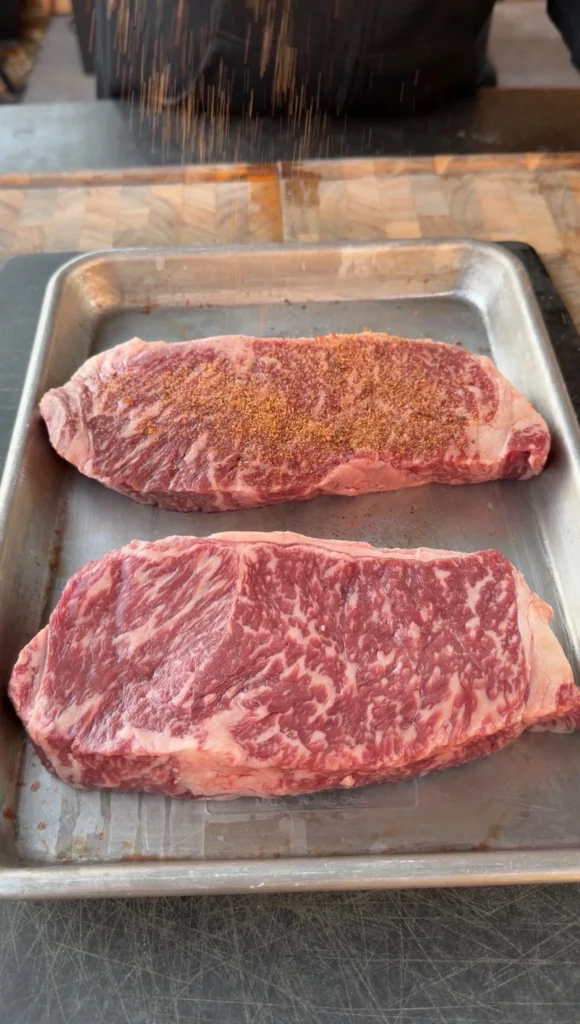
Remove the 2 New York strip steaks from refrigeration. Pat them completely dry with paper towels on both sides. Moisture prevents proper searing and creates steam instead of browning. The steaks should feel dry to the touch. Drizzle 1 tablespoon olive oil over both steaks, using your hands to coat them evenly on all surfaces.
Season both sides of each steak with the kosher salt and black pepper. Use 1½ teaspoons total kosher salt and 1 teaspoon total black pepper divided evenly between both steaks. Press the seasoning into the meat with your hands so it adheres. The steaks should have visible seasoning coating the surface.
Let the seasoned steaks sit at room temperature for at least 20 minutes before grilling. This brings the internal temperature closer to room temperature for more even cooking. Cold steaks straight from the fridge cook unevenly with cold centers when the exterior reaches proper sear. Use this time to finish making chimichurri and caramelizing onions.
Step 4: Grill the Strip Steaks
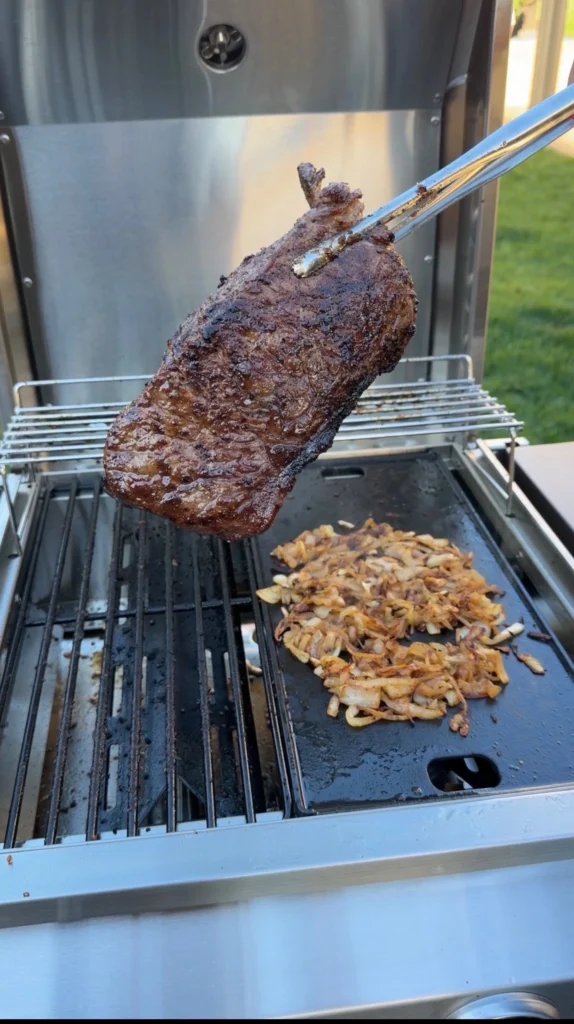
Preheat your grill to high heat, 450-500°F. For gas grills, turn all burners to high and preheat with the lid closed for 10-15 minutes. For charcoal, the coals should be covered in white ash with no black spots, glowing red underneath. Hold your hand 6 inches above the grate – you should only be able to keep it there for 2-3 seconds.
Place both steaks on the hottest part of the grill. They should sizzle loudly on contact. Close the lid and set a timer for 1-2 minutes. After 1-2 minutes, flip both steaks. Close the lid and cook another 1-2 minutes. Continue this pattern of flipping every 1-2 minutes throughout cooking.
After 4-5 flips (about 6-8 minutes total), start checking internal temperature with an instant-read thermometer. Insert it horizontally into the thickest part of the steak. You’re looking for 115-118°F initially. The temperature rises quickly in the final minutes, so check after each flip once you’re close.
When the thermometer reads exactly 120°F in the thickest part, immediately remove the steaks from the grill. Transfer to a cutting board or plate. Tent loosely with aluminum foil and let rest for 8-10 minutes. The internal temperature will rise to 130-135°F final during this rest through carryover cooking. Don’t skip resting or juices will run out when you slice.
Step 5: Toast Ciabatta and Melt Cheese
While the steaks rest, split 2-3 ciabatta rolls in half horizontally. Place them cut-side down on the grill over direct heat. Watch carefully – they toast quickly. Grill for 1-2 minutes until light char marks appear and the surface is golden and crispy. The interior should stay soft while the cut surface becomes crunchy.
Remove the toasted rolls from direct heat. Place 2 slices of provolone cheese on the bottom half of each roll while they’re still hot. If the grill has a cooler zone, move the cheese-topped rolls there and close the lid for 1-2 minutes to melt the cheese. Alternatively, if the steaks are still resting, place the rolls cheese-side up on the cooler part of the grill.
The cheese should be completely melted and slightly bubbly. The provolone adds creamy richness that complements the steak without overpowering the chimichurri. If the cheese isn’t melting on the grill, you can briefly warm the assembled sandwiches before serving.
Step 6: Slice Steak and Assemble Sandwiches
After the steaks have rested for 8-10 minutes, slice them thin against the grain. Look at the meat and identify which direction the muscle fibers run. Cut perpendicular to those lines. Aim for slices about 1/4 inch thick. Use a sharp knife and smooth, even strokes. You should get 6-8 thin slices per steak.
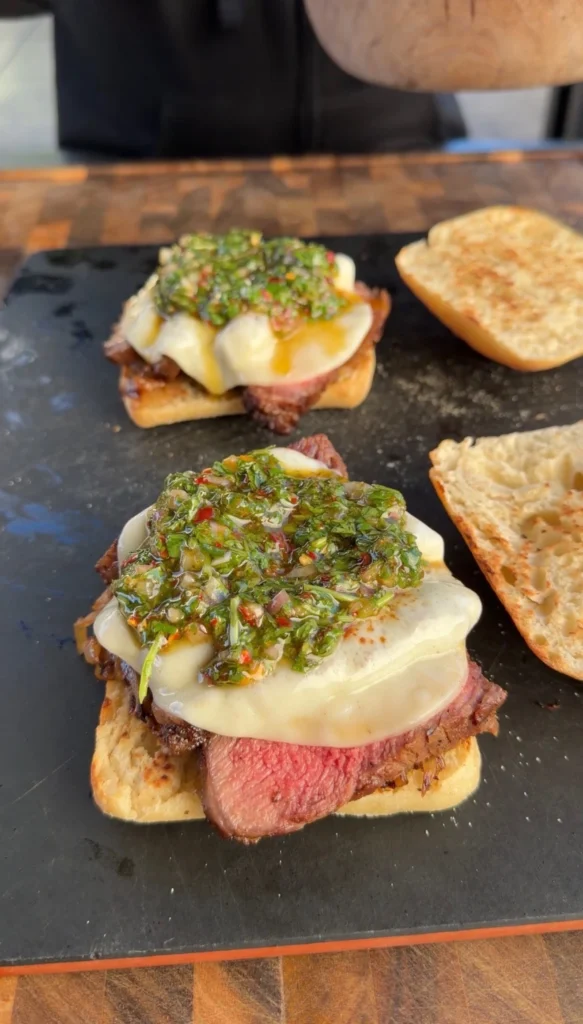
On the bottom half of each toasted ciabatta roll (the one with melted provolone), spread a generous portion of caramelized onions. The onions should cover the cheese in a thick layer. Layer the sliced strip steak on top of the onions. Divide the meat evenly between sandwiches, using 4-6 slices per sandwich depending on size.
Spoon mint chimichurri generously over the sliced steak. Use enough to coat the meat visibly but don’t drench it. The chimichurri should lightly coat each piece of steak without making the bread soggy. You want flavor on the meat itself, not pooling in the bread. Place the top half of the ciabatta roll on each sandwich.
Press down gently to compress slightly. The ingredients should be piled high but not so tall that the sandwich falls apart. If desired, slice each sandwich in half diagonally for easier handling. Serve immediately while the bread is crispy, the steak is warm, and the cheese is melted.
Grilled Strip Steak Sandwich with Mint Chimichurri
Ingredients
Method
- Make mint chimichurri by combining chopped parsley, mint, oregano, minced garlic, diced shallot, and red pepper flakes. Stir in lemon juice and olive oil. Season with salt and pepper. Set aside 15-30 minutes for flavors to bloom.
- Caramelize onions by heating olive oil over medium heat. Add sliced onions and pinch of salt. Cook 10-12 minutes, stirring occasionally, until soft and golden brown.
- Pat steaks dry, coat with olive oil, and season with salt and pepper. Let rest at room temperature 20 minutes.
- Preheat grill to high heat (450-500°F). Grill steaks, flipping every 1-2 minutes, until internal temperature reaches 120°F, about 8-12 minutes total. Remove and rest 8-10 minutes.
- Toast ciabatta rolls cut-side down on grill until golden with light char marks, 1-2 minutes. Top with provolone and move to indirect heat to melt cheese.
- Slice rested steaks thin against the grain. On bottom rolls, layer caramelized onions, sliced steak, and spoon mint chimichurri over steak. Top with other half of roll. Serve immediately.
Notes
Tried this recipe?
Let us know how it was!Frequently Asked Questions
Can I make chimichurri ahead of time?
Yes, make mint chimichurri up to 24 hours ahead and refrigerate in an airtight container. The flavors actually improve after sitting overnight as the herbs and garlic continue infusing the oil. Bring to room temperature before serving by setting it out 30 minutes ahead. Cold chimichurri doesn’t coat the meat as well and mutes the flavors.
Don’t make it more than 1 day ahead since fresh herbs lose their bright color and begin wilting after 24 hours. The chimichurri will still taste good but won’t look as vibrant. For best visual appeal and flavor, make it 2-4 hours ahead rather than immediately before or days ahead.
What if I don’t like mint?
Make traditional chimichurri by omitting the mint and increasing parsley to 3/4 cup total. Traditional Argentine chimichurri uses only parsley, oregano, garlic, and vinegar or lemon juice. It’s more intensely herbaceous and garlicky without the fresh, cooling notes from mint. Both versions work excellently on steak sandwiches.
Alternatively, substitute fresh cilantro for the mint to create a different flavor profile. Cilantro adds bright, citrusy notes that complement the lemon juice. Use the same quantity (1/4 cup) in place of mint. This creates more Latin American-style chimichurri.
Can I use a different cut of steak?
Ribeye, sirloin, or flat iron steak all work well for sandwiches. Ribeye has more marbling and stays juicy even if slightly overcooked. Sirloin is leaner and more budget-friendly with good flavor. Flat iron is very tender with moderate marbling. Use the same grilling technique and temperature targets for any of these cuts.
Avoid very lean cuts like eye of round or very tender cuts like filet mignon. Lean cuts become dry when sliced thin for sandwiches. Filet is expensive for sandwiches and its buttery tenderness doesn’t matter as much when sliced and layered with strong flavors. Strip steak provides the ideal balance of tenderness, beefy flavor, and reasonable price.
How do I keep sandwiches from getting soggy?
Toast the ciabatta well so it creates a moisture barrier. The crispy grilled surface prevents immediate absorption. Spoon chimichurri directly onto the steak, not the bread. The meat absorbs most of the sauce. Use enough caramelized onions to create flavor without excess liquid – they should be jammy, not swimming in oil.
Assemble sandwiches immediately before serving rather than letting them sit. Even with proper technique, sandwiches with juicy steak and sauce will soften over 15-20 minutes. For best texture, serve within 5 minutes of assembly while the bread is still crispy and the steak is warm.
What sides go well with strip steak sandwiches?
Classic sides include French fries (regular or sweet potato), potato chips, coleslaw, or simple green salad. Grilled vegetables like zucchini, asparagus, or peppers complement the steak without competing. Potato salad or pasta salad work for casual meals or cookouts. Pickles add acidity that cuts through richness.
The sandwich itself is quite substantial, so sides can be light. A handful of chips or small side salad provides enough accompaniment. If serving for dinner, roasted potatoes or grilled corn round out the meal. Beer or iced tea pairs excellently with the bold flavors.
Ready to Take Your Cooking to the Next Level?
This is where I keep all my most-used products, gear, and favorite cooking tools — check it out:
🔥 View My Cooking Gear & ToolsRecipe Categories
If you loved this recipe, you’ll find more to savor across our diverse categories. From beef to pork, chicken to turkey, seafood to appetizers, there’s a wealth of flavors waiting for you. Explore them all at CWFeats.