
Jerk Chicken
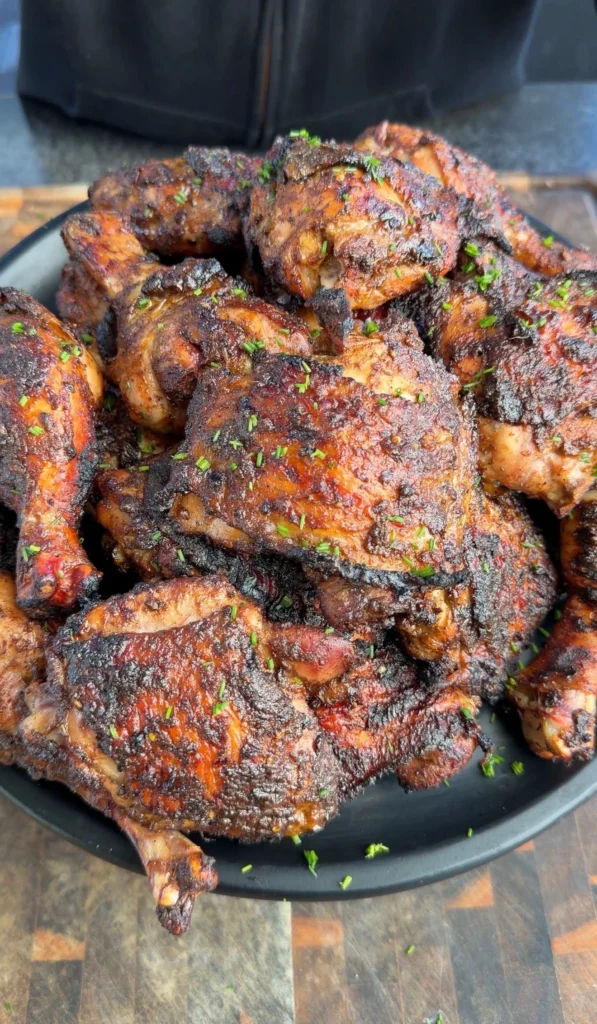
Grilled Jamaican jerk chicken is made by marinating 4 pounds of chicken thighs and 4 pounds of chicken drumsticks (8 pounds total) in a blended marinade of 8 chopped green onions, 8 garlic cloves, 3 tablespoons fresh ginger, 3 habanero peppers, 3 tablespoons fresh thyme, ¼ cup brown sugar, ¼ cup soy sauce, 2 tablespoons lime juice, 2 tablespoons vegetable oil, 1 tablespoon ground allspice, 2 teaspoons black pepper, 2 teaspoons salt, 2 teaspoons smoked paprika, 1 teaspoon cinnamon, 1 teaspoon nutmeg, and 1 tablespoon white vinegar for at least 4 hours or overnight. You grill the marinated chicken over direct heat at 350°F, flipping frequently to develop char all around, basting with extra marinade near the end of cooking, until the internal temperature reaches 185°F in the thickest parts, then rest for 5 minutes before serving.
The entire process takes 5 to 25 hours from start to finish depending on marinade time. This includes 15 minutes for making the marinade by blending all ingredients smooth. Marinating requires minimum 4 hours but overnight (12 to 24 hours) produces significantly better flavor penetration. Grilling takes approximately 45 to 55 minutes for mixed thighs and drumsticks at 350°F. Resting adds 5 minutes. You can make the marinade 2 to 3 days ahead and refrigerate, then marinate the chicken the night before grilling day.
This jerk chicken recipe serves 8 to 12 people depending on appetite and sides. Eight pounds of chicken (4 pounds thighs plus 4 pounds drumsticks) yields approximately 6 pounds cooked after shrinkage from fat rendering and moisture loss. Each person eating 8 to 10 ounces of cooked chicken serves 10 to 12 people. For heartier appetites with 12 to 16 ounces per person, this serves 6 to 8 people. The chicken is rich and well-seasoned, so smaller portions with substantial sides like rice and peas are satisfying.
Jump to RecipeWhy 185°F Creates Better Texture for Jerk Chicken Than 165°F
Collagen Breakdown in Dark Meat
Chicken thighs and drumsticks contain significantly more collagen than chicken breasts. This collagen surrounds muscle fibers and connective tissue. Raw collagen is tough and chewy. Cooking converts collagen to gelatin through hydrolysis. This conversion requires both heat and time.
At 165°F, the USDA minimum safe temperature, collagen has begun converting but the process is incomplete. The chicken is safe to eat but the texture is somewhat tough. The meat pulls away from the bone with effort. The connective tissue has bite and resistance.
At 175°F, collagen conversion is progressing but not finished. The texture is improved over 165°F but still has some toughness. The meat is starting to become tender but hasn’t reached optimal texture.
At 185°F, collagen has fully converted to gelatin throughout the meat. The texture transforms from tough to tender. The meat pulls away from the bone easily. Each bite is soft and succulent. This is the ideal temperature for dark meat chicken.
Fat Rendering and Mouthfeel
Chicken thighs and drumsticks have substantial fat deposits between muscles and under the skin. This fat needs to render for optimal flavor and texture. Rendered fat is liquid and luxurious. Unrendered fat is solid and waxy in the mouth.
At 165°F, much of the fat remains unrendered. You encounter pockets of solid fat when eating. The chicken tastes greasy rather than rich. The mouthfeel is unpleasant with slippery, waxy texture.
At 185°F, the fat renders completely. It melts into liquid that either drips away during cooking or integrates into the meat. The remaining fat coats your palate pleasantly. The chicken tastes rich without being greasy.
The rendered fat also bastes the meat from inside during cooking. As fat melts, it migrates through the meat. This internal basting keeps the chicken moist even at the higher temperature. This is why dark meat stays juicy at 185°F while breast meat would be dry.
Texture Appropriate for Jerk Style
Authentic Jamaican jerk chicken is traditionally cooked over pimento wood fires. The chicken cooks relatively hot and fast compared to American low-and-slow barbecue. The result is chicken that’s tender enough to pull apart easily but still has structural integrity.
Cooking to 185°F achieves this texture. The meat is tender but not falling apart into mush. You can pick up a drumstick and bite into it cleanly. The meat releases from the bone but doesn’t dissolve. This is the traditional jerk chicken texture.
If you only cooked to 165°F, the chicken would have tight, firm texture. You’d need to tear the meat with your teeth. This isn’t traditional jerk chicken. It’s more like roasted or baked chicken with jerk seasoning.
Handling Sugar in the Marinade
The jerk marinade contains ¼ cup brown sugar. Sugar caramelizes and can burn at high heat. When cooking chicken to 185°F internal temperature, the exterior spends significant time over direct heat.
The higher internal temperature target means you’re cooking longer. This extended cooking time allows the marinade to reduce and caramelize without burning. The sugar develops deep brown color and complex flavor through the Maillard reaction.
If you rushed to just 165°F, you’d pull the chicken while the exterior was still pale. The marinade wouldn’t have time to caramelize properly. The flavor would be less developed. The visual appeal would be lacking.
Why Direct Heat Grilling Works Better Than Smoking for Jerk Chicken
Temperature and Cooking Speed
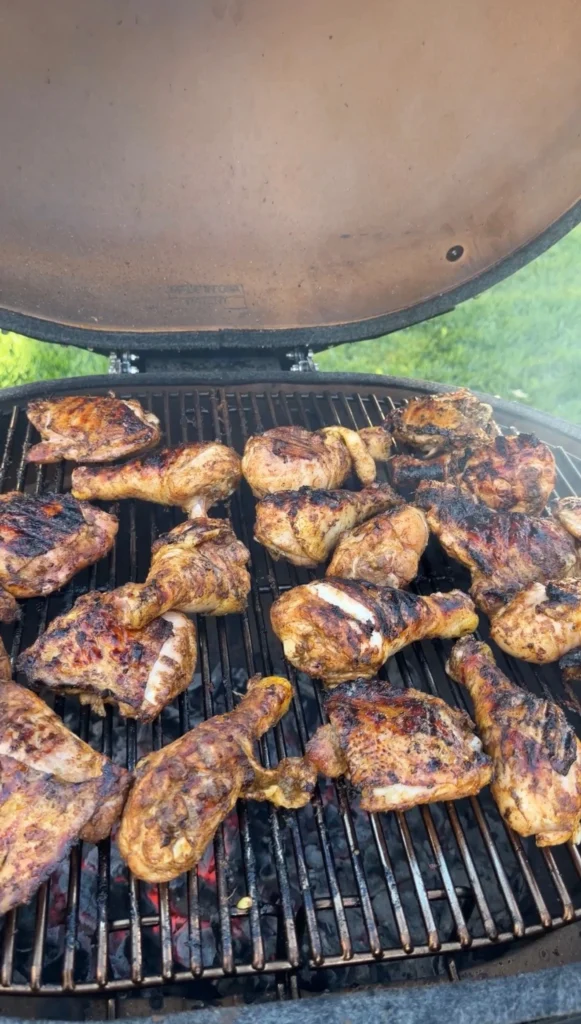
Direct heat grilling at 350°F cooks chicken relatively quickly. The high heat creates rapid surface browning. Eight pounds of mixed thighs and drumsticks finish in 45 to 55 minutes. This speed prevents the chicken from drying out.
Smoking at 225 to 250°F would take 2 to 3 hours for the same chicken. The extended cook time increases moisture loss. Even dark meat can dry out during very long smoking. The texture becomes stringy rather than juicy.
Traditional Jamaican jerk cooking uses direct heat from pimento wood coals. The cooking method is more similar to grilling than American-style smoking. The authentic technique prioritizes caramelization and char over extended smoke exposure.
Caramelization and Char Development
Direct heat at 350°F creates excellent Maillard reaction on the chicken surface. The marinade, which contains brown sugar, soy sauce, and other proteins and sugars, caramelizes quickly. You get deep brown to black char marks that provide intense flavor.
This char is essential to jerk chicken’s character. The slightly burnt edges create bittersweet flavor that balances the marinade’s sweetness and heat. The contrast between charred exterior and tender interior defines the dish.
Smoking at lower temperatures doesn’t create the same char. The chicken develops smoke ring and bark but not the aggressive char marks. The exterior stays lighter in color. The flavor profile shifts toward smoky rather than charred.
Marinade Interaction With Heat
The jerk marinade is thick and paste-like after blending. When exposed to direct 350°F heat, the marinade adheres to the chicken and cooks onto the surface. It forms a crust that seals in moisture while developing complex flavors.
The frequent flipping allows this crust to develop evenly all around the chicken. Each surface spends time directly over the flame. The marinade layer cooks, caramelizes, and chars in stages.
With indirect heat smoking, the marinade doesn’t set the same way. It can drip off rather than adhering. The chicken may end up with less visible marinade coating. The flavor stays in the meat from absorption but the surface lacks the characteristic crust.
Fat Rendering From Direct Flame
When chicken fat drips onto hot coals or grill grates at 350°F, it vaporizes immediately. This creates aromatic smoke that rises back up and flavors the chicken. The smoke from vaporized chicken fat has distinct savory character.
Additionally, the direct flame periodically flares when fat drips. These brief flare-ups add char and flavor. You control flare-ups by moving chicken temporarily, but occasional brief contact with flame is desirable for authentic jerk flavor.
Smoking doesn’t create these dynamics. Fat drips into a drip pan. There’s no vaporization or flare-ups. You get clean smoke from wood but not the complex smoke from rendered fat hitting hot surfaces.
What Makes Authentic Jerk Marinade Different From Store-Bought
Fresh Aromatics vs Dried Seasonings
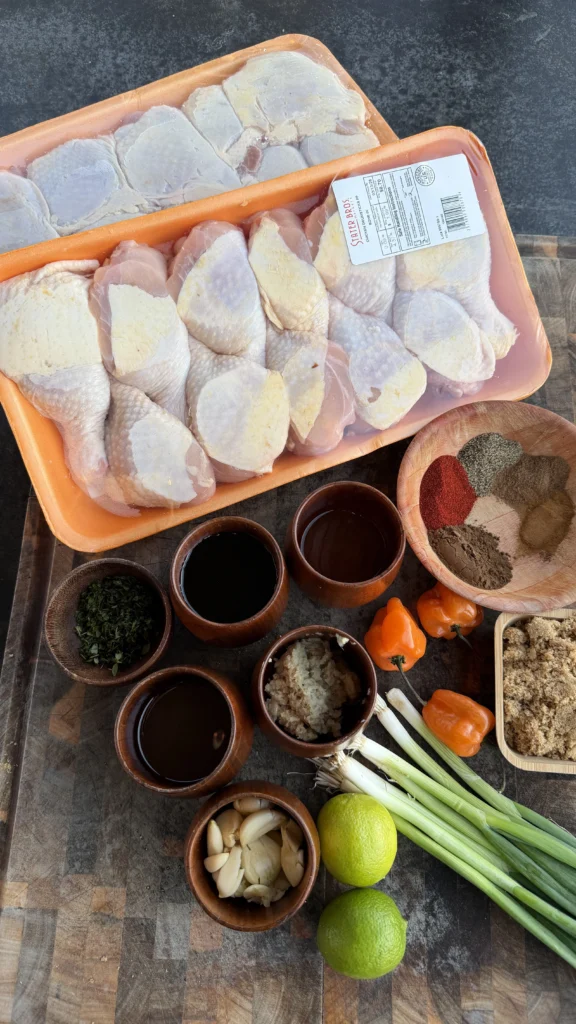
Authentic jerk marinade uses fresh green onions, fresh garlic, fresh ginger, and fresh habanero peppers. These fresh ingredients provide vibrant, pungent flavors that dried versions can’t match. Fresh aromatics have volatile compounds that dissipate when dried.
Fresh ginger has sharp, spicy heat with citrus notes. Dried ground ginger is mellow and almost sweet. The difference is dramatic. Three tablespoons of fresh ginger creates authentic jerk heat and aroma.
Fresh green onions (scallions) provide sharp onion flavor with slight sweetness. They’re traditional in jerk marinades. Dried onion powder or granulated onion tastes completely different. The fresh green tops add herbaceous notes.
Fresh habaneros or Scotch bonnets are non-negotiable. These peppers have fruity, floral heat that dried chile powders don’t provide. The specific habanero flavor profile defines jerk seasoning. Substituting cayenne or generic chile powder produces different results.
Blended vs Powdered Consistency
Authentic jerk marinade is blended into a thick paste or sauce. All ingredients go into a blender or food processor. The result is smooth, unified mixture where flavors integrate completely.
This paste consistency clings to chicken much better than dry rub. The marinade penetrates into the meat during marinating. It also stays on the surface during grilling, creating the characteristic crust.
Store-bought jerk seasoning is typically dry powder. You can mix it with oil to create paste, but it’s not the same. The dried spices don’t integrate the way fresh blended ingredients do. The flavor stays more separated and one-dimensional.
The blending process also creates emulsion between the oil, soy sauce, and lime juice. This emulsified liquid carries both water-soluble and fat-soluble flavor compounds into the chicken. Dry rubs can’t achieve this penetration.
Sugar and Acid Balance
Authentic jerk marinade balances brown sugar’s sweetness with lime juice and white vinegar’s acidity. This balance is critical. The sugar caramelizes during cooking. The acid tenderizes the chicken and provides brightness.
The ratio of ¼ cup brown sugar to 2 tablespoons lime juice plus 1 tablespoon vinegar creates sweet-tart balance. Neither element dominates. The sweetness rounds out the heat from habaneros. The acid cuts through the richness.
Many store-bought jerk seasonings are just spices without sugar or acid. They’re designed to be mixed with other ingredients. The flavor profile is incomplete. You get heat and spices but not the full complexity.
Allspice as Foundational Spice
Ground allspice (pimento) is the most important spice in jerk marinade. It’s not optional. Allspice has complex flavor combining cinnamon, nutmeg, and clove characteristics. This is the spice that identifies jerk seasoning.
Traditional jerk cooking in Jamaica uses pimento wood for smoke. The wood comes from the allspice tree. When you can’t smoke over pimento wood, using generous ground allspice in the marinade captures some of that traditional flavor.
One tablespoon of ground allspice for 8 pounds of chicken seems like a lot. But it’s necessary to create authentic taste. Combined with actual cinnamon and nutmeg, the warm spice profile becomes pronounced. This is correct for jerk.
Store-bought jerk seasonings often skimp on allspice or use it in minimal amounts. They compensate with more generic chile powder or paprika. The result tastes vaguely Caribbean but not authentically Jamaican.
Jamaican Jerk Chicken
Fresh marinade, direct heat 350°F, flipped often to 185°F
Ingredients
Chicken
- 4 lbs chicken thighs
- 4 lbs chicken drumsticks
Jerk Marinade
- 8 green onions (chopped)
- 8 cloves garlic
- 3 tablespoons fresh ginger
- 3 habanero peppers (or Scotch bonnet peppers)
- 3 tablespoons fresh thyme (or 1 tablespoon dried)
- ¼ cup brown sugar
- ¼ cup soy sauce
- 2 tablespoons lime juice
- 2 tablespoons vegetable oil
- 1 tablespoon ground allspice
- 2 teaspoons black pepper
- 2 teaspoons salt
- 2 teaspoons smoked paprika
- 1 teaspoon cinnamon
- 1 teaspoon nutmeg
- 1 tablespoon white vinegar
Cook to 185°F, not just 165°F. Dark meat needs higher temp for collagen conversion and fat rendering. Fresh habaneros are essential for authentic flavor. Dried chile powder doesn’t create the same fruity heat. Flip frequently over direct heat to char evenly without burning the marinade’s sugar.
Step-by-Step Instructions
Step 1: Make the Jerk Marinade
Add all marinade ingredients to a blender or food processor. This includes 8 chopped green onions, 8 garlic cloves, 3 tablespoons fresh ginger, 3 habanero peppers, 3 tablespoons fresh thyme, ¼ cup brown sugar, ¼ cup soy sauce, 2 tablespoons lime juice, 2 tablespoons vegetable oil, 1 tablespoon ground allspice, 2 teaspoons black pepper, 2 teaspoons salt, 2 teaspoons smoked paprika, 1 teaspoon cinnamon, 1 teaspoon nutmeg, and 1 tablespoon white vinegar.
Blend on high speed until completely smooth. The marinade should be thick and paste-like with no visible chunks. This takes about 1 to 2 minutes of blending.
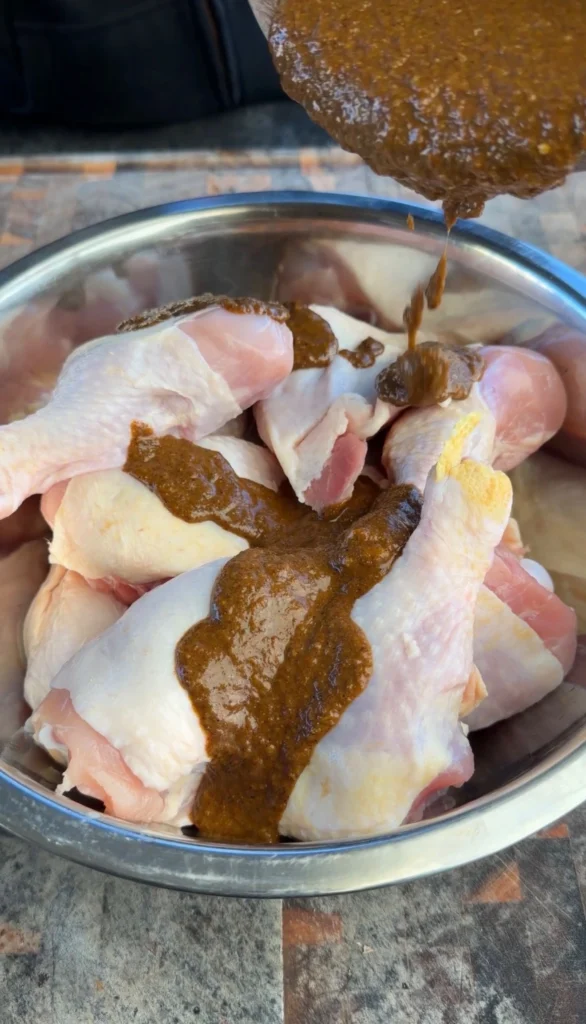
The color should be deep green-brown from the combination of fresh herbs, spices, and soy sauce. The consistency should be thick enough to cling to chicken but fluid enough to coat evenly.
Taste the marinade if desired (it’s safe to taste before adding to raw chicken). It should be intensely spicy, sweet, salty, and aromatic. The flavor is strong because it will distribute across 8 pounds of chicken.
Reserve approximately ½ cup of marinade in a separate container for basting during grilling. Refrigerate this reserved portion. The rest goes on the raw chicken.
Step 2: Marinate the Chicken
Remove 4 pounds of chicken thighs and 4 pounds of drumsticks from packaging. Pat completely dry with paper towels. Surface moisture dilutes the marinade and prevents proper adhesion.
Place all chicken in a very large bowl, large roasting pan, or multiple large zip-top bags. You need enough space for 8 pounds of chicken plus marinade.
Pour the marinade (except the ½ cup reserved for basting) over the chicken. Using your hands (wear gloves if handling habaneros bothers you), massage the marinade into every piece of chicken. Coat all surfaces thoroughly.
Make sure to get marinade under the skin where possible. Gently separate the skin from the meat and rub marinade directly on the meat. This creates maximum flavor penetration.
Cover the bowl with plastic wrap or seal the bags. Refrigerate for minimum 4 hours. Overnight (12 to 24 hours) is significantly better. The longer marinating allows flavors to penetrate deeply.
Turn or massage the chicken once or twice during marinating if possible. This redistributes the marinade for even coverage.
Step 3: Prepare the Grill
Remove chicken from refrigerator 30 minutes before grilling. Letting it come closer to room temperature promotes more even cooking. Don’t leave it at room temperature longer than 30 to 45 minutes for food safety.
Preheat your grill to 350°F using direct heat. For gas grills, set burners to medium or medium-high to achieve this temperature. For charcoal, use a full chimney of coals spread in an even layer.
Clean the grill grates thoroughly with a wire brush. Oil the grates lightly using a paper towel dipped in neutral oil held with tongs. This prevents sticking.
Have your reserved marinade ready for basting. You’ll use this near the end of cooking. Also have a clean plate ready for cooked chicken.
Step 4: Grill the Chicken
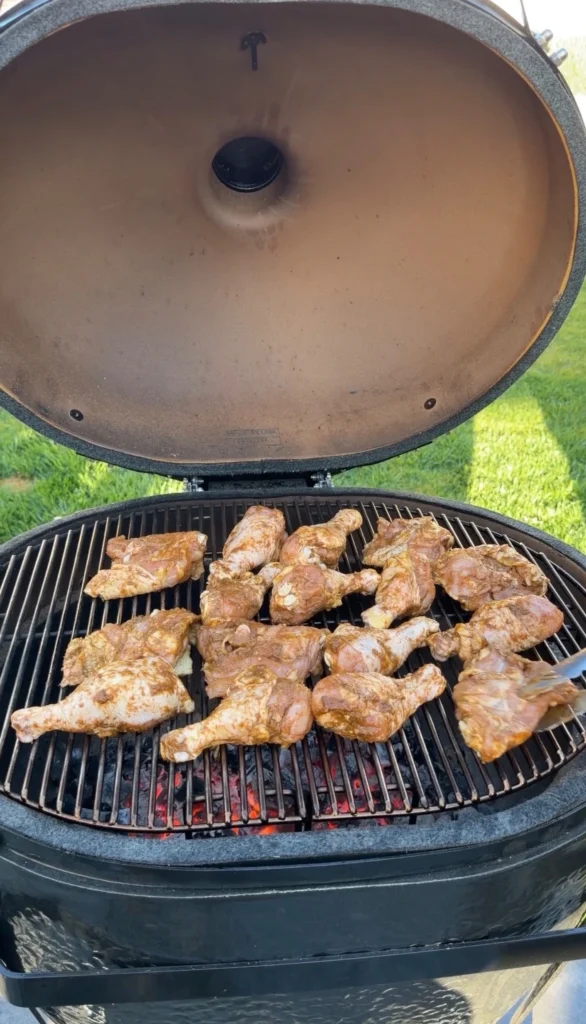
Place all chicken pieces on the preheated grill over direct heat. Arrange them so they’re not overcrowded. Leave some space between pieces for heat circulation and for flipping.
Close the grill lid. Let the chicken cook for 5 to 7 minutes undisturbed on the first side. You want the marinade to set and start caramelizing.
After 5 to 7 minutes, open the lid and flip all pieces. Use tongs to turn each piece of chicken. You’ll notice char marks developing. This is correct.
Continue flipping every 5 to 7 minutes. Each time you flip, check for even charring. If some pieces are charring faster than others, move them to cooler zones or flip them more frequently.
The chicken will develop increasingly dark, caramelized exterior. Some black char marks are desirable. This is authentic jerk appearance. Just prevent entire surfaces from becoming black.
Step 5: Monitor Temperature and Baste
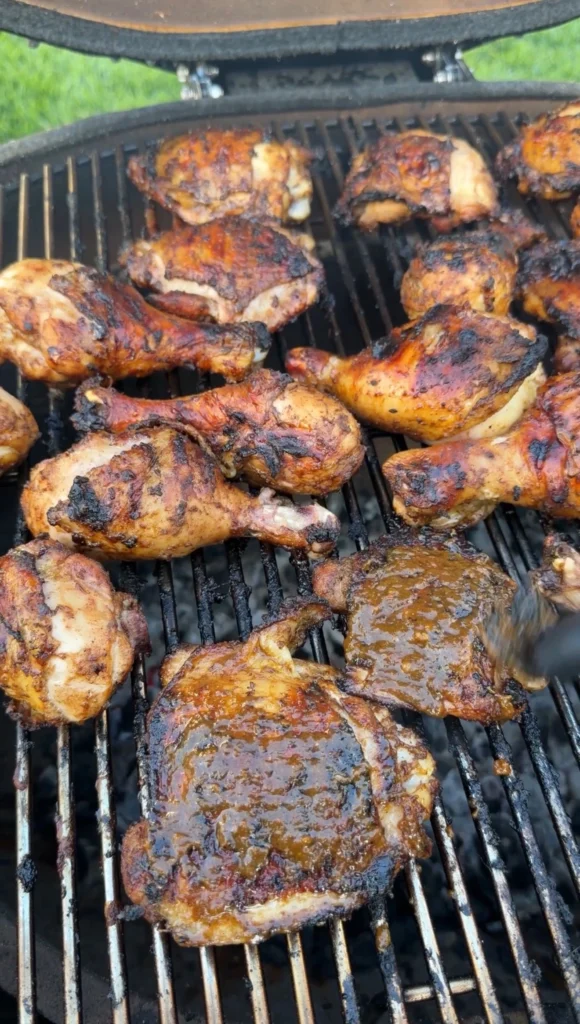
After about 30 minutes of cooking, start checking internal temperature. Insert an instant-read thermometer into the thickest part of a thigh and a drumstick, avoiding bone.
When the chicken reaches 170 to 175°F, start basting with the reserved marinade. Use a silicone brush to apply marinade to all surfaces. The marinade will caramelize quickly on the hot chicken.
Continue flipping and basting every 5 to 7 minutes. The chicken should be approaching 180 to 185°F at this point. Monitor temperature closely.
When the chicken reaches 185°F internal temperature in the thickest parts, remove from the grill immediately. Check multiple pieces since they may not all finish simultaneously.
The chicken should be deeply charred in spots with caramelized, almost black crust in places. The skin should be crispy. The meat should release from the bone easily when tested with tongs.
Step 6: Rest and Serve
Transfer grilled chicken to a clean platter. Let rest for 5 minutes before serving. This brief rest allows juices to redistribute. The chicken is already well-done at 185°F, so extended resting isn’t necessary.
After resting, the chicken is ready to serve. The internal temperature will have dropped slightly to 180 to 183°F during rest, which is perfect.
Serve immediately with traditional Jamaican sides like rice and peas, fried plantains, and fresh lime wedges. The lime juice squeezed over hot jerk chicken adds brightness that balances the rich, spicy flavors.
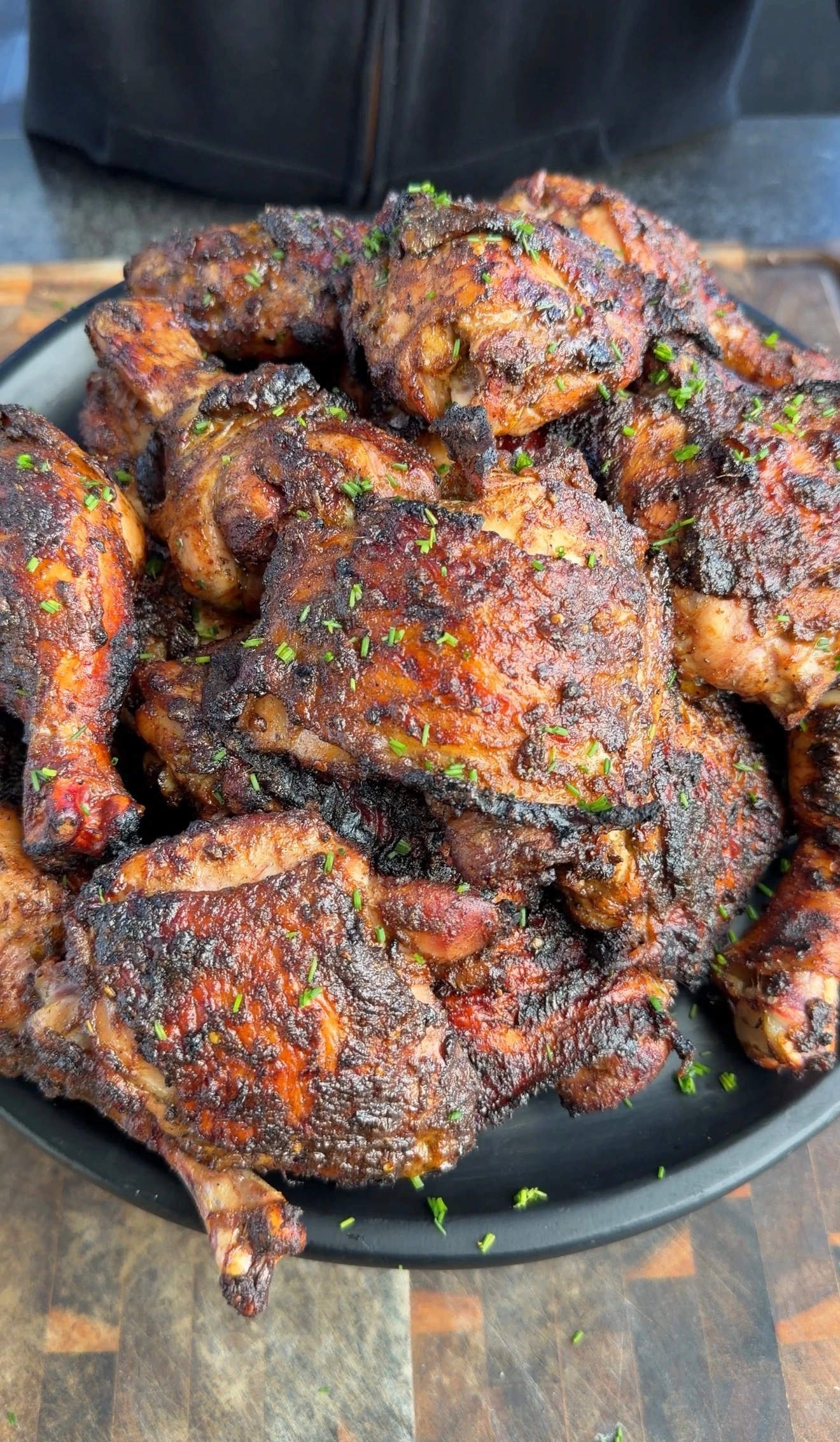
Grilled Jamaican Jerk Chicken
Ingredients
Equipment
Method
- Add all marinade ingredients to blender. Blend on high 1 to 2 minutes until completely smooth. Reserve ½ cup marinade for basting. Refrigerate reserved portion.
- Pat 4 lbs chicken thighs and 4 lbs drumsticks dry. Place in large bowl or bags. Pour remaining marinade over chicken. Massage to coat all surfaces thoroughly, including under skin where possible.
- Cover and refrigerate minimum 4 hours, preferably overnight (12 to 24 hours). Turn once or twice during marinating.
- Remove chicken from refrigerator 30 minutes before grilling. Preheat grill to 350°F direct heat. Clean and oil grates.
- Place chicken on grill over direct heat. Close lid. Cook 5 to 7 minutes, then flip. Continue flipping every 5 to 7 minutes to develop even char without burning.
- After 30 minutes, check internal temperature. When chicken reaches 170 to 175°F, start basting with reserved marinade. Continue flipping and basting every 5 to 7 minutes.
- Remove when internal temperature reaches 185°F in thickest parts. Chicken should be deeply charred with crispy skin.
- Rest 5 minutes. Serve with rice and peas, fried plantains, and lime wedges.
Nutrition
Notes
Tried this recipe?
Let us know how it was!Frequently Asked Questions
Can You Use Chicken Breasts Instead of Thighs and Drumsticks?
Chicken breasts work but create different results. Breasts are leaner with less fat and collagen. They don’t benefit from cooking to 185°F the way dark meat does. For breasts, pull at 160 to 165°F to avoid drying.
The marinade’s heat and spices can overpower breast meat’s mild flavor. Dark meat’s richer flavor balances the aggressive jerk seasoning better. The result tastes more harmonious.
If using breasts, reduce cooking time significantly. Breasts finish in 25 to 35 minutes at 350°F versus 45 to 55 minutes for thighs and drumsticks. Monitor temperature carefully.
For authentic jerk chicken, dark meat is traditional. Jamaican jerk stands and restaurants use thighs and drumsticks almost exclusively. If you prefer white meat, use it, but understand you’re departing from traditional preparation.
How Spicy Is This Jerk Chicken?
With 3 habaneros for 8 pounds of chicken, this jerk is medium-hot. The heat is noticeable and builds as you eat but it’s not overwhelming for most people. The sweetness from brown sugar and richness from chicken fat moderate the heat.
For milder jerk, use 1 to 2 habaneros. Remove the seeds and membranes from the habaneros before blending. The seeds contain most of the capsaicin. Seeded habaneros provide flavor with less heat.
For extra-hot jerk, use 4 to 5 habaneros. Keep all seeds and membranes. You can also add a teaspoon of cayenne pepper to the marinade for additional heat.
The heat dissipates slightly during cooking. Some capsaicin burns off at high temperatures. Fresh jerk immediately after grilling is hottest. Leftover jerk reheated the next day is slightly milder.
Can You Make Jerk Chicken in the Oven?
Oven-baked jerk chicken works when grilling isn’t possible. Preheat oven to 425°F. Place marinated chicken on a wire rack over a baking sheet. Bake for 40 to 50 minutes until 185°F.
For better char, broil for the last 3 to 5 minutes. Watch carefully to prevent burning. The broiler creates some caramelization similar to grilling.
The flavor will be good from the marinade but lack the smoky char that defines grilled jerk. You get seasoned roasted chicken rather than authentic jerk. It’s acceptable but not ideal.
For closer approximation, use an oven with convection setting. The circulating air creates some surface drying similar to grilling. The chicken won’t have grill marks but the texture improves.
What Are Traditional Jamaican Sides for Jerk Chicken?
Rice and peas (also called rice and beans) is the most traditional side. This is rice cooked with kidney beans or pigeon peas in coconut milk with thyme and scallions. The creamy, mild rice balances spicy jerk perfectly.
Fried plantains (sweet plantains cut on the bias and fried) provide sweet contrast to spicy chicken. The caramelized plantains’ sweetness complements jerk’s heat.
Festival (sweet fried dumplings) are traditional street food accompaniment. The slightly sweet, fried dough provides textural contrast and soaks up jerk sauce.
Simple green salad or coleslaw with lime-based dressing offers fresh, acidic contrast to rich chicken. Steamed cabbage is also common.
Hard dough bread is traditional for soaking up jerk juices and sauce. Any crusty bread works similarly.
How Do You Store and Reheat Leftover Jerk Chicken?
Store leftover jerk chicken in an airtight container in the refrigerator for up to 4 days. The chicken actually develops more complex flavor overnight as the marinade continues penetrating.
To reheat, use a 350°F oven for 15 to 20 minutes until heated through. Cover with foil to prevent drying. The oven method maintains the crispy skin better than microwave.
Microwave reheating works but affects texture. Use 50% power and heat in 30-second intervals. The skin won’t stay crispy in the microwave. Add a damp paper towel to create steam and prevent excessive drying.
Don’t freeze jerk chicken if possible. The aggressive marinade can develop off-flavors during freezing and thawing. If you must freeze, use within 2 months. Thaw in refrigerator overnight before reheating.
Leftover jerk chicken works excellently in other dishes. Shred it for jerk chicken tacos, quesadillas, or rice bowls. The strong flavors hold up well to repurposing.
Ready to Level Up?
Take your backyard cooking from good to legendary.
This is where I keep all my most-used smokers, knives, and favorite cooking tools.
Shop My Gear CollectionExplore More Recipes
Find more diverse flavors at CWFeats.com