Rotisserie Beef Plate Ribs with Coffee Rub
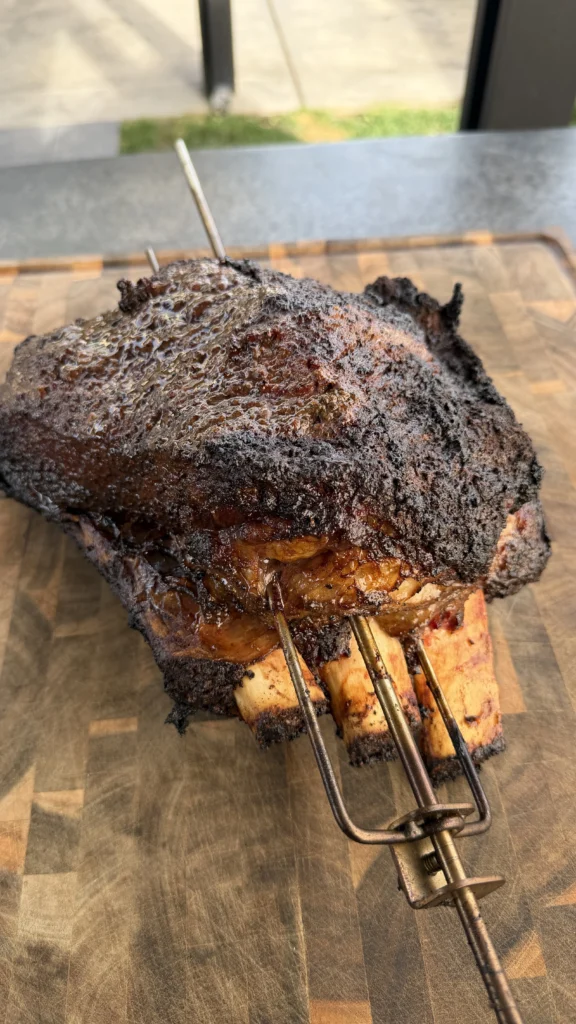
Rotisserie beef ribs use one whole rack of beef plate ribs (3-4 bones, also called dino ribs) trimmed of loose fat and silver skin while leaving the fat cap intact, seasoned generously with coffee rub made from 2 tablespoons finely ground coffee, 2 tablespoons coarse black pepper, 1.5 tablespoons kosher salt, 1 tablespoon brown sugar, and 1 teaspoon each of paprika and garlic powder. Rest at room temperature for 30-45 minutes, then secure on a rotisserie spit over a charcoal grill stabilized at 350°F with optional wood chunk (oak, hickory, or mesquite) for smoke. Spin over indirect heat until internal temperature reaches 195°F in the thickest part, approximately 1.5-2 hours. Rest for 20 minutes tented with foil, then slice between bones and serve. These beef plate ribs with coffee rub deliver deeply browned bark, buttery rendered fat, and tender meat through hot-and-fast rotisserie cooking that eliminates the need for wrapping while creating crispy exterior and rich beefy flavor enhanced by coffee’s earthy depth.
The whole process takes about 3 hours from start to finish. Spend 15 minutes trimming and seasoning, then 30-45 minutes letting the ribs come to room temperature. Cook for 1.5-2 hours depending on rack size and fire control. Rest for 20 minutes while the juices redistribute. The hot-and-fast method at 350°F keeps the fat buttery rather than completely rendered, while the constant rotation ensures even cooking and self-basting. The coffee rub creates complex flavor with earthy, slightly bitter notes that complement the rich beef without overpowering it.
What Are Beef Plate Ribs?
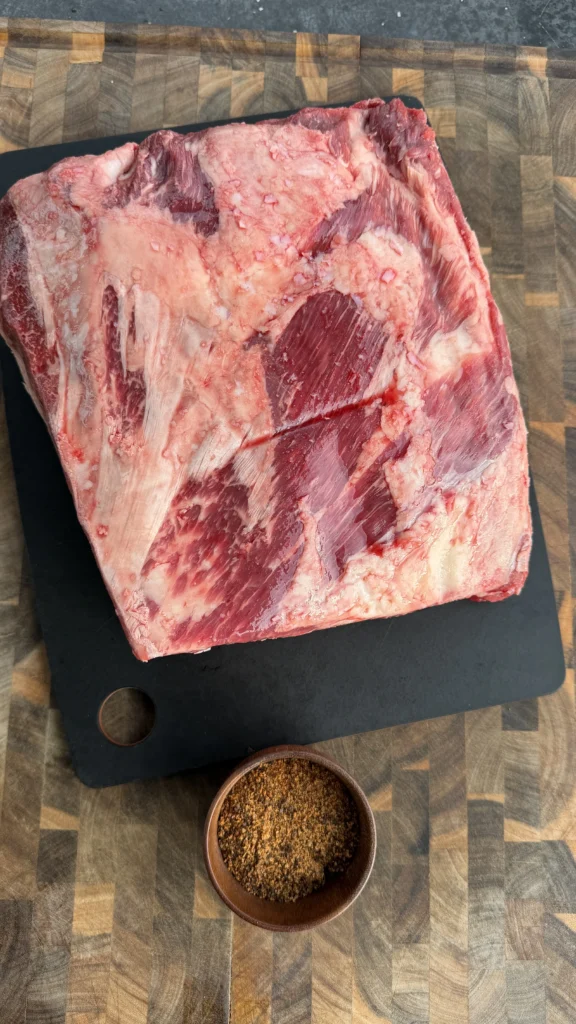
Beef plate ribs come from the short plate section of the cow, located below the ribeye primal and above the flank. This cut consists of ribs 6-9 and contains some of the most heavily marbled, flavorful beef on the entire animal. Each bone is massive, typically 8-12 inches long with thick meat between the bones. A full rack of 3-4 bones can weigh 6-10 lbs before trimming.
The nickname “dino ribs” or “dinosaur ribs” comes from their enormous size and dramatic presentation. When cooked properly, the meat pulls away from the bone creating that iconic prehistoric appearance. The meat itself is deeply marbled throughout with intramuscular fat that renders during cooking, creating incredibly rich, beefy flavor. This marbling is what makes beef plate ribs perfect for smoking and rotisserie cooking.
Beef plate ribs differ from back ribs (which come from the ribeye section) in size, meat content, and fat distribution. Back ribs have less meat between the bones since much of it is sold as ribeye steaks. Plate ribs have thick, meaty sections between bones with heavy marbling throughout. They’re also different from short ribs which are cut shorter (3-4 inches of bone) and typically sold individually or in smaller portions.
You’ll typically find beef plate ribs at specialty butchers or by special order from regular butchers. They’re less common than pork ribs in grocery stores. When buying, look for racks with good marbling, thick meat between bones, and a substantial fat cap on top. The bones should be intact without cracks. Expect to pay premium prices since these are highly prized cuts.
Why Use Coffee Rub on Beef Ribs?
Coffee rub adds earthy, slightly bitter depth that enhances beef’s natural richness without overpowering it. The finely ground coffee provides complex flavor notes similar to cocoa or dark chocolate, creating savory depth rather than coffee flavor. When exposed to heat, coffee grounds brown and develop roasted, nutty characteristics that complement the caramelization happening on the beef surface.
The coarse black pepper in combination with coffee creates bold, assertive bark. The pepper provides spicy heat while coffee adds earthiness. Together they form a crust that stands up to beef’s intense flavor. This is particularly important for plate ribs which are so richly marbled that they need strong seasoning to balance the fattiness. Delicate seasonings would be lost.
Coffee also contains compounds that enhance the Maillard reaction during cooking. The sugars and amino acids in coffee participate in browning reactions that create deeper, more complex bark color. The result is mahogany to nearly black crust that looks dramatic and tastes intensely savory. The brown sugar in the rub provides additional caramelization while balancing coffee’s bitterness.
The coffee rub is simpler than traditional Texas-style beef rub but equally effective. Texas rubs often include chili powder, cumin, and other spices. Coffee rub keeps the focus on beef flavor by using minimal ingredients: coffee for earthiness, pepper for heat, salt for seasoning, brown sugar for balance, and just touches of paprika and garlic for depth. This simplicity lets the quality of the beef shine through.
What Temperature Should Beef Plate Ribs Reach?
Beef plate ribs should reach 195°F internal temperature for optimal tenderness and fat rendering. At this temperature, the intramuscular fat and connective tissue have broken down sufficiently to create tender, pull-apart texture while the fat remains buttery rather than completely rendered out. Insert an instant-read thermometer into the thickest part of the meat between bones, avoiding bone contact since bone conducts heat differently.
The 195°F target is lower than traditional low-and-slow beef ribs which typically go to 203-205°F. The hot-and-fast method at 350°F cooks the ribs faster, preventing them from drying out at higher temps. At 195°F with the faster cooking time, you get tender meat with more retained moisture and buttery fat. The shorter cook also prevents the exterior from becoming overly dry or crusty.
Start checking temperature around 1.5 hours into cooking. Beef plate ribs vary significantly in size and thickness, so cooking time ranges from 1.5-2 hours at 350°F. A smaller 3-bone rack might be done at 1.5 hours while a massive 4-bone rack could take the full 2 hours. The thermometer is your guide, not the clock.
The meat should also pass the bend test when done. Using tongs, pick up the rack from one end. It should bend significantly in the middle with the meat starting to crack on top. If it’s rigid, it needs more time. If it flops completely or falls apart, you’ve overcooked it. The sweet spot is noticeable bend with surface cracking but structural integrity maintained.
How Does Rotisserie Cooking Work for Beef Ribs?
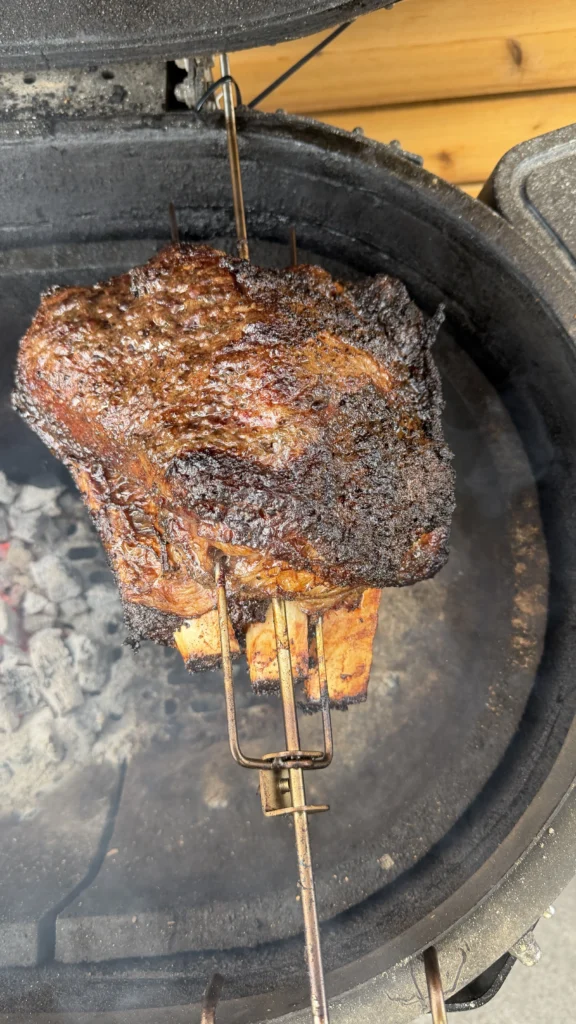
Rotisserie cooking spins the ribs continuously over indirect heat, exposing all surfaces to even heat while allowing fat to render and drip away. The constant rotation creates uniform bark development on all sides that stationary cooking can’t achieve. Areas that would normally face the heat source get breaks from direct exposure, preventing burning, while cooler sides get their turn to brown.
The spinning also creates self-basting as rendering fat flows over the meat surface before dripping off. As the fat cap on top heats and renders, gravity pulls the liquid fat down over the meat. But because the ribs are rotating, this fat coats all surfaces rather than just running down one side. This continuous basting keeps the meat moist while promoting browning through fat-enhanced heat transfer.
For beef plate ribs specifically, the rotisserie handles the weight and size better than grill grates. These massive racks are heavy and awkward to flip on standard grates. The rotisserie supports the weight while turning automatically. This prevents the meat from tearing or bones from breaking that can happen when trying to flip heavy ribs manually.
The setup requires balancing the ribs on the spit. Thread the spit through the meat between bones, positioning the rack so its center of gravity aligns with the spit. Use rotisserie forks or prongs to secure both ends tightly. Test spin by hand before starting the motor to ensure balanced rotation. Unbalanced loads create uneven cooking and can damage the motor.
Why Cook Beef Ribs Hot and Fast Instead of Low and Slow?
Hot and fast at 350°F cooks beef plate ribs in 1.5-2 hours while retaining more moisture and creating better bark than traditional low-and-slow methods. The higher heat renders fat quickly before it has time to completely melt away, leaving buttery pockets throughout the meat. Low-and-slow at 225-250°F takes 6-8 hours, during which time more fat renders completely out, potentially leaving drier meat.
The faster cooking time also prevents the exterior from becoming overly dry or crusty. At low temperatures over many hours, the surface moisture evaporates completely, creating very hard bark. At 350°F for under 2 hours, you get crispy bark without excessive drying. The bark has crunch but doesn’t turn rock-hard. This creates better eating texture where bark enhances rather than overwhelms each bite.
Hot and fast also eliminates the need for wrapping (Texas crutch). Traditional low-and-slow often requires wrapping in foil at the stall to push through and add moisture back. Hot-and-fast power through the stall quickly without wrapping, maintaining crispy bark throughout. Wrapping steams the meat and softens bark – by avoiding it, you keep maximum crust while still achieving tenderness.
The 350°F temperature is hot enough to develop excellent Maillard reaction and bark while still being gentle enough for the rotisserie. Higher temps (400°F+) risk burning the exterior before the interior reaches 195°F. Lower temps (300°F) take too long and start blurring the line between hot-and-fast and traditional smoking. The 350°F sweet spot provides ideal balance of speed, bark development, and even cooking.
Rotisserie Beef Ribs
Coffee rub, hot & fast at 350°F to 195°F
Ingredients
Beef Ribs
- 1 whole rack beef plate ribs (3-4 bones, also called dino ribs)
Coffee Rub
- 2 tablespoons finely ground coffee
- 2 tablespoons coarse black pepper
- 1½ tablespoons kosher salt
- 1 tablespoon brown sugar
- 1 teaspoon paprika
- 1 teaspoon garlic powder
Optional Wood Smoke
- Oak, hickory, or mesquite wood chunk
The constant rotation of the rotisserie bastes the ribs in their own rendering fat while exposing all surfaces to even heat. This creates uniform bark development that you can’t achieve with stationary cooking. The spinning also prevents fat from pooling on one side, ensuring the entire rack renders evenly for buttery texture throughout.
Step-by-Step Instructions
Step 1: Trim and Season the Beef Plate Ribs
Remove the rack of beef plate ribs from packaging and place on a large cutting board. Pat the entire surface dry with paper towels. Moisture prevents rub from adhering and creates steam during cooking instead of bark development. The ribs should feel dry to the touch on all sides.
Examine the rack for any loose fat or membrane. Trim off any flaps of fat that hang loosely using a sharp knife. These pieces burn before rendering and create bitter flavor. However, leave the main fat cap intact on top of the rack. This fat cap protects the meat and renders into delicious flavor. Also check for silver skin (tough membrane) on the back side and remove it by sliding a knife under it and peeling away.
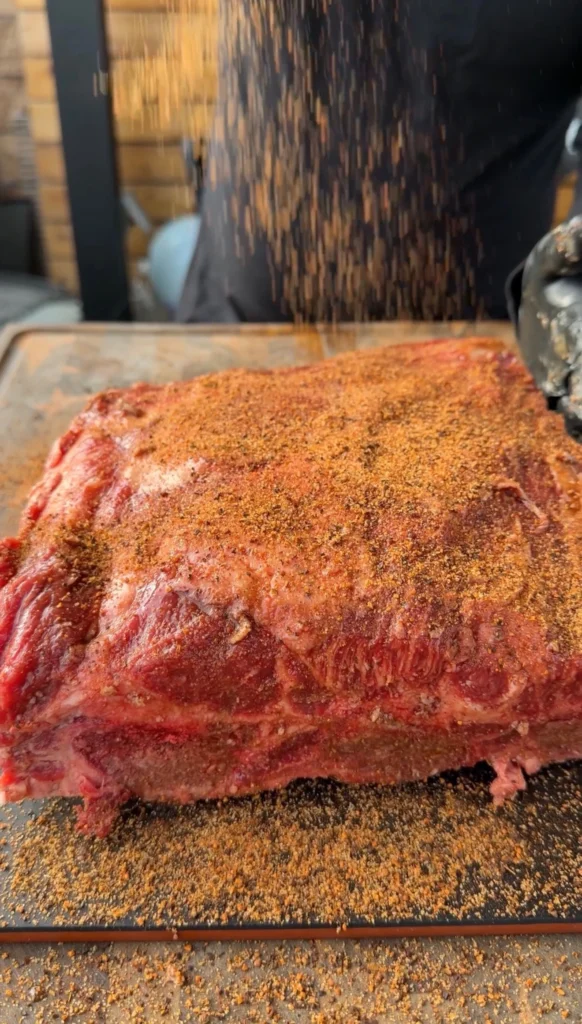
Make the coffee rub by combining 2 tablespoons finely ground coffee, 2 tablespoons coarse black pepper, 1.5 tablespoons kosher salt, 1 tablespoon brown sugar, 1 teaspoon paprika, and 1 teaspoon garlic powder in a small bowl. Stir until evenly mixed. The mixture should be fragrant with visible coffee grounds and pepper flakes.
Season the beef ribs generously on all sides with the coffee rub. Use all of it – beef plate ribs are large and need heavy seasoning. Coat the top, bottom, sides, and ends. Press the rub into the meat and fat cap firmly so it adheres well. The ribs should have visible dark coating from the coffee and pepper. Let the seasoned ribs sit at room temperature for 30-45 minutes before cooking. This brings them closer to room temp for more even cooking.
Step 2: Set Up the Charcoal Grill for Rotisserie
Build a charcoal fire using enough coals for medium-hot heat sustained over 2 hours. For a standard 22-inch kettle grill, use a full chimney of charcoal (about 80-100 briquettes). Light the chimney and let coals burn until mostly covered with white ash, about 15-20 minutes. The coals should glow red underneath.
Bank the lit coals to one side of the grill for indirect heat. The ribs will spin over the cool side while heat from the coals circulates around them. For two-zone setup, push all coals to one half of the grill. For kettle grills with rotisserie attachments, arrange coals in a horseshoe or C-shape around the perimeter, leaving the center clear for the drip pan.
Place a disposable aluminum drip pan in the empty space beneath where the ribs will rotate. This catches rendering fat and prevents flare-ups. Add a cup of water to the drip pan to create moisture and prevent fat from burning. Position the rotisserie motor and spit rod according to your grill’s specific attachment system.
Add a chunk of oak, hickory, or mesquite wood to the hot coals for smoke flavor if desired. One fist-sized chunk provides smoke without overpowering beef flavor. Adjust the vents to stabilize temperature at 350°F. For most kettle grills, this means bottom vents about half open and top vent fully open. Let the grill stabilize for 10 minutes before adding the ribs.
Step 3: Secure Ribs on the Rotisserie Spit
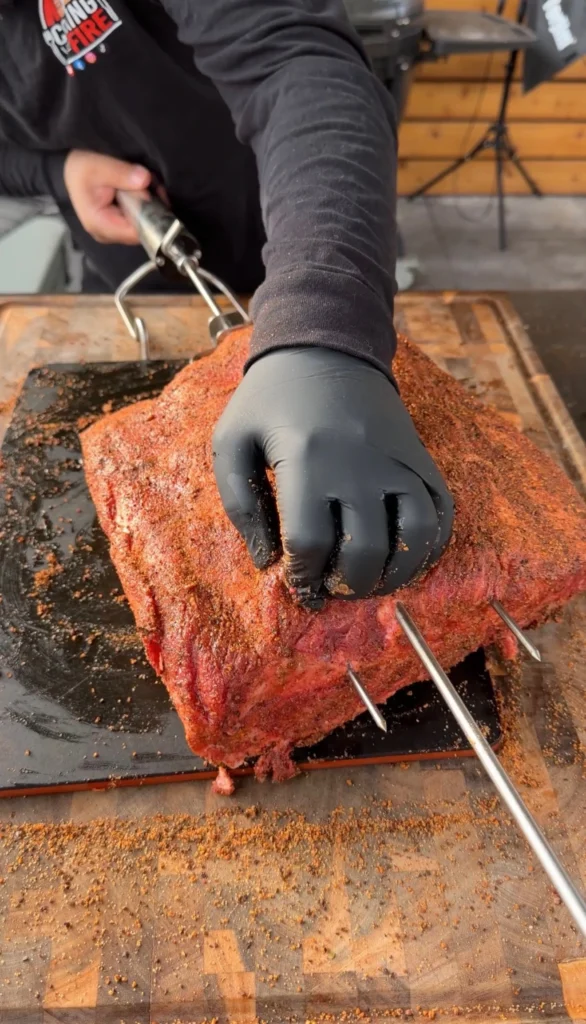
Thread the rotisserie spit rod through the rack of ribs. The best approach is threading it between the bones, positioning the spit through the thickest part of the meat for balance. Push the rod through the rack so equal weight is on both sides of the motor mounting point. The ribs should be centered on the rod.
Secure one rotisserie fork onto the spit rod on one end of the ribs. The prongs should dig into the meat and bone to hold firmly. Tighten the thumbscrew completely so the fork can’t slip. Move to the other end and secure the second fork the same way. The forks should compress the ribs tightly between them, preventing any movement during rotation.
Test the balance by spinning the spit by hand before mounting it on the grill. The ribs should rotate smoothly without wobbling or favoring one side. If they’re unbalanced, adjust the position of the forks and ribs on the spit. Proper balance prevents motor strain and ensures even cooking. An unbalanced load creates hot and cold spots as different parts spend more time facing heat.
Mount the assembled spit onto the grill’s rotisserie brackets. One end has the motor that will drive rotation. Secure that end first, then slide the other end into its bracket. Turn on the motor to verify smooth rotation. The ribs should spin steadily without jerking or struggling. If it struggles, rebalance the load.
Step 4: Cook to 195°F Internal Temperature
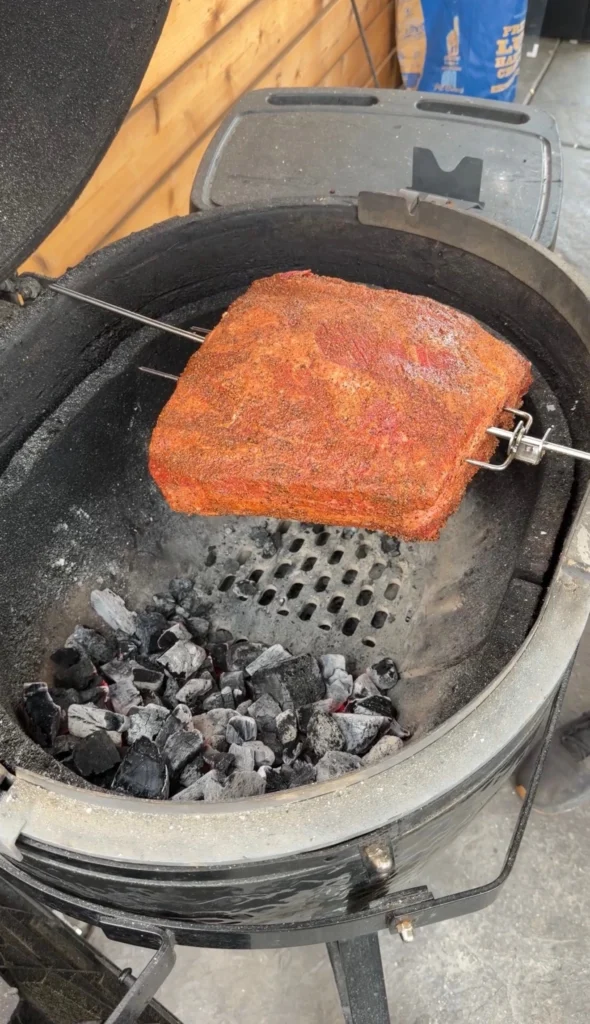
Close the grill lid with the ribs spinning over indirect heat. The coals should be to one side with the ribs rotating over the cool zone. Monitor grill temperature through the lid thermometer or an oven thermometer placed at grate level. Adjust vents as needed to maintain 350°F throughout cooking.
For the first hour, don’t open the lid except briefly to check temperature and add more charcoal if needed. Most full chimneys of coals will last 2+ hours at 350°F but monitor your fire. If temperature drops below 325°F, add 10-15 fresh coals. If it climbs above 375°F, close bottom vents slightly to reduce airflow.
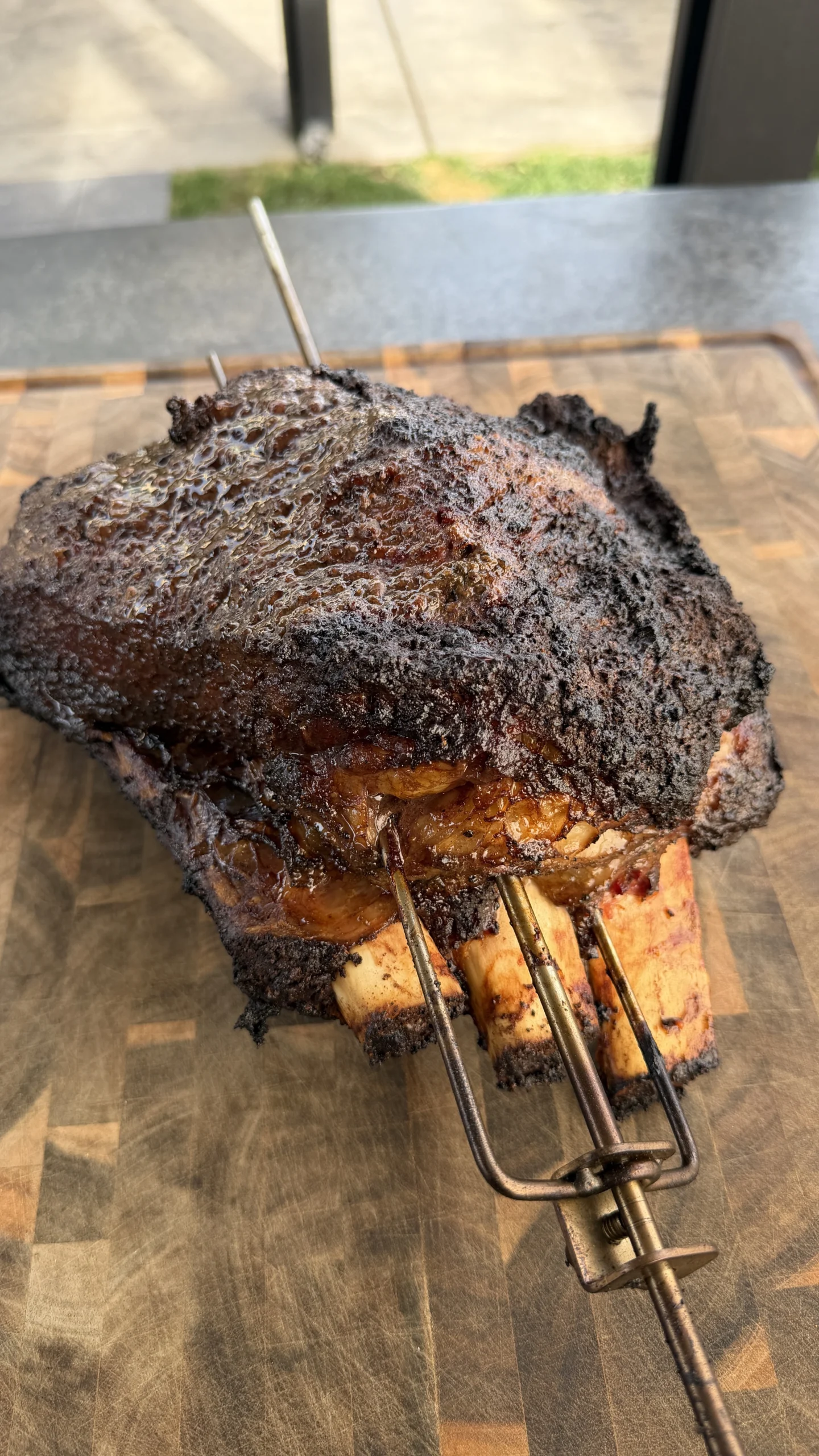
The ribs should develop even browning on all surfaces as they rotate. The fat cap will begin rendering, with fat dripping into the pan below. The coffee rub will darken significantly, creating nearly black bark in some spots. This dark color is normal and desired – it’s not burnt, it’s deeply caramelized crust from the coffee and sugars.
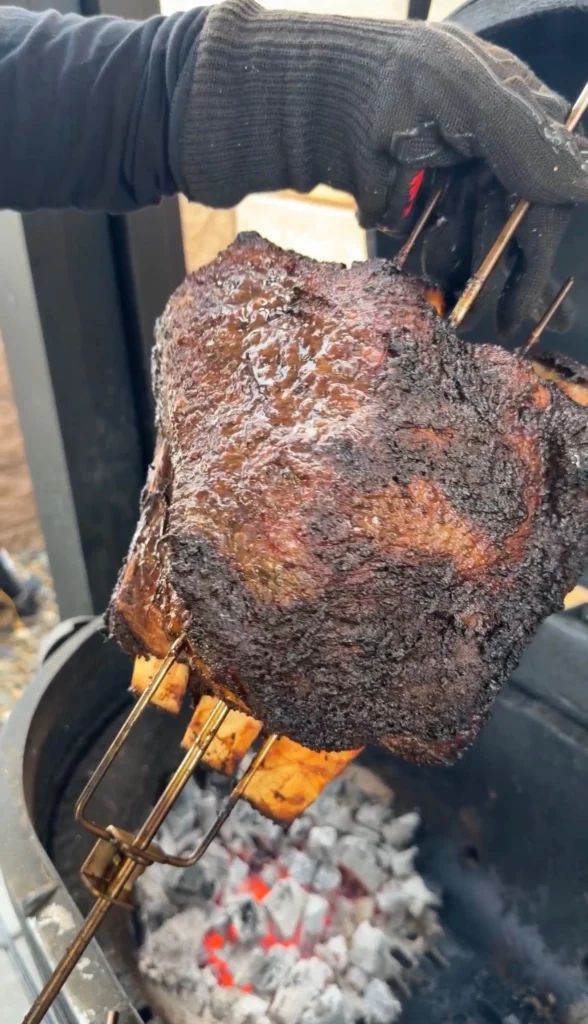
After 1.5 hours, start checking internal temperature. Insert an instant-read thermometer into the thickest part of meat between bones, avoiding bone contact. Check in multiple spots since thickness varies. When the coolest spot reaches 195°F, the ribs are done. This usually takes 1.5-2 hours total. The exterior should be deeply browned with crispy rendered fat cap.
Step 5: Rest and Slice
When the ribs reach 195°F internal temperature, turn off the rotisserie motor. Carefully remove the spit from the grill using heavy gloves or pot holders – it will be very hot. The ribs will also be extremely heavy, so get help if needed. Transfer the entire spit to a cutting board or large platter.
Remove the rotisserie forks carefully and slide the ribs off the spit. They should come off easily but the meat will be tender enough that forcing them could cause tearing. Place the ribs on a cutting board bone-side down. Tent loosely with aluminum foil and let rest for 20 minutes minimum. This rest allows juices to redistribute throughout the meat.
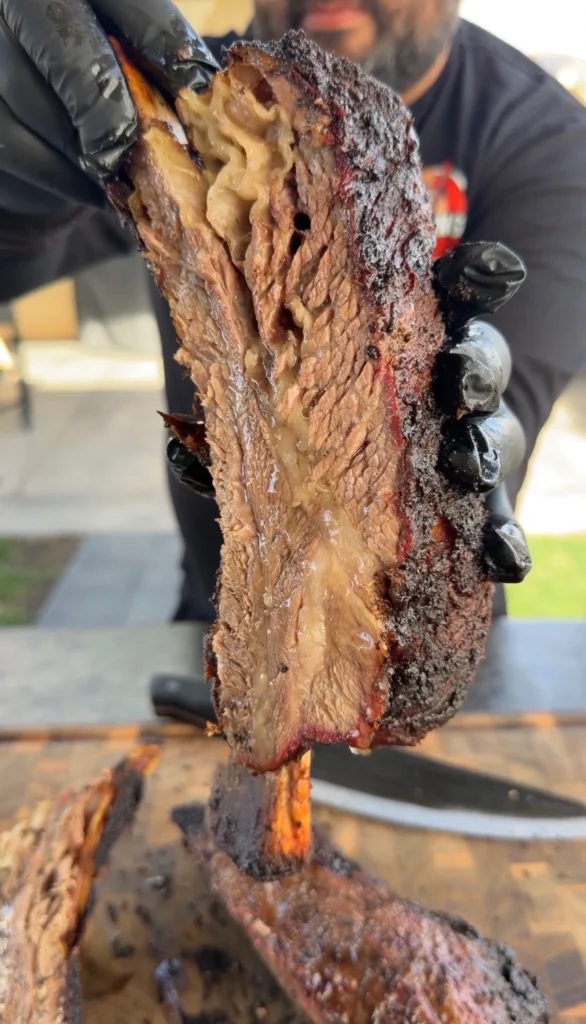
During rest, the internal temperature will rise another 5 degrees or so to about 200°F through carryover cooking. The juices that were driven to the center during cooking will flow back toward the edges. The connective tissue that melted will firm up slightly, making the meat easier to slice. Cutting immediately would cause juice loss and ragged slicing.
After resting, slice between each bone using a sharp knife. Cut straight down through the meat, sawing through any cartilage connecting the bones. Each bone should separate into an individual portion. The meat should be tender with a slight pull but not falling-apart mushy. The exterior bark should be dark, crispy, and intensely flavored while the interior is juicy and beefy.
Rotisserie Beef Plate Ribs with Coffee Rub
Ingredients
Method
- Remove ribs from packaging and pat dry. Trim loose fat and silver skin but leave fat cap intact. Mix coffee rub ingredients: coffee, black pepper, salt, brown sugar, paprika, and garlic powder.
- Season ribs generously on all sides with coffee rub, pressing firmly. Let sit at room temperature 30-45 minutes.
- Build charcoal fire and stabilize grill at 350°F. Bank coals to one side for indirect heat. Place drip pan under where ribs will rotate. Add optional wood chunk to coals for smoke.
- Thread ribs onto rotisserie spit, centering for balance. Secure with forks on both ends. Test spin by hand, then mount on grill. Turn on motor.
- Cook at 350°F with lid closed, monitoring temperature and adding coals as needed. Start checking internal temp at 1.5 hours. Ribs are done when thickest part reaches 195°F, about 1.5-2 hours total.
- Remove from grill and spit carefully. Tent with foil and rest 20 minutes. Slice between bones and serve immediately.
Notes
Tried this recipe?
Let us know how it was!Frequently Asked Questions
Can I use a gas grill instead of charcoal?
Yes, gas grills with rotisserie attachments work perfectly for this recipe. Preheat to 350°F using burners on one side only, leaving the other side off for indirect heat. Place the drip pan on the cool side beneath where ribs will rotate. You won’t get charcoal flavor but you can add wood chips in a smoker box for smoke.
Gas provides easier temperature control than charcoal. Just monitor and adjust burners to maintain steady 350°F. The cooking time and internal temperature target remain identical. The rotisserie technique works the same regardless of heat source.
What if I don’t have a rotisserie attachment?
Cook beef plate ribs using traditional indirect heat on a grill. Place ribs bone-side down on the cool side of a two-zone setup. Cook at 350°F, flipping every 30 minutes, until they reach 195°F internal temperature. The cook time may be slightly longer (2-2.5 hours) without rotisserie’s self-basting benefits.
You can also smoke them low-and-slow at 250°F for 6-8 hours to 203°F internal temperature using traditional Texas style. The results will be more tender but less crusty. The hot-and-fast rotisserie method creates unique texture you can’t replicate without the rotating spit.
Can I use a different rub instead of coffee rub?
Yes, any beef rub works on plate ribs. Traditional Texas rub (coarse salt and pepper only) is classic. Montreal steak seasoning provides similar bold flavor. Standard BBQ rubs with chili powder and brown sugar work well. Use 4-6 tablespoons total of whatever rub you prefer since the ribs are large.
Coffee rub is special because the coffee enhances beef’s richness with earthy depth. If you don’t like coffee flavor, try cocoa powder instead which provides similar earthiness without coffee taste. The technique works regardless of seasoning choice.
How do I know if the ribs are done besides temperature?
The bend test provides visual confirmation. Use tongs to pick up the rack from one end. Properly cooked ribs bend significantly in the middle with meat starting to crack on the surface but not falling apart. Undercooked ribs remain rigid. Overcooked ribs flop completely or fall apart.
You can also probe with a thermometer probe or skewer. It should slide in and out with little resistance like probing room-temperature butter. If it meets significant resistance, they need more time. The combination of 195°F temperature, proper bend, and easy probe penetration confirms doneness.
Can I cook these in the oven?
Yes, cook beef plate ribs in a 350°F oven on a roasting rack over a sheet pan. They won’t rotate but will cook through. Turn them every 30 minutes for relatively even cooking. Cook time will be similar (1.5-2 hours to 195°F) but bark won’t be as crispy without open-air heat.
For crisper bark in the oven, finish under the broiler for 3-5 minutes after reaching temperature. Watch closely to prevent burning. Oven ribs lack smoke flavor and rotisserie self-basting, so they’re less impressive than grilled versions but still delicious.
Ready to Take Your Cooking to the Next Level?
This is where I keep all my most-used products, gear, and favorite cooking tools — check it out:
🔥 View My Cooking Gear & ToolsRecipe Categories
If you loved this recipe, you’ll find more to savor across our diverse categories. From beef to pork, chicken to turkey, seafood to appetizers, there’s a wealth of flavors waiting for you. Explore them all at CWFeats.