
Smoked Pineapple Ham with Pineapple Chutney
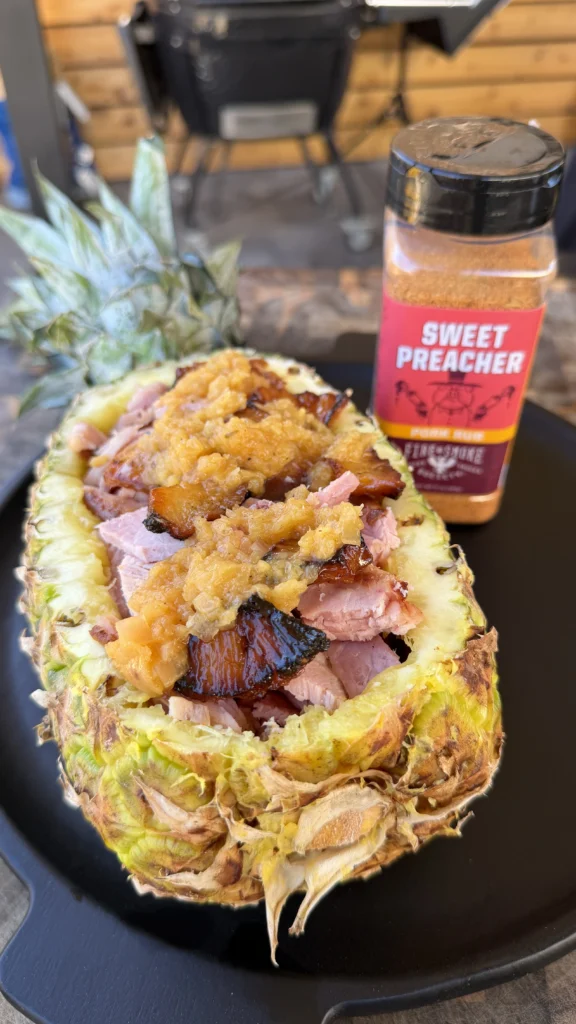
Smoked pineapple ham uses an 8-12 lb spiral-cut ham rubbed with Dijon mustard and Sweet Preacher seasoning, covered with fresh pineapple chunks secured with toothpicks, then smoked at 275°F until internal temperature reaches 130°F when you begin glazing with pineapple juice, brown sugar, honey, and Dijon mixture. Continue smoking to 140°F final temperature, applying 1-2 more coats of glaze. Serve by slicing ham and layering it in a hollowed pineapple boat with homemade pineapple chutney made from diced pineapple, onion, ginger, brown sugar, and vinegar. The pineapple glazed ham delivers sweet, sticky exterior with caramelized pineapple chunks and dramatic pineapple boat presentation perfect for holidays, special occasions, or anytime you want ham that wows guests visually and taste-wise.
The whole process takes about 3 hours from start to finish. Spend 30 minutes prepping the ham, pinning pineapple chunks, making glaze and chutney, and hollowing the pineapple boat. Smoke for 2-3 hours depending on ham size. The pineapple chunks caramelize during smoking, creating golden-brown spots that add both beauty and flavor. The spiral-cut ham requires no scoring since it’s already pre-sliced for easy serving. The pineapple boat presentation is restaurant-quality dramatic, creating overflowing layers of ham and chutney that photograph beautifully and make serving interactive and fun.
Why Pin Pineapple Chunks Directly onto Ham Before Smoking

Pinning pineapple chunks onto the ham before smoking allows them to caramelize during the long cooking time, creating golden-brown, sticky spots that add both visual appeal and concentrated sweet flavor. The pineapple sugars caramelize at smoking temperature, developing complex flavors beyond just “sweet.” The chunks essentially candy themselves on the ham surface, creating texture contrast between the tender ham and the slightly chewy, caramelized pineapple.
The pineapple chunks also baste the ham continuously as they cook. Pineapple releases juice that runs down the ham surface, carrying sweetness and acidity with it. This natural basting enhances the ham’s flavor while keeping the surface moist. The juice mixes with the Dijon mustard and Sweet Preacher rub, creating a flavor coating that develops throughout smoking. Without the chunks, you’d need to manually baste more frequently.
The visual impact of pineapple-studded ham is dramatic. Golden pineapple chunks dotting the glossy glazed surface create festive, tropical appearance that stands out on holiday tables. The chunks signal immediately that this is pineapple ham, setting expectations for the sweet-savory flavor profile. When you slice the ham, some chunks stay attached to slices, ensuring every portion gets pineapple flavor.
Securing chunks with toothpicks prevents them from falling off during smoking and handling. The toothpicks should go through the pineapple chunk into the ham meat, anchoring them firmly. Space chunks evenly across the ham surface for uniform flavor and appearance. Use 20-30 chunks for an 8-12 lb ham. The toothpicks burn slightly during smoking but remain functional. Remove them before serving or leave them in for guests to pull out themselves.
When Should You Apply Glaze to Smoked Ham
Apply glaze when the ham reaches 130°F internal temperature for optimal coating and caramelization without burning. Glazing too early at lower temperatures means the glaze sits on the ham for too long, potentially burning before the ham finishes cooking. The sugars in the glaze (brown sugar and honey) caramelize and darken during the final 10 degrees of cooking from 130°F to 140°F. This timing creates perfect sticky, glossy coating without blackened or burnt spots.
The 130°F trigger gives you approximately 20-30 minutes of glazing time depending on ham size. Apply the first coat immediately when temperature hits 130°F. Wait 10 minutes, then apply a second coat. The first coat sets and becomes tacky, creating a base for the second coat to adhere to. Multiple thin coats build better glaze thickness than one heavy application. The layering also creates depth of flavor as each coat caramelizes slightly differently.
Starting glaze at 130°F also ensures the ham surface is hot enough to immediately begin caramelizing the sugars. Cold or warm ham below 120°F just absorbs glaze without developing the sticky, caramelized surface. The hot surface (130°F+) causes the glaze to bubble slightly as you brush it on, beginning the caramelization process immediately. This hot application creates the glossy, mahogany finish that defines great glazed ham.
If you glaze at 100°F or 110°F like some recipes suggest, the ham sits with glaze for 45-60 minutes. The extended heat exposure risks burning the sugars, especially in hot spots near heat sources. If you wait until 140°F to glaze, the ham is done and you’re just coating the surface without proper caramelization. The 130°F timing is the sweet spot for smoked pineapple ham that’s perfectly glazed without being burnt.
Why Use Spiral Ham Instead of Bone-In Ham for This Recipe

Spiral-cut ham is pre-sliced in a continuous spiral around the bone, making serving effortless. You just pull slices apart following the pre-cut lines. No carving knife or skill required. This is crucial when presenting ham in a pineapple boat since you need sliced ham to layer with chutney. Carving a bone-in ham at the table would be awkward with the pineapple boat setup. Pre-sliced ham allows immediate serving.
The spiral cuts also allow smoke and glaze to penetrate between the slices, flavoring more surface area. Regular bone-in ham only gets smoke and glaze on the exterior. Spiral ham has hundreds of cut surfaces where smoke and glaze can reach. This creates more thorough seasoning throughout the ham. Every slice tastes well-seasoned rather than just the exterior being flavorful.
Spiral-cut ham doesn’t require scoring since it’s already separated into slices. Scoring bone-in ham is done to allow glaze penetration and create visual appeal. Spiral ham accomplishes both automatically through the pre-cutting. This saves prep time and eliminates the knife work that can be tricky with a slippery, rounded ham. You just rub with mustard, season, pin pineapple, and smoke.
Spiral ham does have one disadvantage compared to bone-in: it can dry out more easily since there’s more surface area exposed. Combat this by not overcooking past 140°F internal temperature and by applying glaze at 130°F which adds moisture. The pineapple chunks pinned on also help keep the surface moist. For pineapple glazed ham where presentation and ease of serving matter, spiral-cut is superior despite the slight drying risk.
How to Make a Pineapple Boat for Serving Ham

Select a large, ripe pineapple with vibrant green leaves and golden skin for the serving boat. The pineapple should be big enough to hold several slices of ham and generous portions of chutney. Wash the outside thoroughly since you’ll be using it as a serving vessel. Lay the pineapple on its side on a cutting board and cut it in half lengthwise through the leaves and fruit. You want two equal halves that can serve as matching boats.
Use a sharp knife to score around the inside edge of the pineapple flesh, about 1/2 inch from the skin. Cut deep but don’t puncture through the skin. Make additional cuts in a crosshatch pattern through the flesh to make removal easier. Use a large spoon or your knife to scoop out all the pineapple flesh, leaving just the skin shell with some flesh attached for structure. Save the scooped-out pineapple for the chutney or other uses.
The hollowed pineapple half should now be a boat-shaped vessel with curved walls and a flat base. Pat the inside dry with paper towels if there’s excess juice. The boat doesn’t need to be perfectly smooth inside. Rough texture is fine since you’ll be piling ham and chutney in it. Make sure the bottom is flat enough that the boat sits stable on the serving platter without rolling.
For presentation, place the pineapple boat on a large platter or wooden board. Start layering by placing several slices of smoked ham in the bottom. Add a generous spoonful of pineapple chutney. Add more ham slices. Add more chutney. Continue layering ham and chutney until the boat is overflowing. The overflow creates the “money shot” visual impact. Garnish with fresh herbs, extra pineapple chunks, or maraschino cherries if desired.
What Temperature Should Smoked Ham Reach
Smoked ham should reach 140°F internal temperature for proper reheating and serving quality. Spiral-cut hams are pre-cooked when you buy them, so you’re reheating rather than cooking from raw. The USDA recommends reheating pre-cooked ham to 140°F minimum. Some sources say 145°F, but 140°F is sufficient for pre-cooked products and prevents drying out from unnecessary extra cooking.
Insert an instant-read thermometer into the thickest part of the ham without touching bone. The bone conducts heat differently than meat and gives false readings. Check in 2-3 spots since hams heat unevenly. The thickest area near the bone takes longest to reach temperature. When the thickest spot hits 140°F, the ham is ready. Thinner outer areas may be 145-150°F, which is fine.
Don’t cook ham past 145°F or it dries out significantly. Pre-cooked ham has already been processed, cured, and cooked once. Excessive reheating squeezes out moisture and creates dry, tough texture. The difference between 140°F and 150°F is dramatic for ham. Those 10 extra degrees turn juicy ham into dry ham. Watch temperature carefully in the final 20-30 minutes of cooking.
The temperature continues rising slightly after removing from the smoker through carryover cooking. If you pull at exactly 140°F, it will reach 142-143°F during the 10-minute rest. This final temperature is perfect for serving. The ham is hot throughout, juicy, and the glaze has set into sticky coating. Remove at 140°F, rest for 10 minutes, then slice and serve in the pineapple boat.
Smoked Pineapple Ham
Pineapple chunks pinned on, served in pineapple boat with chutney
Ingredients
Ham
- 1 spiral-cut ham (8-12 lbs)
- Dijon mustard
- Sweet Preacher seasoning (or your favorite sweet pork rub)
- Fresh pineapple chunks (for pinning onto ham)
- Toothpicks or small skewers
- 1 whole pineapple (for serving boat)
Pineapple Glaze
- 1 cup pineapple juice
- 1/2 cup brown sugar
- 2 tablespoons honey
- 1 tablespoon Dijon mustard
- 1 tablespoon apple cider vinegar
- 1 teaspoon Sweet Preacher seasoning
Pineapple Chutney
- 2 cups diced pineapple
- 1/2 cup diced onion
- 1 tablespoon minced ginger
- 1/4 cup brown sugar
- 1/4 cup pineapple juice
- 1 tablespoon apple cider vinegar
- Pinch of red pepper flakes
- 1 teaspoon Sweet Preacher seasoning
Pin pineapple chunks all over the ham before smoking so they caramelize and infuse the meat with tropical sweetness. The chunks render juices that baste the ham continuously while the sugars caramelize into golden, sticky coating that looks as impressive as it tastes.
Step-by-Step Instructions
Step 1: Prep the Ham and Pin Pineapple Chunks

Remove the spiral-cut ham from packaging and place it in a disposable aluminum foil pan. The pan catches drippings and makes cleanup easier. Pat the ham dry with paper towels if needed. Spiral hams are usually quite dry on the surface already. Using a basting brush or your hands, apply a thin layer of Dijon mustard all over the ham. Cover all visible surfaces including the flat bottom if you want complete coverage.
Sprinkle Sweet Preacher seasoning generously over the mustard-coated ham. Use approximately 1/4 cup total for an 8-12 lb ham. The seasoning should cover the surface evenly. Press it lightly with your hands to help it adhere to the mustard. The mustard acts as a binder for the seasoning while adding tangy flavor that balances the sweet pineapple.
Cut fresh pineapple into chunks about 1-1.5 inches in size. You’ll need 20-30 chunks depending on ham size. Pat the chunks dry with paper towels so they’re not too juicy. Take a toothpick or small skewer and push it through a pineapple chunk into the ham meat. The toothpick should go at least 1/2 inch into the ham to secure the chunk. Space pineapple chunks evenly across the entire ham surface, creating an attractive pattern.
Cover the ham with pineapple chunks until it’s well-decorated. The chunks should be visible from all angles when the ham is on the serving platter. Some chunks can go between the spiral slices if you want extra pineapple flavor in the interior. The pinned chunks will caramelize during smoking, creating golden spots that contrast with the glazed ham surface.
Step 2: Make the Pineapple Glaze and Chutney

In a small saucepan over medium heat, combine 1 cup pineapple juice, 1/2 cup brown sugar, 2 tablespoons honey, 1 tablespoon Dijon mustard, 1 tablespoon apple cider vinegar, and 1 teaspoon Sweet Preacher seasoning. Stir until the brown sugar dissolves completely. The Dijon and vinegar add tangy complexity that balances the sweetness from sugar and honey.
Bring the mixture to a gentle simmer and cook for 8-10 minutes, stirring occasionally. The glaze will reduce and thicken noticeably. It should coat the back of a spoon and flow slowly when you tilt the pan. Don’t let it boil hard or the sugar can burn. Remove from heat and set aside. The glaze will thicken more as it cools. You’ll use this later when the ham reaches 130°F internal temperature.
Make the pineapple chutney in a separate saucepan. Combine 2 cups diced pineapple, 1/2 cup diced onion, 1 tablespoon minced ginger, 1/4 cup brown sugar, 1/4 cup pineapple juice, 1 tablespoon apple cider vinegar, a pinch of red pepper flakes, and 1 teaspoon Sweet Preacher seasoning. Stir everything together over medium heat.
Simmer the chutney for 10-12 minutes, stirring occasionally, until it thickens and becomes chunky rather than liquidy. The pineapple softens slightly but should still have texture. The onions become translucent and sweet. The ginger adds aromatic warmth. The finished chutney should be thick enough to spoon onto ham without running off immediately. Remove from heat and set aside to cool. Store in the refrigerator if making ahead.
Step 3: Preheat Smoker and Smoke the Ham
Set your smoker to 275°F using a mild wood like apple or cherry. These fruit woods provide subtle sweetness that complements the pineapple without overpowering it. Avoid hickory or mesquite which are too strong for ham. Let the smoker preheat completely and stabilize at 275°F with thin blue smoke before adding the ham. This takes 15-20 minutes for most smokers.
Place the foil pan with the prepared ham (mustard, seasoning, and pineapple chunks pinned on) directly on the smoker grate. Position it in the center for even heat exposure. Close the lid and smoke undisturbed for the first 1.5 hours. The ham needs consistent heat to warm through properly. Opening the lid repeatedly loses heat and extends cooking time unnecessarily.
During smoking, the pineapple chunks begin to caramelize and turn golden-brown. Their juices render and run down the ham, basting it continuously. The ham absorbs subtle smoke flavor while the glaze ingredients you’ll apply later react with the smoke for complex flavor development. The Sweet Preacher seasoning darkens and becomes aromatic. The Dijon creates a tangy base layer under the sweet glaze you’ll add.
At the 1.5 hour mark, check the internal temperature with an instant-read thermometer. Insert it into the thickest part without touching bone. You’re looking for 130°F to start glazing. If the temperature is below 125°F, close the lid and check again in 15 minutes. Don’t start glazing until the ham reaches 130°F. The timing varies based on ham size, starting temperature, and exact smoker temperature.
Step 4: Glaze When Ham Reaches 130°F

When the internal temperature reaches 130°F, brush the first coat of pineapple glaze all over the ham. Use a silicone basting brush to cover all exposed surfaces including around the pineapple chunks. The glaze should coat everything evenly. Don’t worry about perfection since you’ll apply multiple coats. Work quickly to keep the smoker closed as much as possible.
Close the lid and continue smoking for 10 minutes. The glaze begins to set and caramelize. The brown sugar and honey bubble slightly in the heat, creating the glossy finish. After 10 minutes, open the smoker and apply a second coat of glaze over the first. The second coat adheres to the tacky first coat, building thickness. Brush thoroughly around all the pineapple chunks which should be turning dark golden by now.
Continue smoking until the internal temperature reaches 140°F. This typically takes another 10-20 minutes after the second glaze application. Check temperature every 10 minutes during this final stage. When it hits exactly 140°F in the thickest part, remove the ham immediately from the smoker. Don’t let it go past 142-143°F or it starts drying out.
The finished smoked pineapple ham should be mahogany-colored with glossy glaze coating and golden-brown caramelized pineapple chunks dotting the surface. The glaze should be sticky and thick, not runny. Some darker spots are normal and desirable from the caramelized sugars. The ham should smell amazing with sweet pineapple, smoke, and caramelized sugar aromas.
Step 5: Rest and Prepare Pineapple Boat
Remove the ham from the smoker and let it rest in the foil pan for 10 minutes. This brief rest allows the internal temperature to stabilize and the glaze to firm up slightly. The ham is easier to handle and slice after resting. The glaze sets into its final sticky texture during this time. Don’t rush this step or the glaze may run off when you handle the ham.
While the ham rests, prepare the pineapple boat if you haven’t already. Cut a large pineapple in half lengthwise through the leaves and fruit. Hollow out each half by scoring around the inside edge and scooping out all the flesh with a spoon. Pat the inside dry. Place one hollowed pineapple half on a large serving platter or wooden board. Save the other half for another use or prepare both boats if serving a crowd.
After resting, pull the toothpicks out of the pineapple chunks. The chunks will stick to the ham from the caramelized glaze. You can leave some chunks on the ham for appearance. Remove the ham from the foil pan and transfer to a cutting board. The spiral cuts make slicing easy. Just pull slices apart following the pre-cut spiral. Cut 10-15 slices to start, depending on how many you want in the pineapple boat presentation.
Step 6: Layer Ham and Chutney in Pineapple Boat
Place several slices of smoked ham in the bottom of the hollowed pineapple boat, arranging them in an attractive overlapping pattern. The ham should cover the bottom and start building up the sides. Spoon a generous portion of pineapple chutney over the ham slices, distributing it evenly. The chunky chutney should be visible between and on top of the ham slices.
Add another layer of ham slices over the chutney. Arrange them slightly overlapping so you can see both the ham and the chutney below. Add another generous layer of chutney over this second layer of ham. Continue layering ham and chutney until the pineapple boat is overflowing. The overflow creates visual drama – let ham slices drape over the edges and let chutney spill out slightly.
The finished presentation should look abundant and appetizing. The contrast of pink ham, golden-brown pineapple chunks, and chunky yellow-orange chutney creates an appealing color palette. The pineapple boat with green leaves adds tropical flair. This presentation is perfect for photographs and for buffet-style serving where guests help themselves.
Serve immediately or within 30 minutes while the ham is still warm. Provide tongs or a serving fork so guests can easily grab ham slices and chutney from the boat. Replenish the boat with more ham and chutney as it empties. The pineapple boat can be refilled multiple times throughout serving. The remaining ham not in the boat should be kept warm covered with foil.
Smoked Pineapple Ham with Pineapple Chutney
Ingredients
Method
- Place spiral ham in foil pan. Rub with Dijon mustard, then season with Sweet Preacher. Pin pineapple chunks all over ham using toothpicks.
- Make glaze by combining pineapple juice, brown sugar, honey, Dijon, vinegar, and seasoning in saucepan. Simmer 8-10 minutes until syrupy. Set aside.
- Make chutney by combining diced pineapple, onion, ginger, brown sugar, pineapple juice, vinegar, red pepper flakes, and seasoning in saucepan. Simmer 10-12 minutes until thick and chunky. Set aside.
- Preheat smoker to 275°F with apple or cherry wood. Place ham in smoker and cook until internal temperature reaches 130°F, approximately 1.5-2 hours.
- When ham reaches 130°F, brush first coat of glaze all over. Continue smoking 10 minutes, then apply second coat of glaze. Smoke until internal temperature reaches 140°F.
- Remove from smoker and rest 10 minutes. While resting, cut pineapple in half lengthwise and hollow out to create serving boat.
- Slice ham following spiral cuts. Layer ham and chutney in pineapple boat, alternating layers until overflowing. Serve immediately.
Notes
Tried this recipe?
Let us know how it was!Frequently Asked Questions
Can I use canned pineapple instead of fresh?
Fresh pineapple is strongly preferred for both the pinned chunks and the chutney. Fresh pineapple has firmer texture that holds up better during the 2-3 hour smoking time. It also has brighter, more complex flavor. Canned pineapple is already cooked and softened, so it can turn mushy during smoking. The syrup in canned pineapple also affects the flavor balance, making everything sweeter than intended.
If you must use canned, choose pineapple chunks packed in juice (not syrup) and drain them thoroughly. Pat completely dry with paper towels before pinning to the ham. The chunks will caramelize but won’t have quite the same texture or flavor as fresh. For the chutney, fresh pineapple is even more important since texture is crucial. Canned pineapple creates mushy chutney without the pleasant bite of fresh fruit.
How do I make this for holiday dinners?
This smoked pineapple ham is perfect for holidays since it feeds large groups and creates impressive presentation. Plan timing by working backward from serving time. For 6 pm dinner, start smoking at 3-3:30 pm since ham takes 2.5-3 hours. Make the glaze and chutney the morning of or even the day before, refrigerating until needed. Prep the ham (mustard, seasoning, pineapple chunks) up to 2 hours before smoking.
The pineapple boat can be prepared while the ham smokes. Hollow it out and refrigerate until ready to fill. Assemble the boat immediately before serving for best presentation. The dramatic overflow of ham and chutney becomes the centerpiece of your holiday table. This works excellently alongside turkey as an alternative protein option, or as the main protein with traditional sides like mashed potatoes, green beans, and rolls.
What if I don’t have Sweet Preacher seasoning?
Any sweet pork rub works well for pineapple glazed ham. Look for rubs with brown sugar, paprika, garlic powder, and minimal heat. Popular alternatives include Meat Church Honey Hog, Killer Hogs The BBQ Rub, or Traeger Pork & Poultry Rub. You can also make your own by mixing 2 tablespoons brown sugar, 1 tablespoon paprika, 1 teaspoon garlic powder, 1 teaspoon onion powder, 1/2 teaspoon black pepper, and 1/2 teaspoon salt.
The key is using a sweet-forward rub rather than a spicy or heavily seasoned one. The pineapple, glaze, and chutney all bring sweetness, so the rub should complement rather than compete. Avoid rubs with chili powder, cayenne, or other heat unless you specifically want spicy pineapple ham. The Sweet Preacher seasoning is ideal because it’s designed for pork with perfect sweet-savory balance.
Can I make the chutney ahead and store it?
Yes, pineapple chutney keeps well in the refrigerator for 5-7 days in an airtight container. Making it ahead actually improves flavor as the ingredients meld. Let it cool completely after cooking, then transfer to a container and refrigerate. Bring to room temperature before serving for best flavor and texture, or warm gently in a saucepan if you prefer it warm.
Chutney can also be frozen for up to 3 months. Freeze in a freezer-safe container or bag, removing as much air as possible. Thaw in the refrigerator overnight before using. The texture may be slightly softer after freezing but the flavor remains excellent. Making a double batch and freezing half gives you instant chutney for future hams without additional work.
What sides pair well with smoked pineapple ham?
Classic holiday sides complement smoked pineapple ham beautifully. Mashed potatoes, sweet potato casserole, green bean casserole, and mac and cheese all work excellently. The sweet ham pairs well with savory sides that provide balance. Roasted Brussels sprouts, glazed carrots, and asparagus add green vegetables. Dinner rolls or Hawaiian rolls are essential for making ham sandwiches with leftovers.
For tropical theme, serve with coconut rice, grilled pineapple slices, mango salsa, or island-style coleslaw. Black beans and plantains add Caribbean flair. The pineapple boat presentation already brings tropical vibes, so sides can either lean into that theme or stick with traditional favorites. Either approach works since the ham is versatile enough to pair with multiple cuisine styles.
Ready to Take Your Cooking to the Next Level?
This is where I keep all my most-used products, gear, and favorite cooking tools — check it out:
🔥 View My Cooking Gear & ToolsRecipe Categories
If you loved this recipe, you’ll find more to savor across our diverse categories. From beef to pork, chicken to turkey, seafood to appetizers, there’s a wealth of flavors waiting for you. Explore them all at CWFeats.