
Smoked Pork Belly Lollipops
Ingredients
For the Pork Belly Lollipops:
- 2 lbs pork belly, cut into thick strips
- Your favorite BBQ seasoning
- Wooden skewers, soaked in water
- 6 strips bacon, cooked and crumbled
For the Braising Mixture:
- 1 cup brown sugar
- 1 cup BBQ sauce
- 1 stick (½ cup) unsalted butter
Smoked Pork Belly Lollipops with Bacon Bits and Brown Sugar Glaze
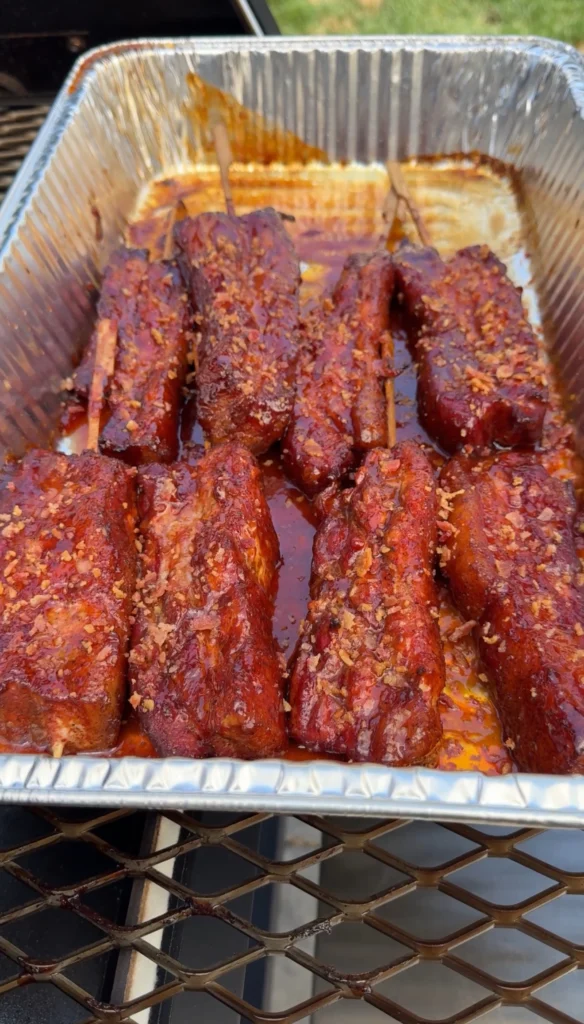
See How It’s Done
Transform ordinary pork belly into an extraordinary BBQ experience with these smoked pork belly lollipops. These bite-sized beauties combine the rich, fatty goodness of pork belly with a sweet and smoky glaze, topped with crispy bacon bits for the ultimate indulgence. The two-stage cooking process first smokes the meat to develop deep flavor, then braises it in a brown sugar and BBQ sauce mixture that creates an irresistible sticky glaze. Perfect for competition BBQ or backyard gatherings where you want to serve something truly memorable.
Understanding Pork Belly Selection and Preparation
Selecting the right pork belly is crucial for successful lollipops. Look for belly with even fat distribution and consistent thickness throughout. The meat should have a good ratio of fat to lean meat, typically 60/40 for optimal flavor and texture. Avoid belly that’s too fatty or too lean, as both will affect the final result negatively.
Cut pork belly into strips approximately 2 inches wide and 3-4 inches long for ideal lollipop size. Consistent sizing ensures even cooking and professional presentation. The strips should be thick enough to hold their shape during the long cooking process but not so thick that they don’t cook through properly.
Threading onto skewers requires technique to prevent the meat from falling off during cooking. Push the skewer through the center of each strip, ensuring it’s secure but not so tight that it splits the meat. Soaking wooden skewers in water for at least 30 minutes prevents burning during the smoking process.
Mastering the Two-Stage Cooking Process
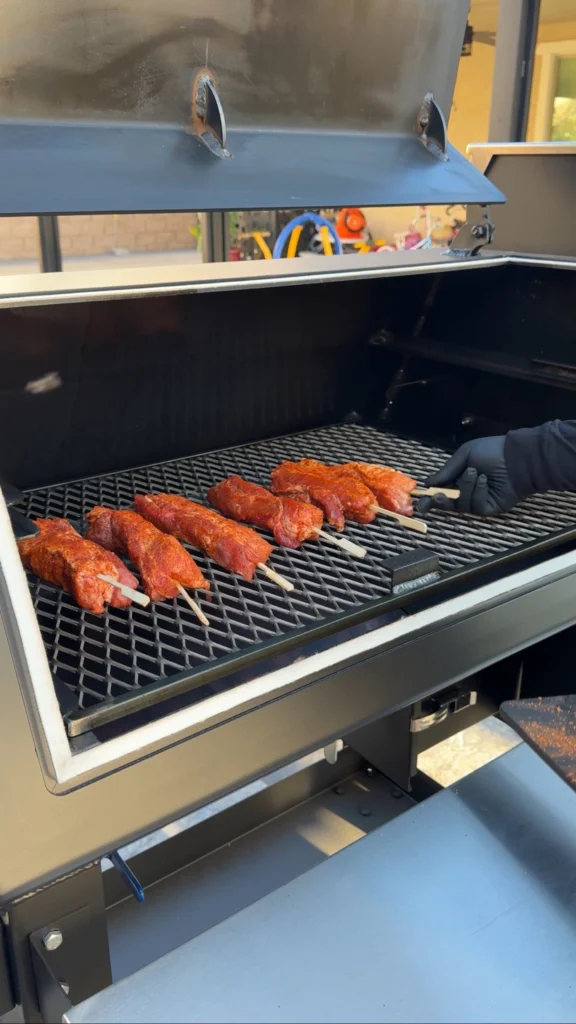
The secret to perfect pork belly lollipops lies in the two-stage cooking method. The initial smoking phase develops the smoke ring and creates the foundational flavors. Maintain smoker temperature between 225-250°F for consistent results. Too high heat will render the fat too quickly, while too low won’t properly cook the meat.
During the smoking phase, the pork belly develops its characteristic bark and absorbs smoke flavor. This typically takes 2-2.5 hours, depending on thickness and smoker temperature. The meat should reach an internal temperature of around 160°F before moving to the braising phase.
The braising phase is where the magic happens. The brown sugar caramelizes while the BBQ sauce provides tangy sweetness. The butter adds richness and helps create the glossy finish. Cover tightly with foil to create a steaming environment that tenderizes the meat while building the glaze.
Creating the Perfect Sweet and Savory Balance
The braising mixture creates the signature flavor profile that makes these lollipops irresistible. Brown sugar provides sweetness and helps with caramelization, while BBQ sauce adds complexity with its blend of sweet, tangy, and smoky elements. The butter creates richness and helps bind the glaze to the meat.
Bacon bits add textural contrast and amplify the pork flavor. Cook bacon until crispy before crumbling to ensure it doesn’t become soggy during the braising process. The bacon should be added during the final stages to maintain its texture while allowing flavors to meld.
Balance is key to preventing the lollipops from becoming overly sweet. Choose a BBQ sauce with good acidity to cut through the richness. The smoky flavor from the initial cooking phase provides the savory backbone that makes these treats truly exceptional.
Ingredients
For the Pork Belly Lollipops:
- 2 lbs pork belly, cut into thick strips
- Your favorite BBQ seasoning
- Wooden skewers, soaked in water
- 6 strips bacon, cooked and crumbled
For the Braising Mixture:
- 1 cup brown sugar
- 1 cup BBQ sauce
- 1 stick (½ cup) unsalted butter
Detailed Step-by-Step Instructions
Step 1: Prepare the Pork Belly and Skewers
Start by selecting high-quality pork belly with even fat distribution throughout. Cut the pork belly into uniform strips approximately 2 inches wide and 3-4 inches long. Consistent sizing ensures even cooking and professional presentation. Pat each strip dry with paper towels to remove excess moisture, which helps the seasoning adhere properly.
Soak wooden skewers in water for at least 30 minutes to prevent burning during the smoking process. Thread each pork belly strip onto a skewer, pushing it through the center to ensure it stays secure during cooking. The skewer should go through the meat firmly but not so tight that it splits the strip.
Step 2: Season and Prepare the Smoker
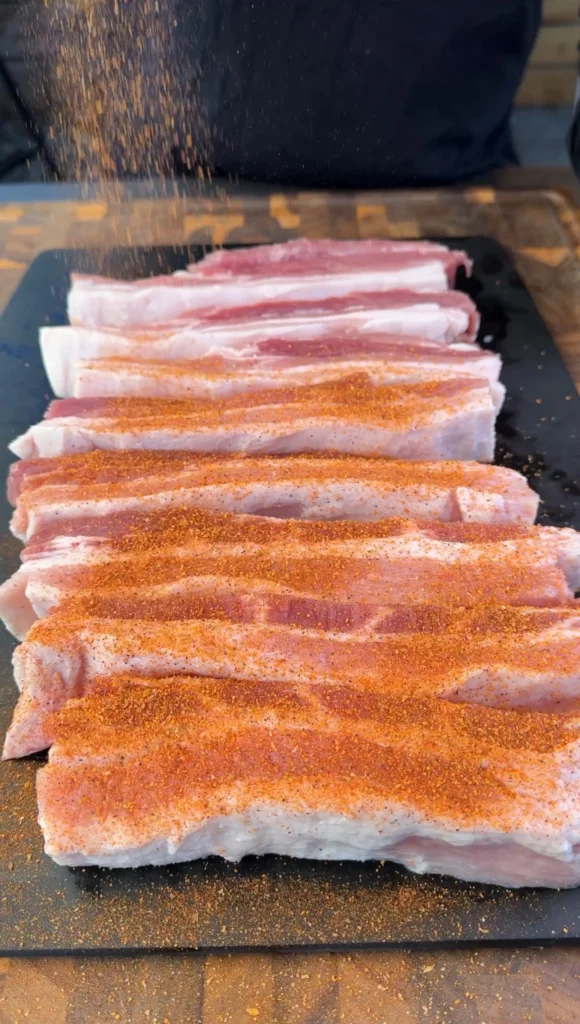
Apply your favorite BBQ seasoning generously to all sides of the pork belly strips. Press the seasoning into the meat to ensure good adherence. Let the seasoned meat rest at room temperature for 15-20 minutes while you prepare the smoker. This allows the seasoning to penetrate and the meat to come closer to cooking temperature.
Preheat your smoker to 225-250°F using your preferred wood chips. Apple, cherry, or hickory work exceptionally well with pork belly. Maintain consistent temperature throughout the cooking process for best results. Clean the grates and lightly oil them to prevent sticking.
Step 3: Begin the Smoking Process
Place the seasoned pork belly lollipops directly on the smoker grates, leaving space between each piece for proper air circulation. Close the smoker and maintain temperature between 225-250°F. Avoid opening the smoker frequently as this causes temperature fluctuations and extends cooking time.
Smoke the lollipops for 2 to 2.5 hours until they develop a nice bark and reach an internal temperature of approximately 160°F. The exterior should be nicely caramelized with a deep color from the seasoning. During this phase, the meat absorbs smoke flavor and begins rendering fat.
Step 4: Prepare the Braising Mixture
While the pork belly smokes, prepare your braising mixture. In a disposable aluminum pan, combine brown sugar, BBQ sauce, and cut the butter into cubes. Mix these ingredients lightly but don’t worry about complete incorporation as the heat will melt and blend everything together during braising.
Cook bacon strips until crispy, then drain on paper towels and crumble into small pieces. Set aside the bacon bits to add during the final stages of cooking. The bacon should be crispy enough to maintain some texture even after braising.
Step 5: Transition to Braising Phase
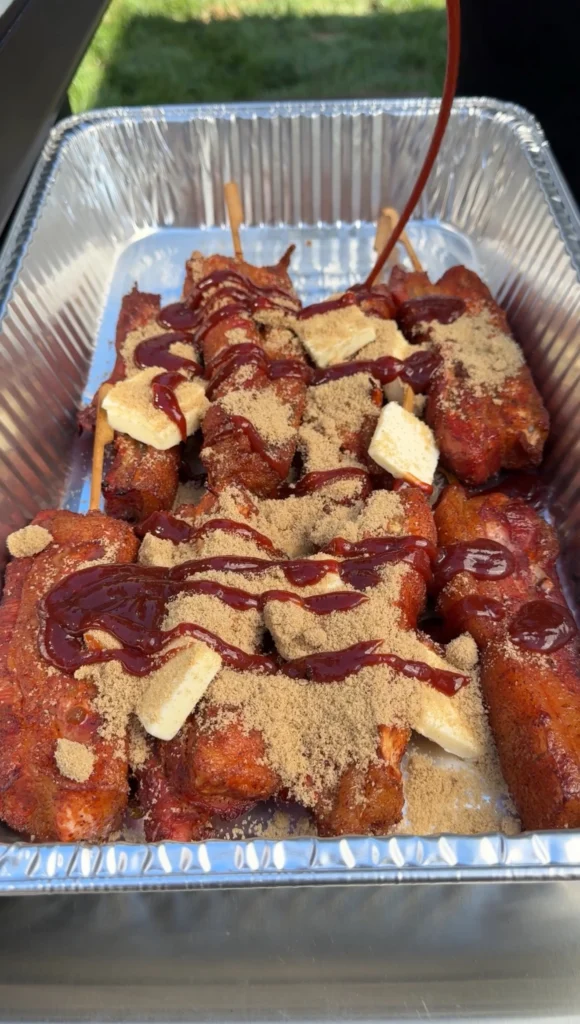
Once the pork belly lollipops have smoked for 2-2.5 hours and reached 160°F internal temperature, carefully transfer them to the prepared aluminum pan with the braising mixture. Arrange them in a single layer, ensuring each piece is in contact with the braising liquid.
Cover the pan tightly with aluminum foil to create a steaming environment. Return the covered pan to the smoker and continue cooking for another 45 minutes to 1 hour. The braising liquid should be bubbling gently, creating steam that tenderizes the meat while building the glaze.
Step 6: Add Bacon Bits and Final Glaze
Remove the foil from the pan and sprinkle the crumbled bacon bits over the pork belly lollipops. The braising liquid should have reduced and become syrupy, coating the meat with a glossy glaze. If the liquid seems too thin, continue cooking uncovered for additional time to reduce further.
Baste the lollipops with the pan juices to ensure even coating. The internal temperature should reach 190-200°F for optimal tenderness. The meat should be tender enough that it yields easily to gentle pressure but still holds its shape on the skewer.
Step 7: Rest and Serve
Remove the pan from the smoker and let the pork belly lollipops rest for 5-10 minutes. This allows the glaze to set slightly and makes handling easier. The lollipops should have a beautiful mahogany color with a glossy, sticky surface covered in bacon bits.
Carefully transfer the lollipops to a serving platter, being mindful that the glaze may be very hot. Serve immediately while warm for the best experience. The combination of smoky pork belly, sweet glaze, and crispy bacon creates an irresistible flavor combination that’s perfect for any BBQ gathering.
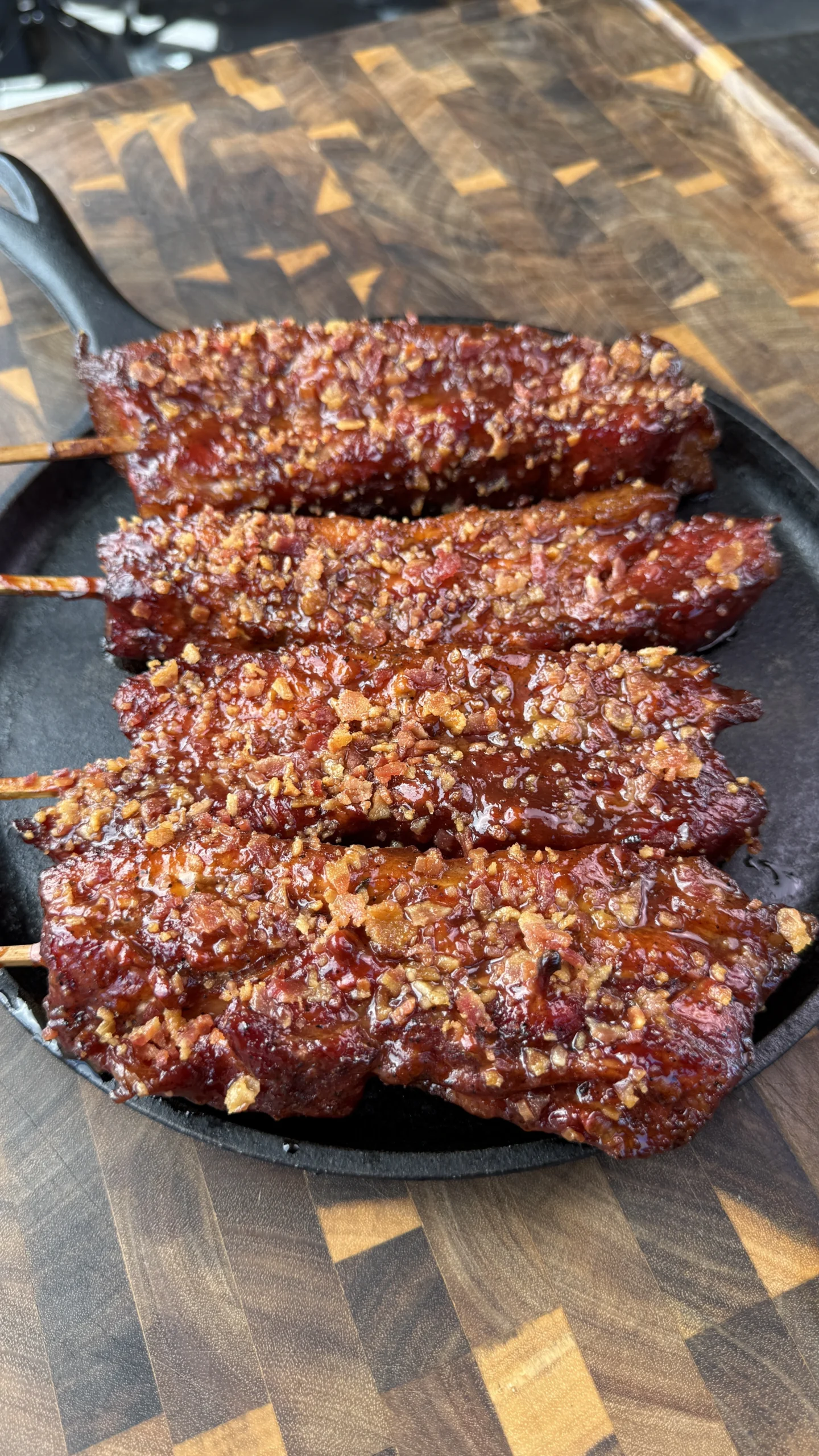
Smoked Pork Belly Lollipops with Bacon Bits and Brown Sugar Glaze
Ingredients
Method
- Cut pork belly into 2×3 inch strips; thread onto soaked skewers
- Season generously with BBQ seasoning; let rest 15-20 minutes
- Preheat smoker to 225-250°F with wood chips
- Smoke lollipops 2-2.5 hours until internal temp reaches 160°F
- Prepare braising mixture with brown sugar, BBQ sauce, and butter in aluminum pan
- Transfer smoked lollipops to braising pan; cover tightly with foil
- Continue cooking covered 45 minutes-1 hour until tender and glazed
- Add crumbled bacon bits; rest 5-10 minutes before serving
Notes
– Maintain consistent smoker temperature for best results
– Internal temperature should reach 190-200°F for optimal tenderness
– Bacon bits should be crispy before adding to maintain texture
Tried this recipe?
Let us know how it was!Conclusion
These smoked pork belly lollipops represent the perfect marriage of technique and flavor that makes BBQ truly special. The combination of smoky pork belly, sweet brown sugar glaze, and crispy bacon creates an unforgettable eating experience that’s sure to be the hit of any gathering. The two-stage cooking process may seem complex, but the results are absolutely worth the effort.
The beauty of this recipe lies in its impressive presentation and crowd-pleasing flavors. Master this technique once, and you’ll have a signature dish that guarantees requests for the recipe every time you serve it. Fire up that smoker and prepare to create some truly memorable BBQ!
This is where I keep all my most-used products, gear, and favorite cooking tools — check it out:
https://linktr.ee/cooking_with_fire___
If you loved this recipe, you’ll find more to savor across our diverse categories. From beef to pork, chicken to turkey, seafood to appetizers, there’s a wealth of flavors waiting for you. Explore them all at CWFeats.