
Smoked Tomahawk Steak with Reverse Sear and Garlic Butter

Smoked tomahawk steak is a thick-cut ribeye with the long rib bone attached, seasoned with salt, pepper, and garlic, then smoked at 250°F until it reaches 125°F internal temperature for medium-rare. You then sear it over high heat for 90 seconds per side while basting with garlic butter sauce made from softened butter, minced garlic, and fresh parsley. The reverse sear method cooks the steak gently and evenly through smoking, then finishes with high heat to create a caramelized crust. This produces edge-to-edge pink throughout with a thin band of char and a visible smoke ring. The reverse sear tomahawk delivers steakhouse quality with the added dimension of wood smoke flavor and dramatic presentation from the exposed bone handle.
The whole process takes about 90 minutes from start to finish. Spend 10 minutes seasoning the steak and making the garlic butter. Smoke for 45-60 minutes until the steak reaches target temperature. Sear for 3 minutes total over screaming hot heat. Rest for 5 minutes before slicing. The long bone makes this steak visually stunning for special occasions and dinner parties. The reverse sear technique ensures perfect doneness every time since you control the internal temperature precisely before adding the sear. This method produces consistently better results than traditional high-heat grilling that often creates gray bands of overcooked meat around a rare center.
What Is Reverse Sear and Why Does It Work
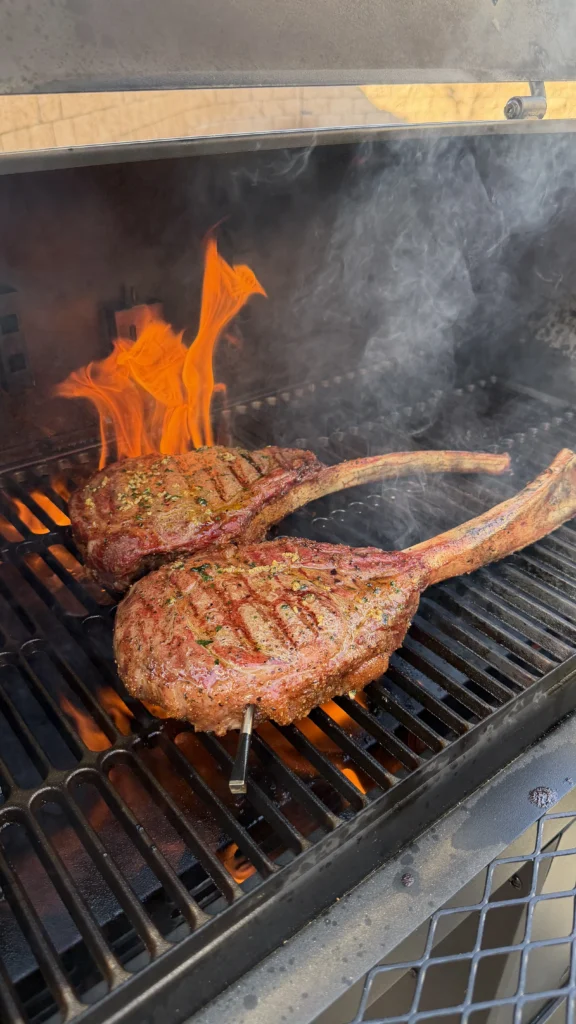
Reverse sear is a cooking method where you slowly cook meat at low temperature first, then finish with high-heat searing. This is the opposite of traditional steak cooking where you sear first and finish in the oven. For smoked tomahawk steak, you smoke at 250°F until the internal temp reaches about 125°F, then sear over 500°F+ heat for crust development. This two-stage approach gives you complete control over internal doneness before adding the exterior crust.
The low-temperature smoking phase cooks the steak evenly from edge to edge without creating the gray band of overcooked meat you get with traditional high-heat methods. When you grill a thick steak over high heat the entire time, the exterior overcooks while heat slowly penetrates to the center. The result is a steak with a thick gray ring around a small rare center. Reverse sear eliminates this problem by bringing the entire steak to near-final temperature gently before searing.
The gentle cooking also allows better moisture retention. High heat squeezes juices out of meat as proteins contract rapidly. Low heat cooking is more gradual, allowing proteins to set without violent contraction. When you finally sear the steak, it’s already cooked to doneness and only needs 90 seconds per side for crust. This brief high heat exposure browns the exterior without significantly affecting the interior temperature or moisture content.
The smoke ring development is another major benefit. Smoke compounds penetrate meat better at lower temperatures over longer time. The 45-60 minutes at 250°F gives smoke plenty of time to create a visible pink ring around the perimeter. Traditional grilling doesn’t allow enough smoke exposure time for ring development. The reverse sear method delivers authentic smoke flavor and appearance that makes this steak special beyond just being well-cooked.
What Temperature Should You Smoke Tomahawk Steak
Smoke tomahawk steak at 250°F for the ideal balance of cooking speed and smoke absorption. This temperature cooks the thick steak through in 45-60 minutes while allowing sufficient time for smoke flavor to penetrate. Lower temperatures like 225°F extend smoking to 75-90 minutes without significantly improving results. The steak absorbs maximum smoke in the first hour, so longer cooking just extends time without adding proportional flavor.
Higher temperatures like 300°F+ cook too fast, finishing before adequate smoke penetration occurs. You’d get a steak that’s cooked properly but lacks the smoke ring and wood flavor that justify using a smoker. The 250°F sweet spot gives you an hour of smoking time, which is enough for noticeable smoke character without being overwhelming. Tomahawk is a premium cut that should taste like beef first, smoke second.
The target internal temperature depends on your preferred doneness. For medium-rare, pull at 125-128°F. The steak will rise to 130-135°F final temperature after searing and resting through carryover cooking. For rare, pull at 118-120°F for a final temp around 125°F. For medium, pull at 132-135°F for a final temp around 140°F. Never cook tomahawk past medium or you waste the expensive, well-marbled meat by drying it out.
Insert an instant-read thermometer into the thickest part of the steak away from the bone. The bone conducts heat differently than meat and gives false readings. Check in 2-3 spots since thick steaks cook unevenly. The center takes longest to reach temperature and is your final checkpoint. Start checking at 40 minutes if you’re smoking at 250°F. When the thickest spot hits your target temp, pull immediately and prep for searing.
How Long Should You Sear Tomahawk Steak After Smoking
Sear reverse sear tomahawk for exactly 90 seconds per side over screaming hot 500°F+ heat. This brief searing time creates a caramelized crust through Maillard reaction while barely affecting the internal temperature. The steak is already cooked to target doneness from smoking, so you’re just adding exterior browning and texture. Longer searing times risk overcooking the outer portions and ruining the edge-to-edge pink you worked to achieve.
The high heat is critical for proper crust development in such short time. Your grill or cast iron skillet should be as hot as possible before the steak touches it. If you are using a charcoal grill, bank all coals on one side and sear directly over them with the lid open. For gas grills, turn all burners to high and preheat for 10-15 minutes. For cast iron, heat over high heat for 5 minutes until smoking hot. The steak should sizzle loudly the instant it hits the cooking surface.
Baste with garlic butter during searing to add flavor and create an even more luxurious crust. Apply butter twice per side during the 90-second sear. The butter solids brown and caramelize, creating nutty flavor and darker color. The garlic toasts slightly, adding aromatic complexity. Don’t baste too early or the butter burns. Wait until you flip the steak, then brush the cooked side. Flip again and brush the other side right before pulling.
Why Let Tomahawk Steak Rest Before Slicing
Resting smoked tomahawk steak for 5-10 minutes after searing allows the proteins to relax and reabsorb juices that were squeezed out during cooking. When you cut into steak immediately, these juices run out onto the cutting board, leaving the meat drier. The rest period gives proteins time to relax and reabsorb moisture, resulting in juicier slices. This happens because the heat-contracted proteins loosen as the steak cools slightly, creating space for liquid to redistribute.
The internal temperature continues rising during rest through carryover cooking. After removing from the screaming hot grill, residual heat in the outer portions continues to penetrate inward. A steak pulled at 125°F will reach 130-135°F during a 5-10 minute rest. This is why you pull before your final target temperature. If you waited until 135°F to pull for medium-rare, it would end up at 140-145°F medium after rest, which is overcooked.
The resting period also makes slicing easier and safer. Steak straight off a 500°F+ grill is dangerously hot to handle. Letting it rest brings the temperature down to where you can safely cut it without burning yourself or having it slide around on the cutting board from the heat. The meat also firms up slightly during rest, creating cleaner slices that hold their shape better on the plate.
Cover the steak loosely with foil during rest if you want to retain more heat, but don’t wrap it tightly or you’ll steam the crust and make it soggy. The goal is gentle resting, not continued cooking.
What Makes Tomahawk Steak Different from Ribeye
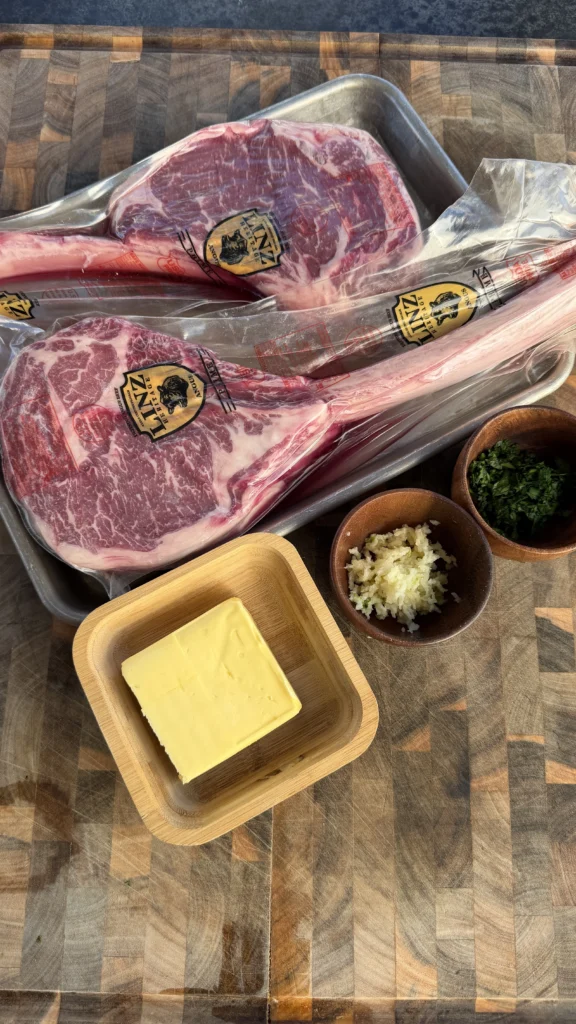
Tomahawk steak is a ribeye with the entire rib bone left attached and frenched for dramatic presentation. Regular ribeye is cut close to the bone or boneless. The tomahawk’s bone extends 5-8 inches from the meat, resembling a tomahawk axe handle. This bone adds significant weight without adding meat, so a 2.5 lb tomahawk has less actual beef than a 2.5 lb boneless ribeye. You’re paying partly for presentation and the bone handle.
The bone does contribute flavor during cooking. As the steak cooks, the bone marrow heats and releases rich, beefy flavors that enhance the meat near the bone. The bone also acts as insulation, slowing cooking near it while the rest of the steak cooks normally. This creates slight variations in doneness across the steak, with the area near the bone being a bit more rare than the outer edges. Some people consider this variety a feature, not a bug.
Tomahawk steaks are typically cut thicker than standard ribeyes, usually 2-3 inches thick compared to 1-1.5 inches for regular ribeye. This extra thickness makes them ideal for reverse sear method since thin steaks would overcook during the smoking phase. The thick cut also creates a more impressive presentation when sliced, showing a larger cross-section of that beautiful medium-rare interior with smoke ring.
The price premium for tomahawk is substantial despite getting less meat per pound. The frenching process (cleaning the bone) takes butcher time and skill. The dramatic presentation makes it a specialty cut that commands higher prices. From a pure value perspective, boneless ribeye gives you more meat for your money. But for special occasions where presentation matters, the smoked tomahawk steak creates an unforgettable experience that justifies the premium.
Smoked Tomahawk Steak
Reverse sear with garlic butter sauce
Ingredients
Tomahawk Steak
- 1 tomahawk steak (2-3 lbs)
- Steak seasoning or coarse salt, black pepper, and garlic powder
Garlic Butter Sauce
- 1 stick unsalted butter, softened
- 4-5 cloves garlic, minced
- 1 tablespoon fresh parsley, chopped
Let the tomahawk steak sit at room temperature for 45-60 minutes before smoking. Cold steak from the fridge creates uneven cooking with a cold center and overcooked edges. Room temperature steak cooks evenly from edge to edge for perfect medium-rare throughout.
Step-by-Step Instructions
Step 1: Bring Steak to Room Temperature and Season
Remove the tomahawk steak from the refrigerator 45-60 minutes before cooking. Place it on a wire rack set over a plate or baking sheet. This allows air circulation around all sides while catching any drips. The steak should reach room temperature throughout, not just on the surface. Cold steak creates uneven cooking with a cold center when the exterior reaches target temp.
Pat the steak completely dry with paper towels, removing all surface moisture. Dry meat accepts seasoning better and browns more effectively during searing. Wet surfaces steam rather than brown, creating gray meat instead of caramelized crust. Pay special attention to any crevices or folds where moisture hides. The steak should feel dry to the touch everywhere.
Season generously with your favorite steak seasoning or a simple blend of coarse salt, black pepper, and garlic powder. Use approximately 1-2 tablespoons total seasoning for a 2-3 lb tomahawk. Press the seasoning into the meat firmly with your hands, making sure it adheres well. Cover all exposed surfaces including the sides and the area near the bone. Let the seasoned steak sit at room temperature while you prepare the smoker and garlic butter.
Step 2: Make the Garlic Butter Sauce
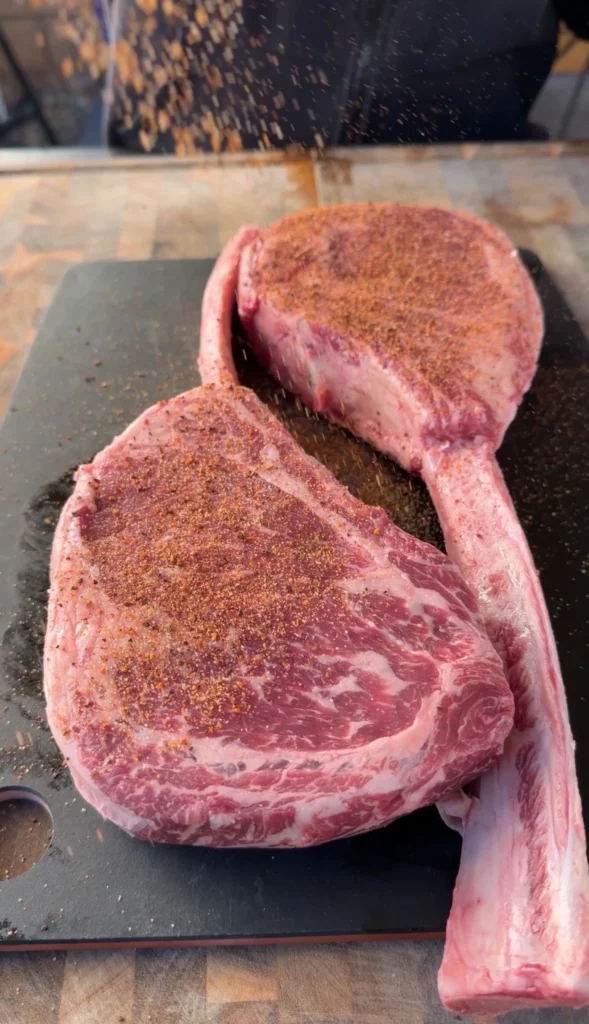
In a small bowl, combine 1 stick of softened unsalted butter with 4-5 cloves of minced garlic and 1 tablespoon of chopped fresh parsley. The butter should be room temperature and soft enough to mix easily. Cold butter won’t incorporate the garlic and parsley evenly. Use a fork or spoon to mash and mix everything together until uniform.
The garlic should be minced very fine so it distributes evenly and doesn’t burn during the high-heat searing. Use a garlic press, microplane, or mince by hand with a sharp knife. Fresh parsley is essential for color and fresh herb flavor. Dried parsley doesn’t provide the same visual appeal or taste. The mixture should be pale yellow with visible flecks of green parsley and garlic pieces throughout.
Set the garlic butter aside at room temperature so it stays soft and spreadable. If you make it ahead and refrigerate, bring it back to room temperature before use. Cold butter won’t brush onto the hot steak properly. You’ll use this butter for basting during the final searing stage and for serving alongside the sliced steak. Make extra if you want more for serving.
Step 3: Preheat Smoker to 250°F
Set your smoker to 250°F using a mild to medium wood. Oak provides clean, neutral smoke that lets the beef flavor shine. Cherry adds subtle sweetness and beautiful color. Pecan is slightly stronger but still pairs well with beef. Avoid mesquite or hickory which can overpower the expensive tomahawk. Let the smoker preheat completely and stabilize at 250°F with thin blue smoke before adding the steak.
For pellet smokers, this preheating takes 10-15 minutes. For offset smokers, build your fire and let it burn down to clean-burning coals with steady heat. You want consistent 250°F with no wild temperature swings. Temperature consistency matters more for reverse sear than for low-and-slow BBQ since you’re targeting a specific internal temperature. Every degree of variation affects your timing and final results.
If using a grill with a smoker box or foil packet of wood chips, set it up for two-zone cooking with heat on one side and the steak on the cool side. Place the wood directly over the heat source to generate smoke. The goal is 250°F indirect heat with steady smoke production. Check your setup with an oven thermometer if you’re uncertain about built-in gauge accuracy.
Step 4: Smoke the Tomahawk Steak
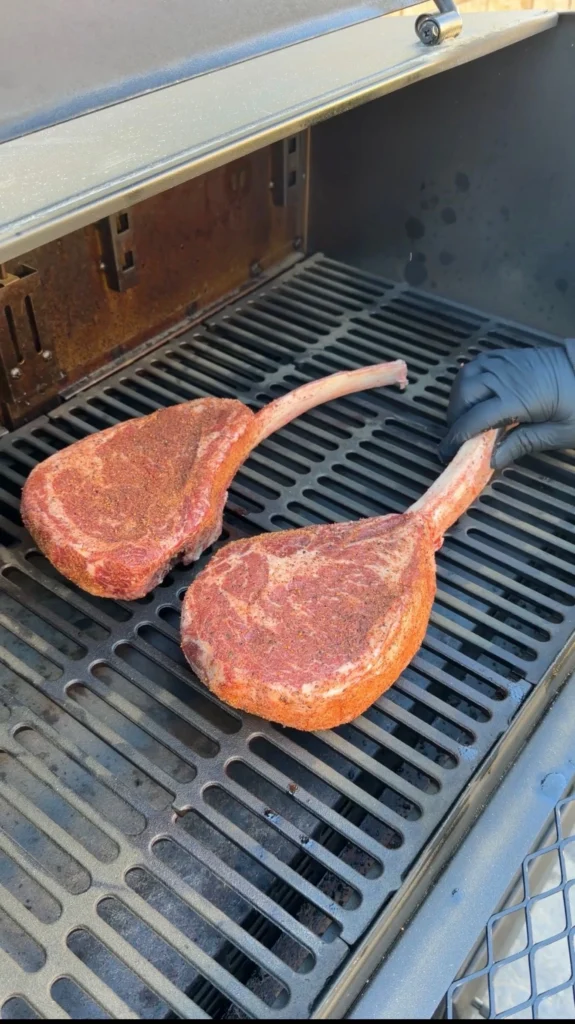
Place the room-temperature, seasoned tomahawk steak directly on the smoker grate on the cool side, away from direct heat. Insert a leave-in probe thermometer into the thickest part of the steak if you have one, making sure not to touch the bone. Position the probe so you can monitor temperature without opening the smoker. Close the lid and smoke undisturbed.
For the first 40 minutes, don’t open the smoker. The steak needs consistent heat and smoke to cook evenly and develop a smoke ring. Every time you open the lid, you lose heat and smoke, extending cooking time and creating temperature fluctuations. Let it smoke in peace while you prepare your searing station and get everything ready for the final steps.
At 40 minutes, start checking internal temperature with an instant-read thermometer if you don’t have a leave-in probe. Insert it into the thickest part away from bone. You’re looking for 125-128°F for medium-rare. If it reads below 120°F, close the lid and check again in 10 minutes. If it’s at 123-125°F, start preparing to pull it soon. The final few degrees happen quickly.
When the steak reaches 125°F internal temperature (or your preferred target based on the doneness chart), remove it from the smoker immediately. The steak should have a noticeable smoke ring around the perimeter and darker, dried exterior from the smoking process. Transfer it to a plate while you prepare the grill or skillet for searing. Work quickly since you want to sear while the steak is still hot from smoking.
Step 5: Sear Over High Heat with Garlic Butter
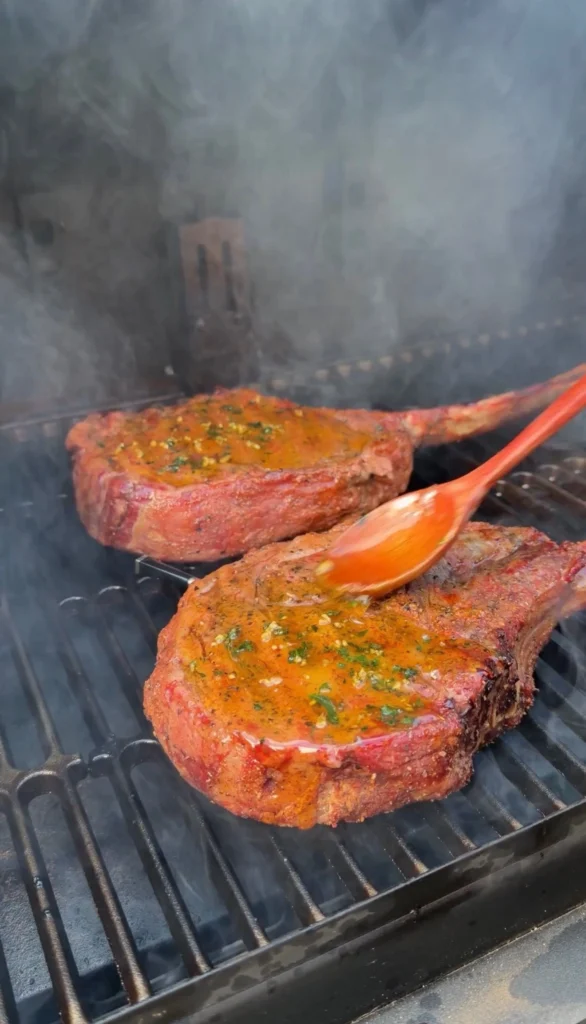
While the steak was smoking, preheat your grill or cast iron skillet to maximum heat. For grills, all burners on high or all charcoal banked on one side. For cast iron, heat over high heat for 5 minutes until smoking hot. The cooking surface should be 500°F+ for proper searing. If using charcoal, wait until coals are white-hot and glowing.
Place the smoked tomahawk steak on the screaming hot grill or in the skillet. It should sizzle violently on contact. Sear for 90 seconds without moving. After 90 seconds, flip and immediately brush the cooked side with garlic butter using a silicone basting brush. The butter will melt and sizzle, creating aromatic steam and additional browning.
Sear the second side for 90 seconds. Right before removing, flip one more time and brush the second side with garlic butter. This ensures both sides get butter basting. If the steak has a thick fat cap on the edge, use tongs to stand it up on that edge for 30-60 seconds to render and crisp the fat. The total searing time should be under 4 minutes including fat cap crisping.
Remove the smoked tomahawk steak when both sides are deeply browned with visible grill marks or sear marks and the garlic butter is caramelized into the crust. The steak should smell incredible with toasted garlic and browned butter aromas. Transfer to a cutting board and loosely tent with foil. The internal temperature will have risen to 128-132°F from the brief searing, perfect for medium-rare after rest.
Step 6: Rest and Slice
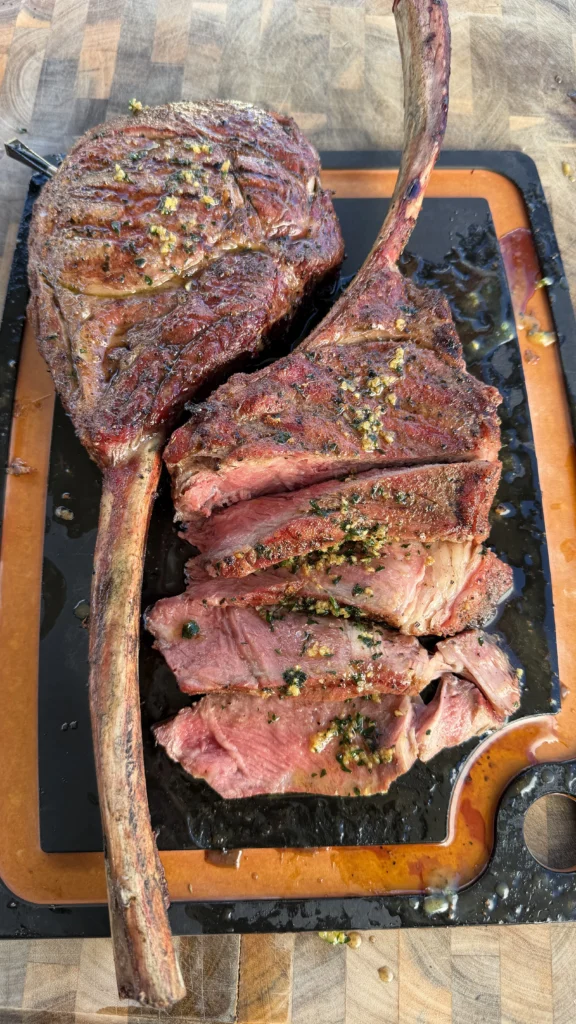
Let the tomahawk steak rest for 5-10 minutes loosely tented with foil. Don’t skip this step or wrap it tightly. The rest allows juices to redistribute and the internal temperature to stabilize at 130-135°F final temperature. The steak firms up slightly, making it easier and safer to slice. The crust sets into its final texture during this time.
After resting, place the tomahawk on a cutting board. If serving whole for presentation, transfer directly to a serving platter with the bone pointing up dramatically. For slicing, cut along the bone to remove the ribeye portion, then slice the meat against the grain into 1/2 inch thick slices. The grain runs in the same direction as the bone, so cutting perpendicular to the bone slices against the grain.
Arrange the slices on a platter, slightly overlapping them to show the beautiful medium-rare interior with smoke ring. Place the bone alongside for presentation since it’s part of the tomahawk experience. Spoon remaining garlic butter over the slices or serve it on the side. The reverse sear tomahawk should show perfect edge-to-edge pink with just a thin band of brown crust and visible smoke ring around the perimeter.
Serve immediately while hot. This steak pairs perfectly with classic steakhouse sides like baked potatoes, creamed spinach, roasted asparagus, or Caesar salad. The rich, beefy flavor and garlic butter don’t need sauce, but you can serve with chimichurri, blue cheese butter, or horseradish cream if desired. The long bone makes a dramatic presentation that guests will remember long after the meal ends.
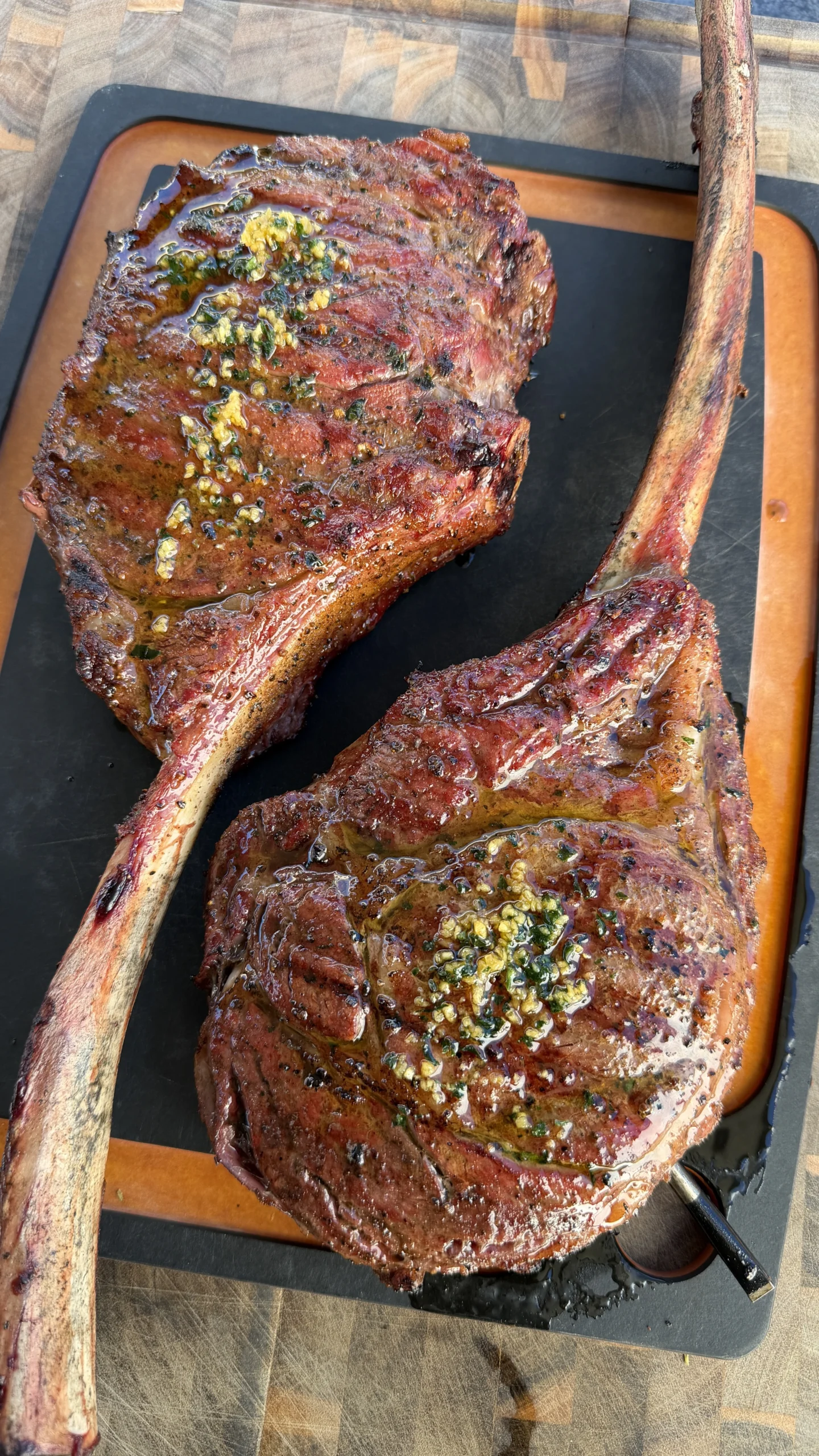
Smoked Tomahawk Steak with Reverse Sear and Garlic Butter
Ingredients
Method
- Remove tomahawk from refrigerator 45-60 minutes before cooking. Pat completely dry and season generously with steak seasoning or salt, pepper, and garlic powder.
- Make garlic butter by mixing softened butter with minced garlic and chopped parsley. Set aside at room temperature.
- Preheat smoker to 250°F with oak, cherry, or pecan wood. Let stabilize at temperature.
- Place seasoned steak on smoker grate away from direct heat. Insert probe thermometer into thickest part. Smoke until internal temperature reaches 125°F for medium-rare (or your preferred target), typically 45-60 minutes.
- While steak smokes, preheat grill or cast iron skillet to maximum heat (500°F+).
- When steak reaches target temp, remove from smoker. Sear on screaming hot grill or skillet for 90 seconds per side, basting twice with garlic butter during searing.
- Rest 5-10 minutes loosely tented with foil. Slice against the grain and serve with remaining garlic butter.
Notes
Tried this recipe?
Let us know how it was!Frequently Asked Questions
Can I use this method for regular ribeye instead of tomahawk?
Yes, reverse sear works excellently for any thick-cut steak including regular ribeye, New York strip, or filet mignon. The key is thickness – steaks should be at least 1.5 inches thick, preferably 2+ inches. Thinner steaks overcook during smoking before developing good smoke flavor. Adjust smoking time based on thickness – a 1.5 inch ribeye finishes in 30-40 minutes while a 2.5 inch tomahawk needs 50-60 minutes.
The searing technique remains identical regardless of cut. Pull at your target temperature, sear over high heat for 90 seconds per side, baste with garlic butter, and rest before slicing. Regular ribeye costs significantly less than tomahawk while delivering the same eating experience minus the bone presentation. For everyday reverse sear cooking, boneless ribeye or strip steaks are more economical choices.
What if I don’t have a smoker?
Use your gas or charcoal grill set up for two-zone cooking with wood chunks for smoke. Place all heat on one side and the steak on the cool side with the lid closed. Maintain 250°F by adjusting vents or burner settings. Add soaked wood chunks directly on the coals or in a smoker box over gas burners. The technique is identical to using a dedicated smoker, just requires more attention to maintain steady temperature.
For oven cooking, roast at 250°F on a wire rack over a baking sheet until the steak reaches target temperature. You won’t get smoke flavor, but the reverse sear technique still produces perfect edge-to-edge doneness. Add 1 teaspoon of liquid smoke to the garlic butter to mimic smoke flavor. Sear in a cast iron skillet since you can’t use the grill. The results are still excellent, just without authentic smoke ring and wood flavor.
How do I know when to pull the steak from the smoker?
Use an instant-read or leave-in probe thermometer inserted into the thickest part of the steak away from bone. Pull when it reaches 5-7 degrees below your final target temperature to account for temperature rise during searing and rest. For medium-rare with final temp 130-135°F, pull at 125°F. For rare, pull at 118-120°F. For medium, pull at 132-135°F.
Visual cues are unreliable for reverse sear since the smoking process darkens the exterior. You can’t judge doneness by color or feel until after searing. The thermometer is your only reliable guide. Start checking at 40 minutes for a 2-3 lb tomahawk at 250°F. Check every 5-10 minutes once you’re within 10 degrees of target. The final degrees happen faster than you expect, so stay vigilant.
Can I prepare the garlic butter ahead of time?
Yes, make the garlic butter up to 3 days ahead and refrigerate in an airtight container. Bring to room temperature 1-2 hours before use so it’s soft enough to brush onto the hot steak. Cold butter won’t spread properly and may not melt evenly during the brief searing time. Making butter ahead actually improves flavor as the garlic infuses more deeply into the fat.
You can also freeze garlic butter for up to 3 months. Form it into a log, wrap tightly in plastic wrap and foil, then slice off portions as needed. Thaw in refrigerator overnight before using. The butter may separate slightly after freezing, but stirring while it comes to room temperature brings it back together. Fresh parsley is still preferable, but dried works in a pinch for make-ahead butter.
What sides pair well with smoked tomahawk steak?
Classic steakhouse sides complement smoked tomahawk steak perfectly. Loaded baked potatoes, twice-baked potatoes, or garlic mashed potatoes provide rich starch that balances the beef. Creamed spinach, sautéed mushrooms, or grilled asparagus add vegetables without competing with the steak. Caesar salad or wedge salad with blue cheese provide freshness and crunch.
For a complete steakhouse experience at home, serve with compound butters beyond garlic butter – try blue cheese butter, herb butter, or red wine butter. Roasted Brussels sprouts with bacon, mac and cheese, or French fries all work beautifully. Keep sides relatively simple and let the tomahawk be the star. The dramatic bone presentation and perfect medium-rare interior with smoke ring create enough visual interest that sides should support rather than distract.
Ready to Take Your Cooking to the Next Level?
This is where I keep all my most-used products, gear, and favorite cooking tools — check it out:
🔥 View My Cooking Gear & ToolsRecipe Categories
If you loved this recipe, you’ll find more to savor across our diverse categories. From beef to pork, chicken to turkey, seafood to appetizers, there’s a wealth of flavors waiting for you. Explore them all at CWFeats.