
Smoked Molasses Coffee Beef Rib Burnt Ends
This burnt ends recipe turns 2 pounds of boneless beef ribs into smoky, sticky, fall-apart tender bites using a two-phase cook: a 250°F applewood smoke until the cubes hit 175°F with a deep mahogany bark (2 to 3 hours), followed by a 2-hour covered braise in a homemade molasses coffee BBQ sauce. The seasoning stays simple on purpose — equal parts kosher salt, coarse black pepper, and garlic powder — so the smoke and the sauce do the heavy lifting. Ten minutes before the finish, the foil comes off and the sauce reduces into a rich, glossy glaze that sets onto every cube. Total cook runs 4 to 5 hours and the payoff is the kind of burnt ends that disappear off the tray before the sides hit the table.
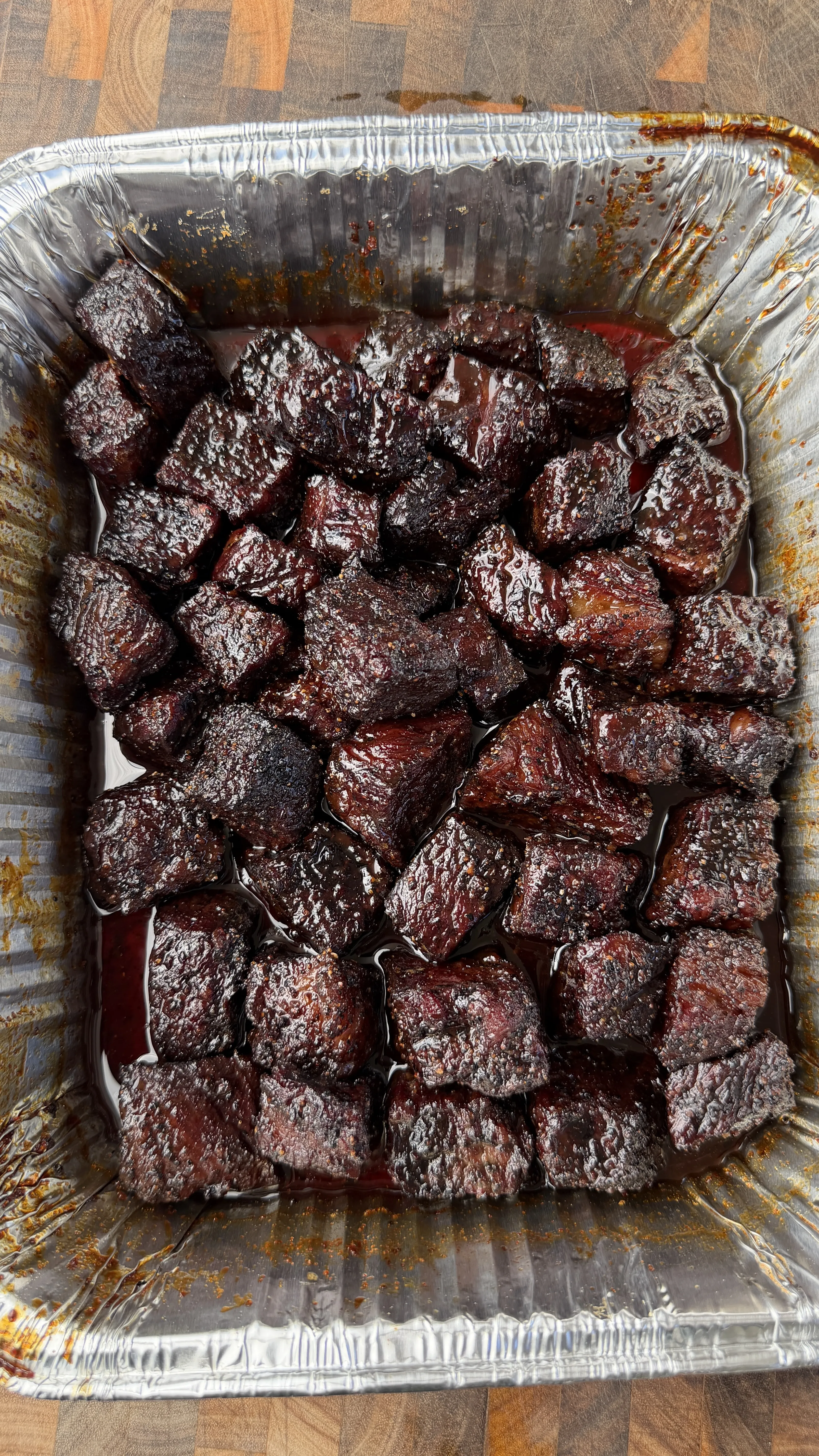
Beef Rib Burnt Ends vs Traditional Brisket Burnt Ends
Where Burnt Ends Come From
Traditional burnt ends are a Kansas City institution made from the point end of a smoked brisket — the fattier, more marbled half that gets cubed, sauced, and returned to the smoker. The catch is that the traditional route requires smoking an entire 12+ pound brisket for 10 to 12 hours to harvest the point. Consequently, pitmasters developed shortcuts using smaller, well-marbled cuts that deliver the same cubed, bark-covered, sauce-glazed result in a fraction of the time. Chuck roast versions earned the nickname “poor man’s burnt ends,” and boneless beef ribs (which are typically cut from the chuck) belong to the same family. This recipe runs that faster path: 4 to 5 hours instead of a full brisket day.
Why Boneless Beef Ribs Work So Well
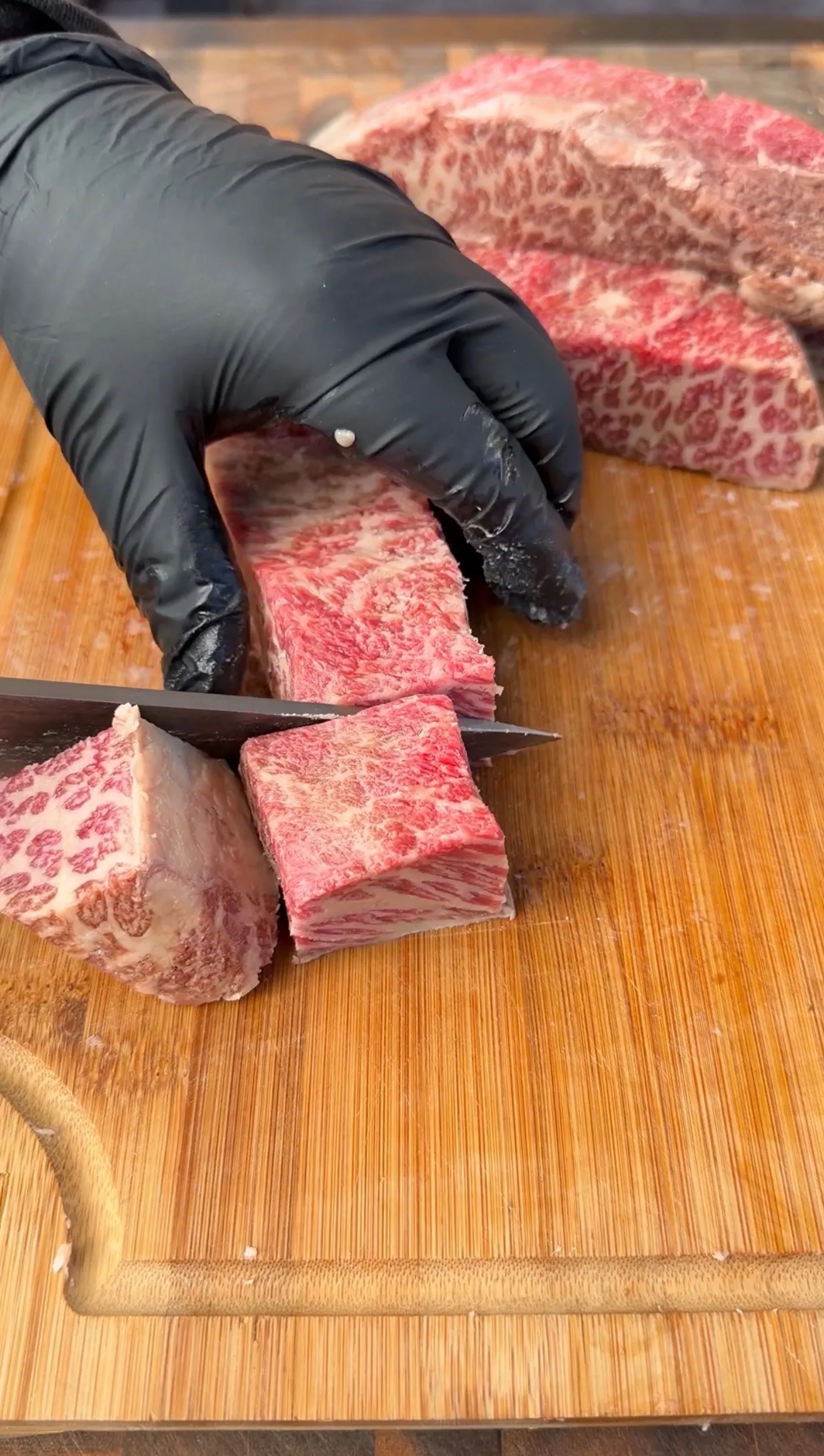
Boneless beef ribs bring two qualities that matter for burnt ends. First, heavy marbling: the intramuscular fat renders during the long cook and bastes each cube from the inside, which is what produces the melt-in-your-mouth texture. Second, high collagen content: the connective tissue that makes these cuts chewy when grilled fast breaks down into gelatin during the braise, creating the fall-apart tenderness burnt ends are known for. Moreover, cutting the ribs into 1-inch cubes before smoking maximizes the bark-to-meat ratio — every cube gets seasoned, smoked surface area on all six sides instead of just the outside of a roast.
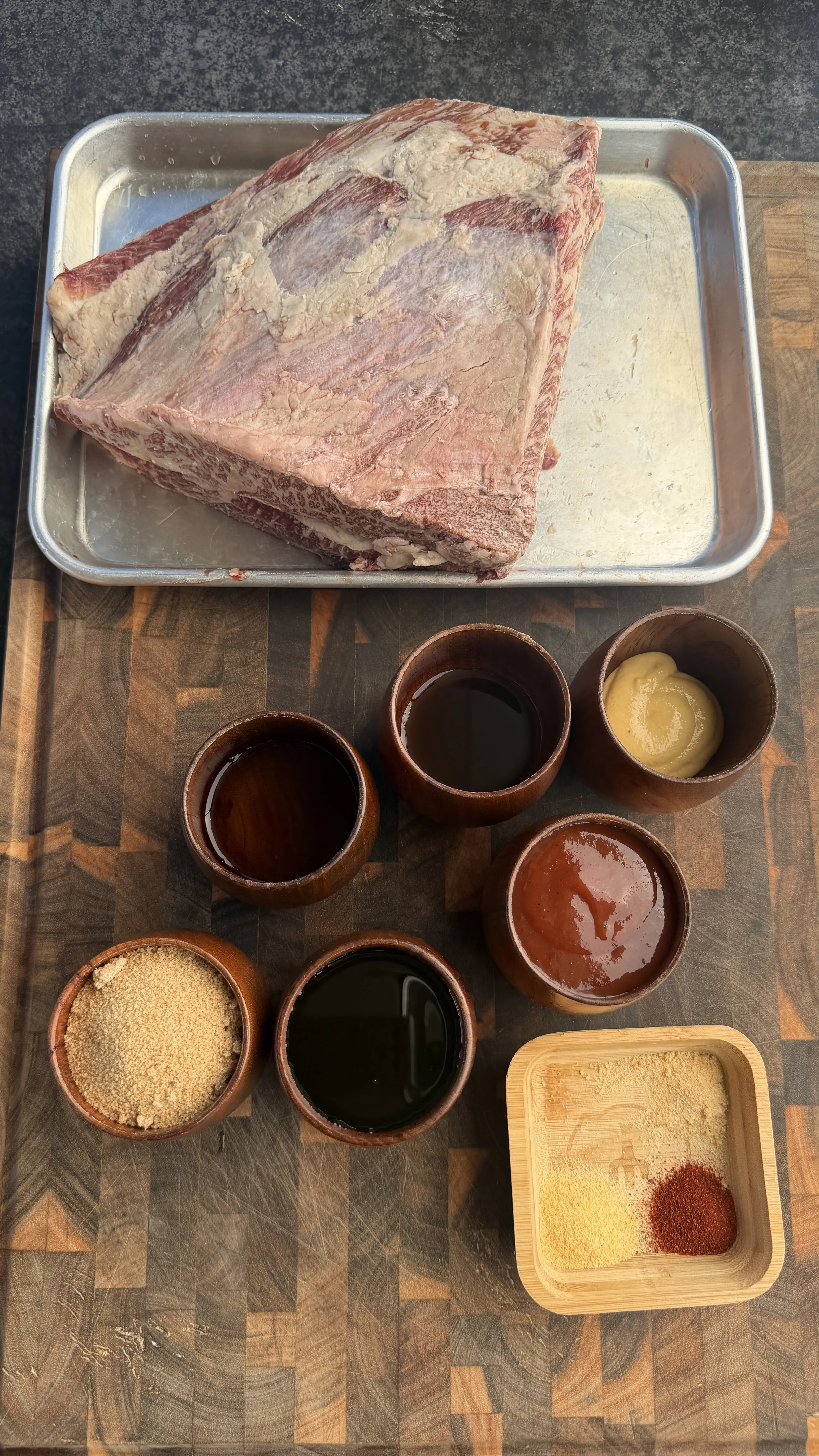
The Molasses Coffee BBQ Sauce
Why Coffee Belongs in a Beef Sauce
Coffee and beef share deep roasted flavor compounds, which is why coffee rubs are a steakhouse standard. In sauce form, the 1/4 cup of strong brewed coffee or espresso works differently than you might expect: it doesn’t make the sauce taste like coffee. Instead, the coffee’s bitterness counterweights the sweetness of the molasses and brown sugar, and its roasted notes amplify the smoke and beef flavors underneath. As a result, the finished glaze tastes deeper and more complex than a standard sweet BBQ sauce, without any single ingredient announcing itself. Brew the coffee strong — weak coffee just adds water.
Molasses as the Backbone, Not Just the Sweetener
The 1/3 cup of dark molasses does three jobs in this sauce. It sweetens, obviously, but it also contributes the bittersweet mineral depth that white sugar and even brown sugar lack, and its thick viscosity is what gives the final glaze its sticky, clinging body. Combined with the ketchup base, apple cider vinegar for acid, Worcestershire and Dijon for savory complexity, and the garlic, onion, pepper, and smoked paprika seasoning, the sauce balances sweet, tangy, bitter, and smoky in every coat. Simmer everything over medium heat for about 5 minutes, just until fully combined — the real reduction happens later on the smoker.
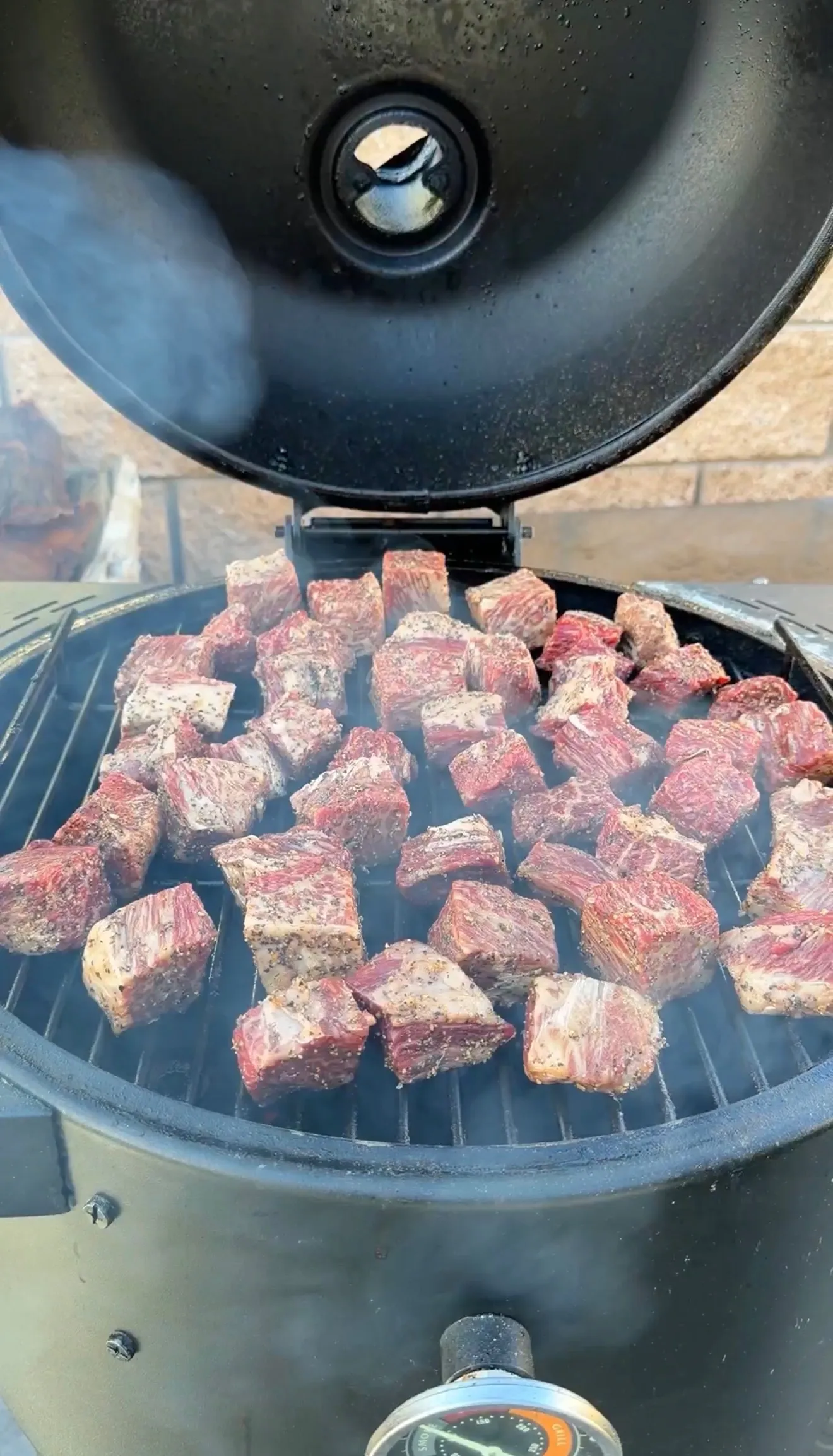
The Smoke Phase: 250°F to a 175°F Bark
Simple SPG Seasoning on Purpose
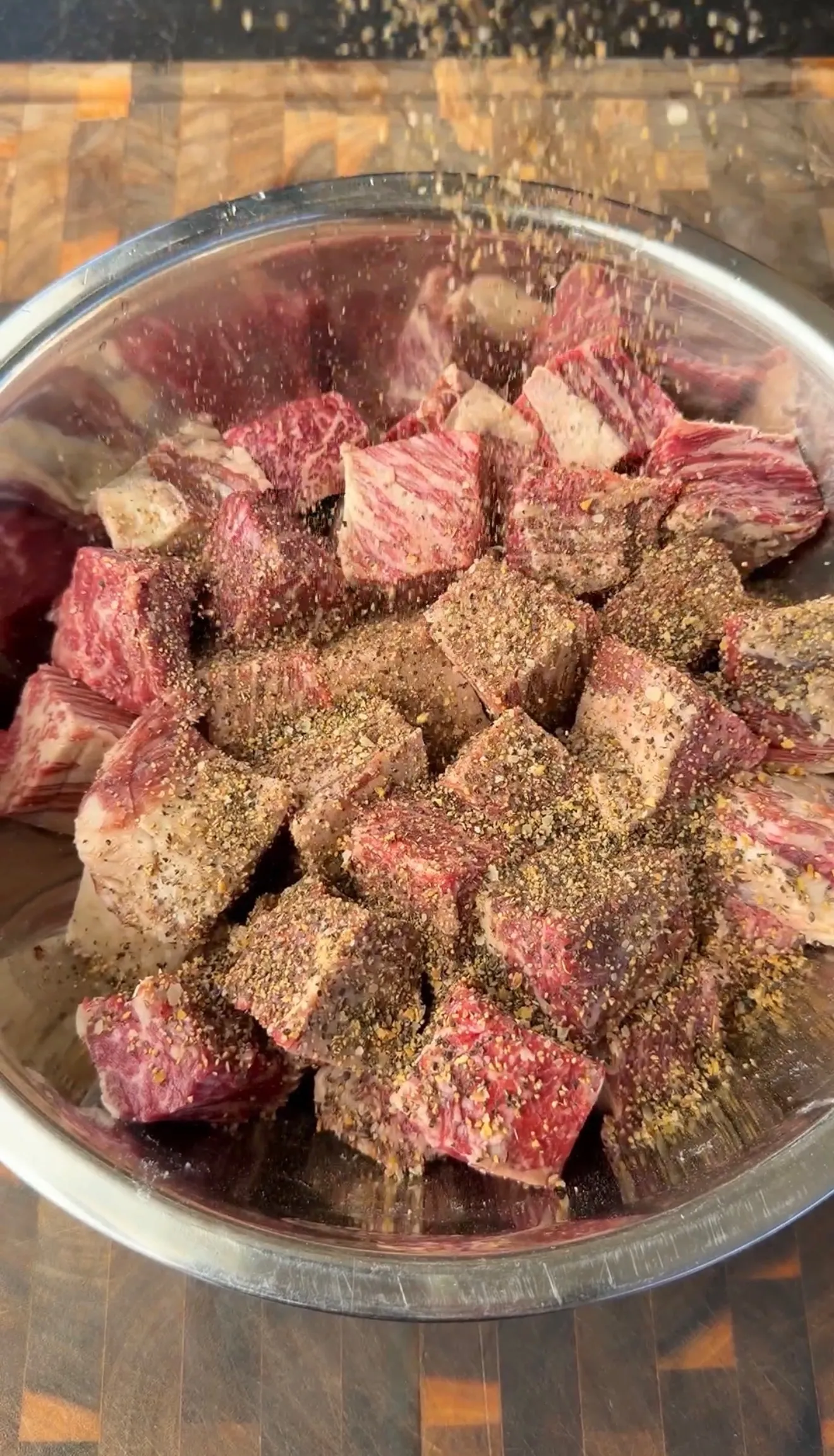
The seasoning is 1 teaspoon each of kosher salt, coarse black pepper, and garlic powder across 2 pounds of cubed beef. That restraint is deliberate. A complex rub would compete with the molasses coffee sauce coming later, and the sugar in most commercial rubs risks burning over the long combined cook. The SPG trio seasons the beef, supports bark formation, and stays out of the sauce’s way. Furthermore, seasoning the cubes after cutting (rather than seasoning the whole ribs first) guarantees every face of every cube carries seasoning into the smoker.
What 175°F Internal Actually Signals
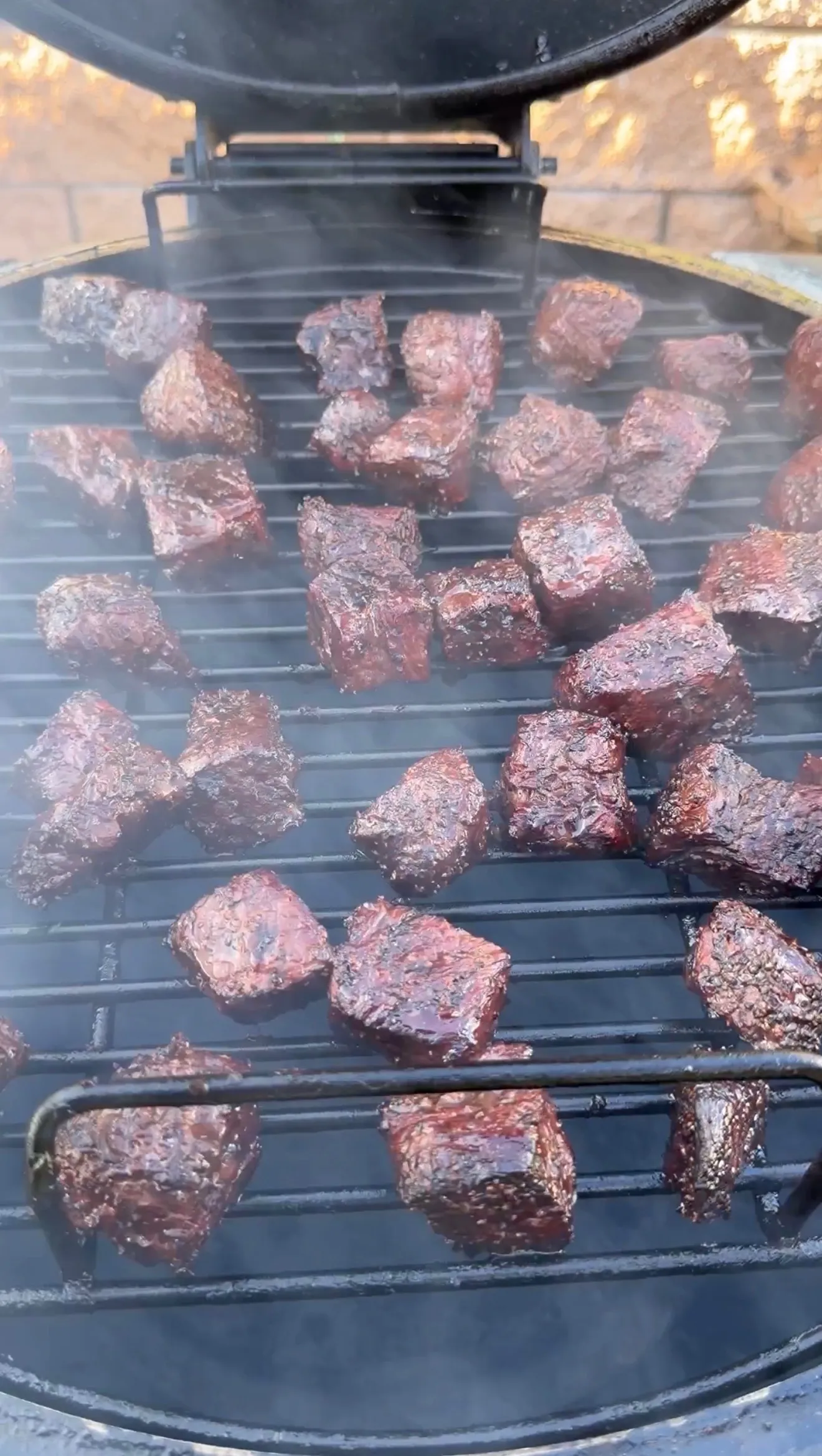
The cubes smoke directly on the grates at 250°F over applewood for 2 to 3 hours, until they develop a deep mahogany color and reach 175°F internal. That temperature target is about bark, not doneness. At 175°F, the surface has dried and darkened into a set crust that will survive the braise, and the smoke absorption phase is essentially complete. Pulling earlier leaves a soft surface that dissolves into the sauce; pushing further just dries the cubes before the braise can save them. Applewood is the right smoke here — its mild sweetness layers with the molasses instead of fighting it the way hickory or mesquite would.
The Braise: Where Tender Happens
Why the Covered Foil Pan Phase Is Non-Negotiable
After the smoke, the cubes move into a foil pan, get coated in the molasses coffee sauce, and cook covered at 250°F for about 2 more hours. The tight foil cover converts the pan into a braising vessel: the sauce and rendering beef fat create a moist heat environment that pushes the cubes through the 195 to 205°F range where collagen fully converts to gelatin. This is the phase that produces fall-apart tenderness — skipping it or shortening it leaves cubes that taste right but chew wrong. Therefore, judge this phase by feel, not just the clock: the cubes should offer no resistance when pressed with tongs.
The Sauce Transforms During the Braise
The sauce that goes into the pan is not the sauce that comes out. Over the 2-hour braise, the rendered beef fat and meat juices merge into the molasses coffee base, the smoke flavor from the bark migrates into the liquid, and the whole mixture deepens into something closer to a beef-enriched glaze than a condiment. Toss the cubes once at the start so every piece is coated, then leave the pan sealed. Every time the foil comes off mid-braise, the moist heat escapes and the clock extends.
Setting the Glaze and Serving
The Final 10 Minutes Uncovered
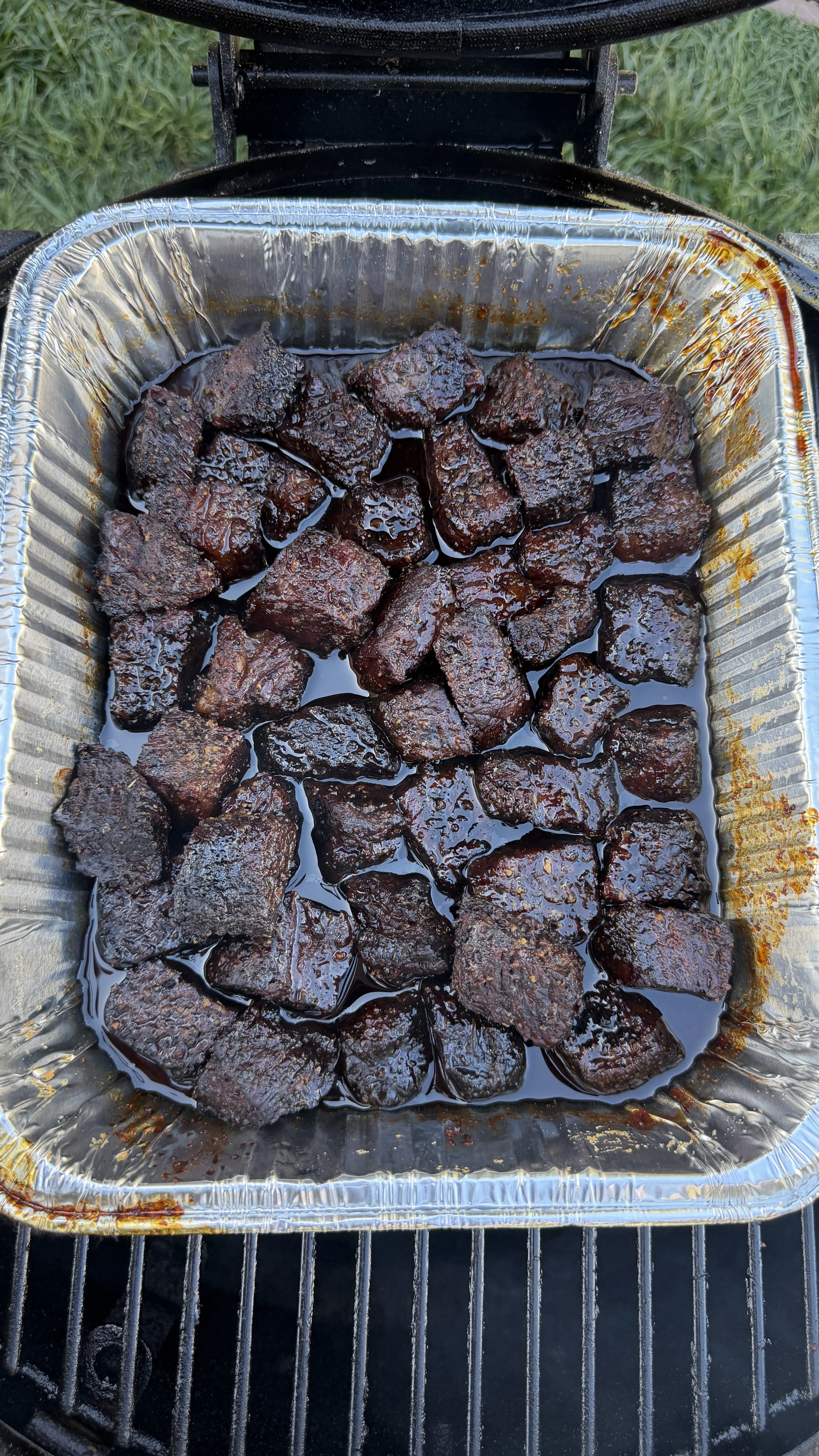
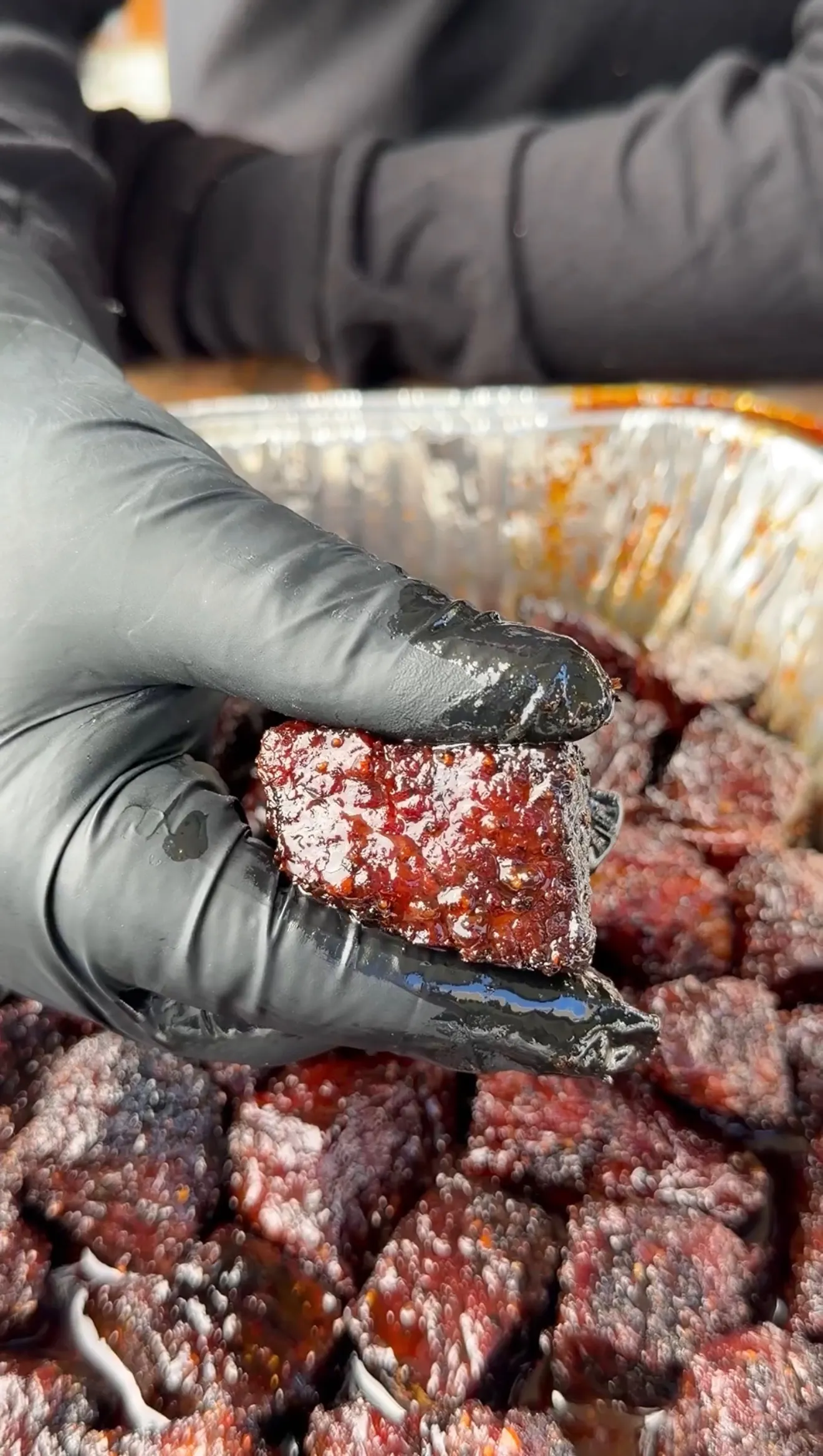
About 10 minutes before the beef is done, remove the foil and continue cooking uncovered. This short open-air finish lets the surface moisture evaporate and the sauce reduce directly onto the meat, transforming the braising liquid into a rich, glossy, sticky glaze that coats each cube. The visual cue is unmistakable: the sauce thickens from pourable to clinging, and the cubes turn lacquered and glossy. Pull the pan, give the burnt ends one final gentle toss in the set glaze, and they’re ready. Toss gently — at this point the cubes are tender enough to shred under rough handling.
Serving and Leftover Ideas
Serve the burnt ends as the centerpiece with classic BBQ sides: creamy coleslaw and pickles for acid against the rich glaze, cornbread or white bread for mopping the pan sauce, and baked beans if you want to lean fully into the Kansas City tradition. They also work as an appetizer straight off toothpicks. Leftovers hold 3 to 4 days refrigerated and reheat best covered in a 300°F oven with a splash of water to loosen the glaze. Additionally, leftover burnt ends are an elite sandwich filling and a strong topping candidate for loaded fries, mac and cheese, or the hash brown route if you have those patties around.
Step-by-Step: How to Make This Beef Burnt Ends Recipe
Step 1: Cube and Season the Beef
Cut the 2 pounds of boneless beef ribs into 1-inch cubes. Season evenly on all sides with the kosher salt, coarse black pepper, and garlic powder. Cubing before seasoning means every face of every cube carries seasoning into the smoker.
Step 2: Smoke at 250°F Over Applewood
Preheat the smoker to 250°F with applewood. Place the seasoned cubes directly on the grates with space between them so smoke circulates on all sides. Smoke for 2 to 3 hours, until the cubes show a deep mahogany color, a set bark, and an internal temperature of 175°F.
Step 3: Simmer the Molasses Coffee Sauce
While the beef smokes, combine the ketchup, molasses, brown sugar, coffee, apple cider vinegar, Worcestershire, Dijon, garlic powder, onion powder, black pepper, and smoked paprika in a saucepan. Cook over medium heat, stirring occasionally, for about 5 minutes until fully combined and smooth.
Step 4: Sauce the Cubes and Cover
Transfer the smoked cubes to a foil pan and pour the molasses coffee BBQ sauce over the top. Toss until every piece is evenly coated, then cover the pan tightly with foil.
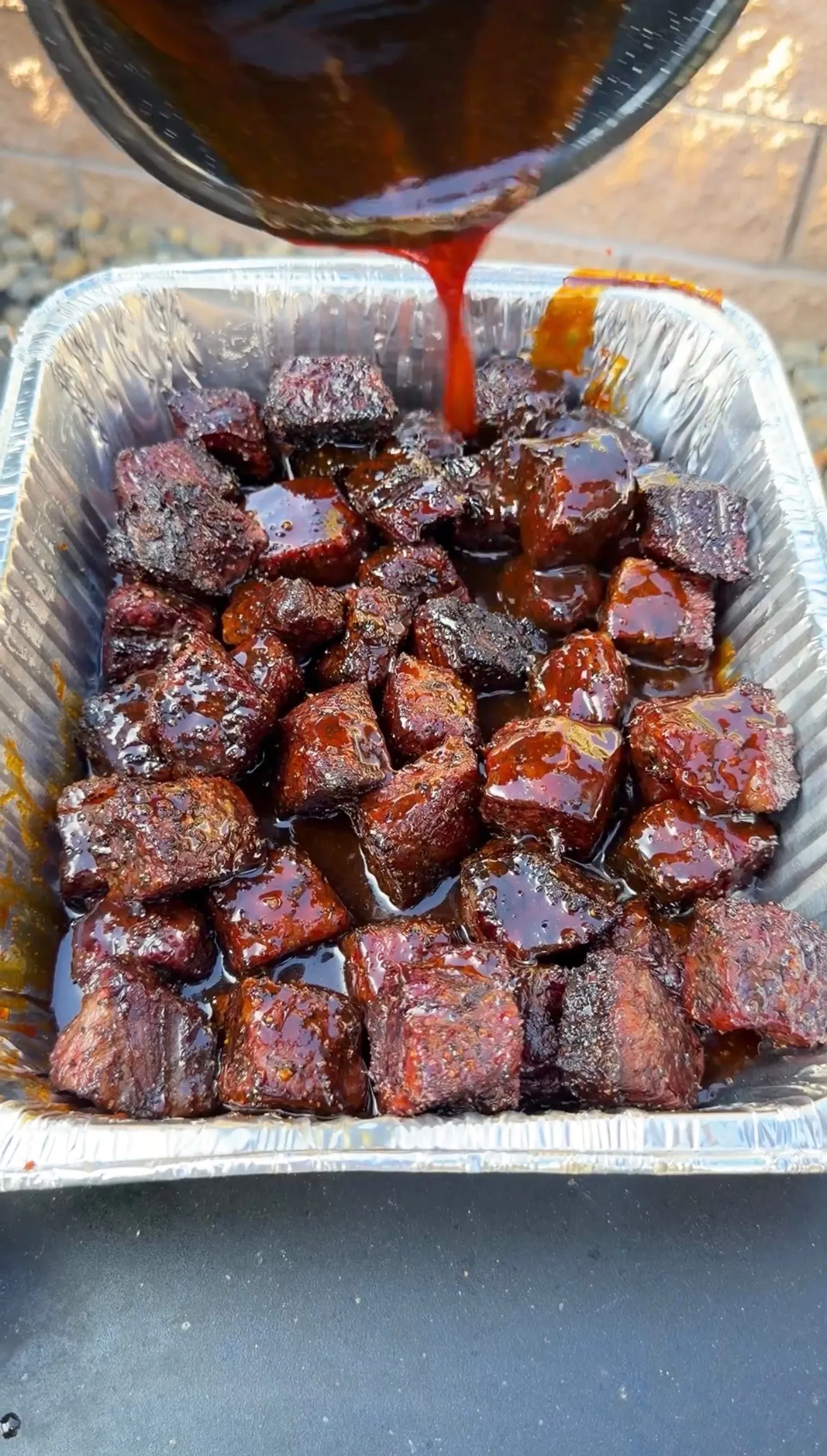
Step 5: Braise at 250°F for About 2 Hours
Return the covered pan to the smoker at 250°F and cook for about 2 hours, until the beef is fall-apart tender. Resist opening the foil mid-braise — every peek releases the moist heat and extends the cook. The cubes are ready when they offer no resistance pressed with tongs.
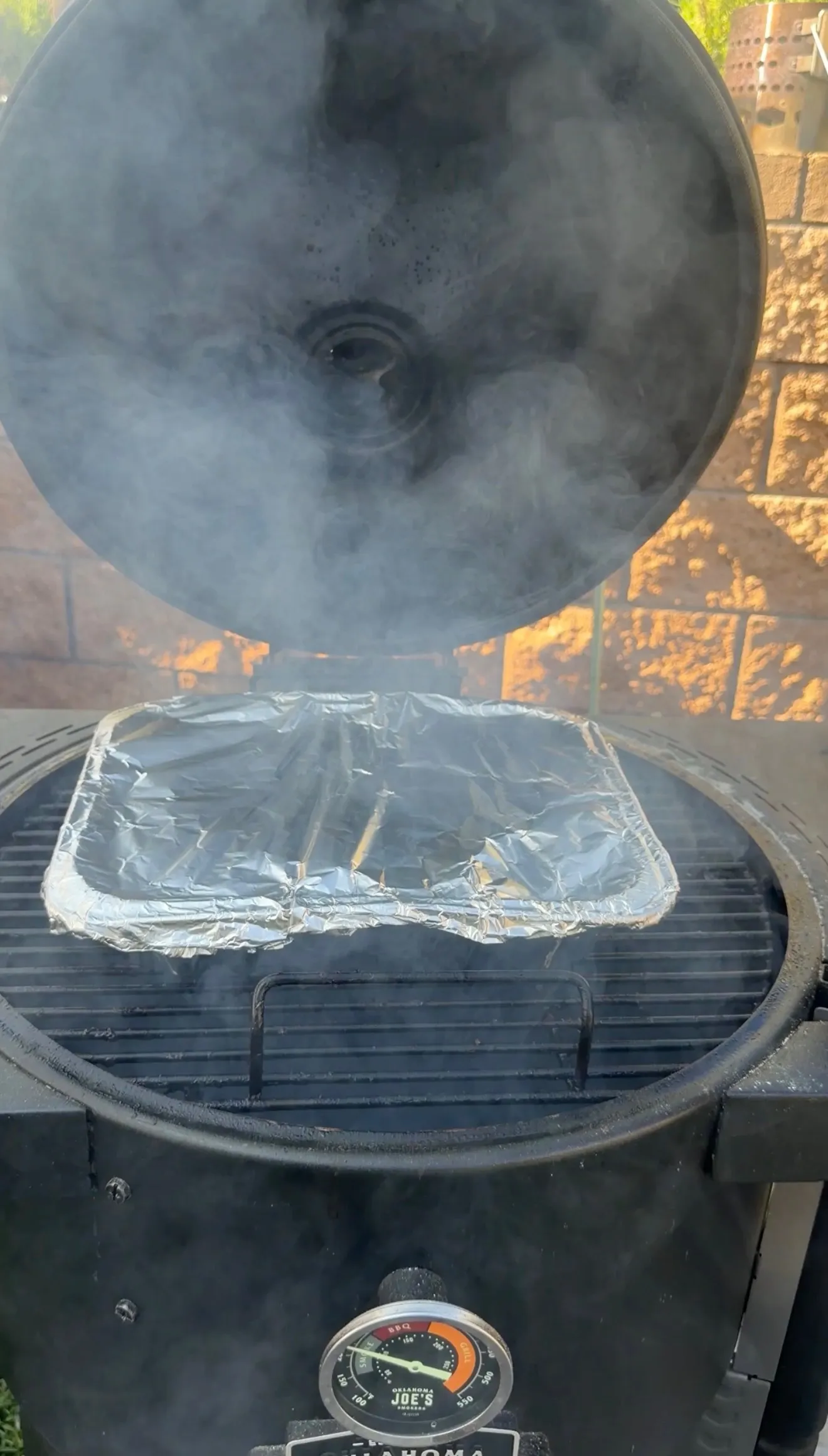
Step 6: Uncover and Set the Glaze
About 10 minutes before the beef is done, remove the foil and continue cooking uncovered. The sauce reduces and sets onto the meat, turning from pourable to clinging and giving every cube a rich, glossy, sticky surface.
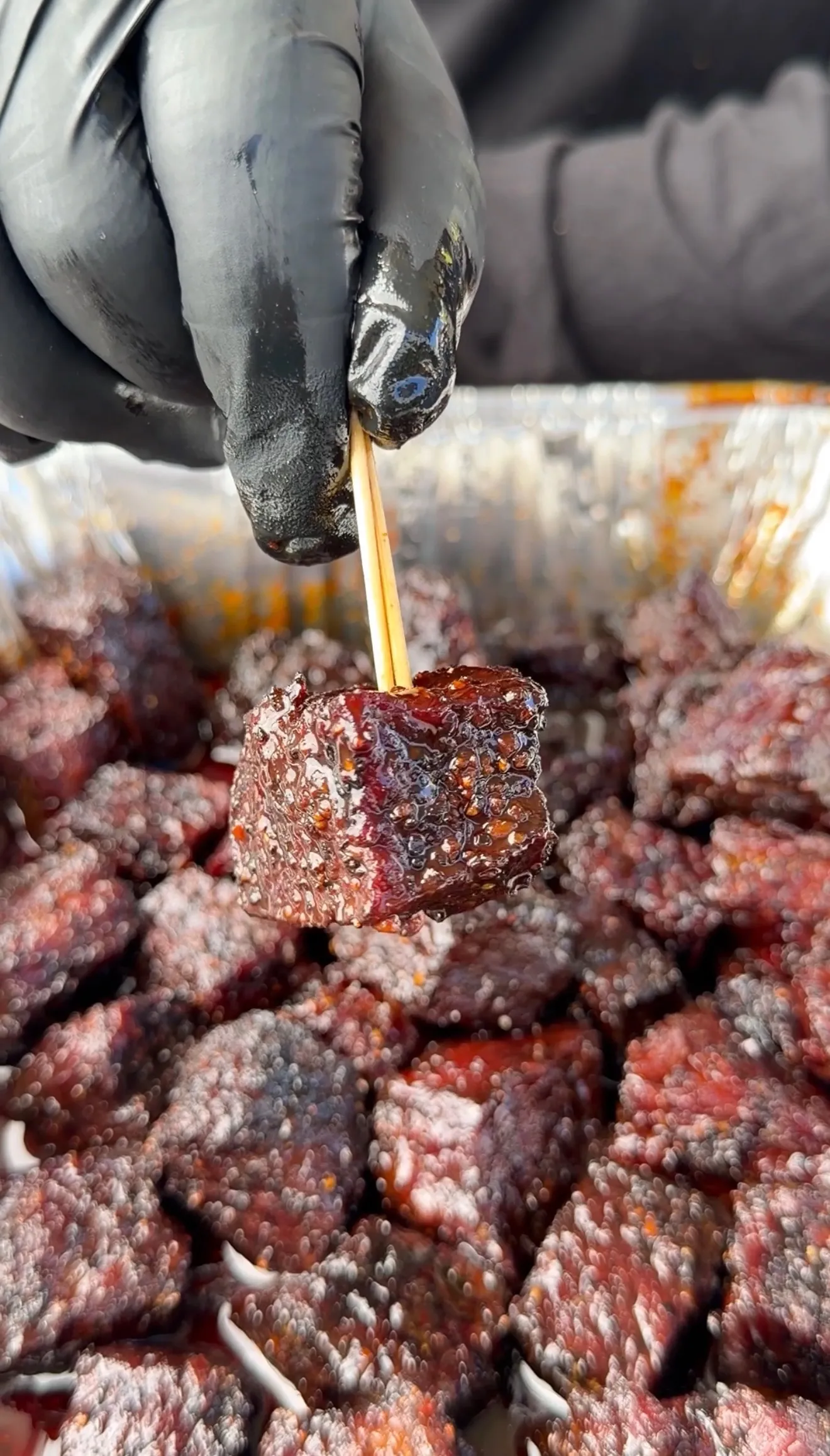
Step 7: Final Toss and Serve
Pull the pan from the smoker and gently toss the burnt ends in the set glaze one final time. Serve hot with coleslaw, pickles, cornbread, or your favorite BBQ sides, or stick toothpicks in the tray and serve them as an appetizer.
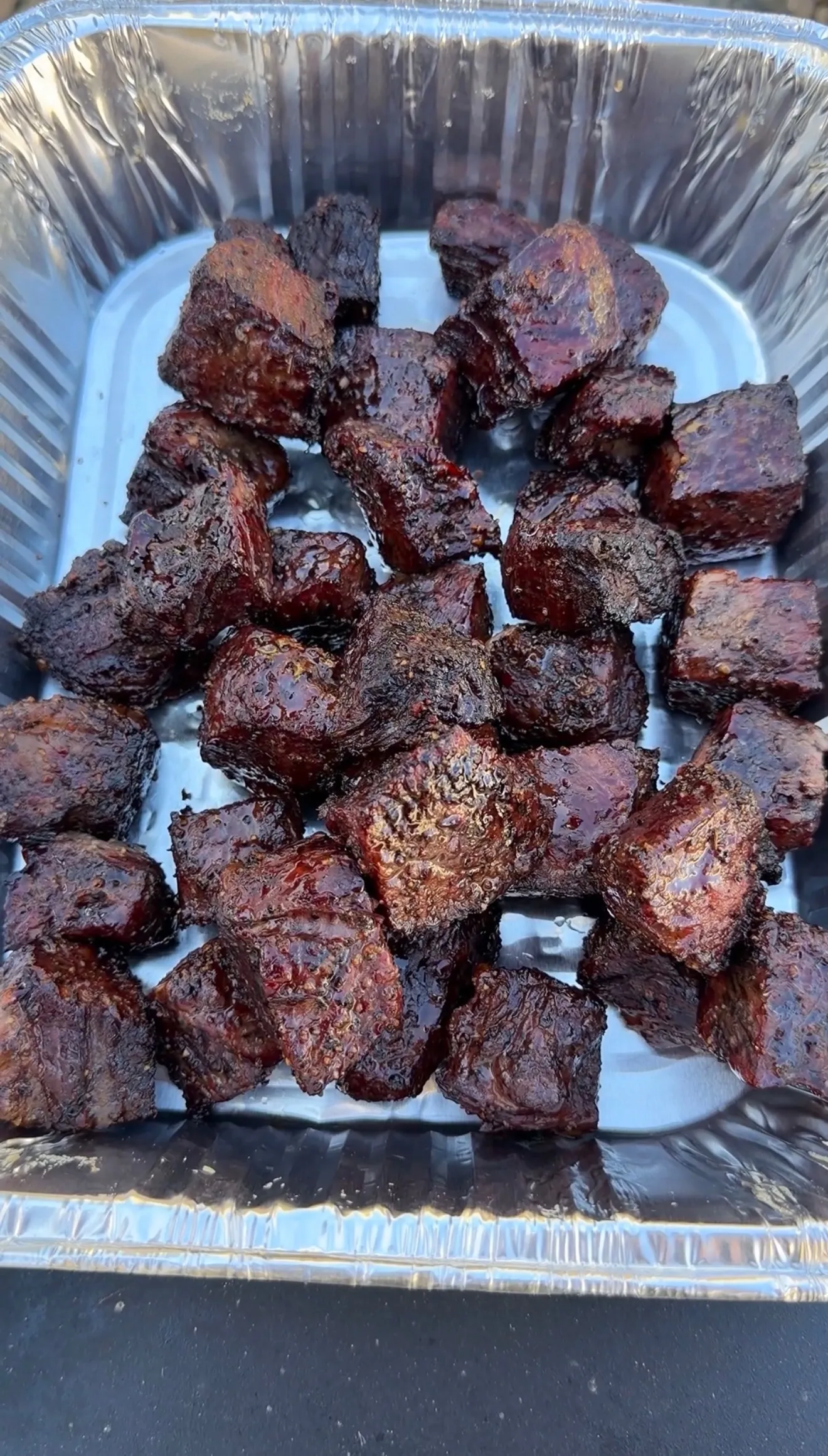
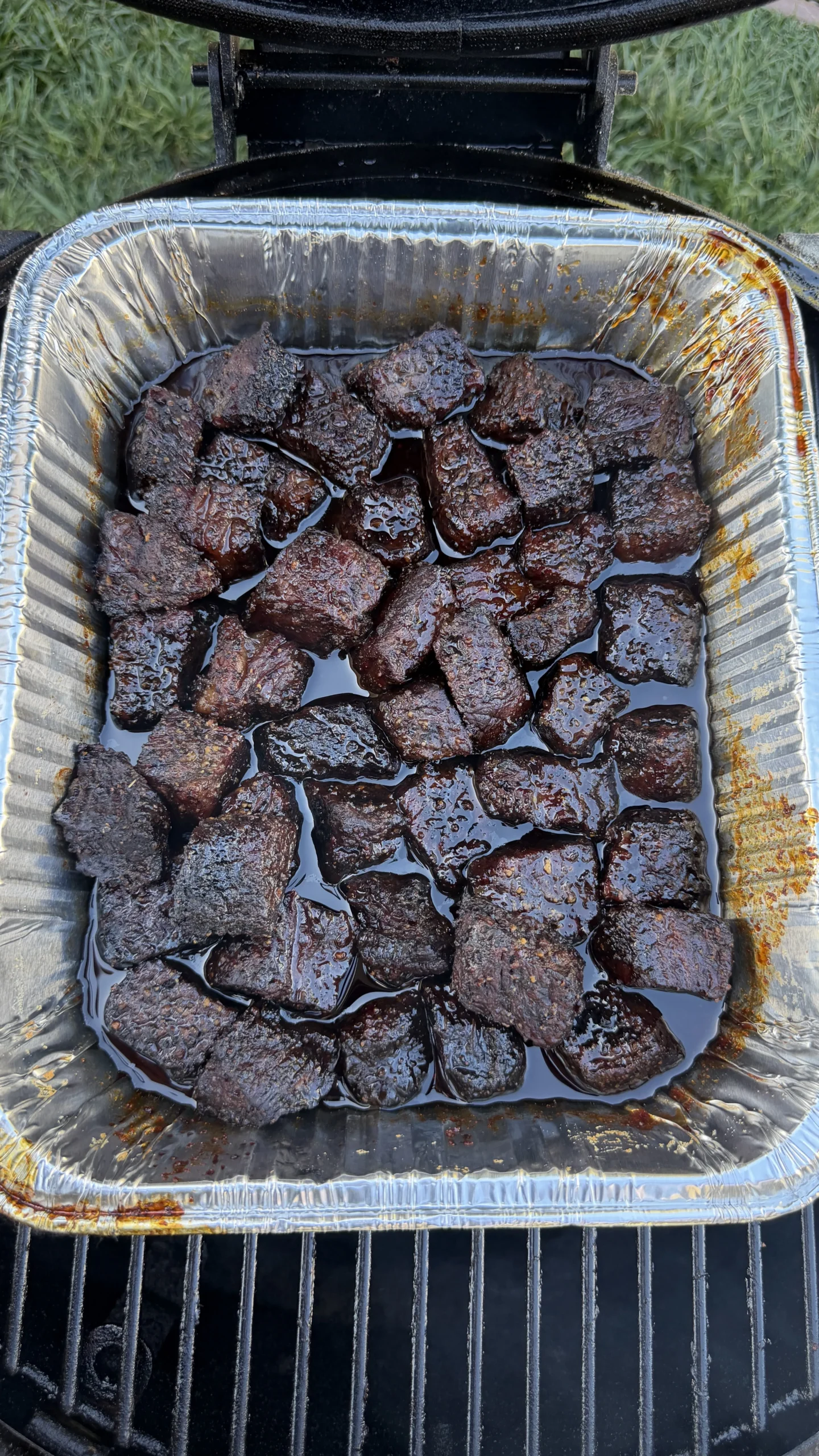
Smoked Molasses Coffee Beef Rib Burnt Ends
Ingredients
Equipment
Method
- Cut the boneless beef ribs into 1-inch cubes and season evenly on all sides with the kosher salt, coarse black pepper, and garlic powder.
- Preheat the smoker to 250°F with applewood. Place the cubes directly on the grates with space between them and smoke for 2 to 3 hours, until they develop a deep mahogany color, a set bark, and an internal temperature of 175°F.
- While the beef smokes, combine the ketchup, molasses, brown sugar, coffee, apple cider vinegar, Worcestershire, Dijon, garlic powder, onion powder, black pepper, and smoked paprika in a saucepan. Cook over medium heat, stirring occasionally, for about 5 minutes until fully combined.
- Transfer the smoked cubes to a foil pan and pour the sauce over the top. Toss until all the pieces are evenly coated, then cover the pan tightly with foil.
- Return the covered pan to the smoker at 250°F and cook for about 2 hours, until the beef is fall-apart tender. The cubes should offer no resistance when pressed with tongs.
- About 10 minutes before the beef is done, remove the foil and continue cooking uncovered so the sauce reduces and sets onto the meat into a rich, glossy, sticky glaze.
- Remove from the smoker and gently toss the burnt ends in the sauce one final time. Serve hot with your favorite BBQ sides.
Notes
Tried this recipe?
Let us know how it was!Beef Rib Burnt Ends — FAQ
Everything you need to nail the bark, the braise, and the glaze.
Setup & Basics
Labels vary by store, which causes real confusion. Most packages labeled “boneless beef ribs” or “boneless country-style beef ribs” are actually cut from the chuck (shoulder), not from an actual rib section \u2014 they’re strips of well-marbled chuck that resemble ribs. That’s fine for this recipe; the marbling and collagen are exactly what burnt ends need. Boneless beef short ribs (the meat cut off the chuck short rib bones) also work beautifully and are often even more marbled. If neither is available, ask the meat counter for boneless chuck short ribs or a well-marbled chuck section you can cube yourself. Look for visible white marbling throughout \u2014 lean pieces produce dry burnt ends.
Same family, slightly different cut. “Poor man’s burnt ends” traditionally refers to burnt ends made from a chuck roast instead of brisket point \u2014 the affordable shortcut that skips smoking a whole 12+ pound brisket. This recipe uses boneless beef ribs, which are typically cut from the chuck anyway, so the technique, timeline, and results are very close to the chuck roast version. The practical difference: pre-cut boneless ribs save you the work of breaking down a roast, and they often carry more marbling than a standard chuck roast. If you have a chuck roast on hand instead, cube it the same way and follow this recipe as written \u2014 it works.
No \u2014 and that’s the point. The 1/4 cup of coffee works as a background ingredient: its bitterness balances the sweetness of the molasses and brown sugar, and its roasted compounds deepen the beef and smoke flavors without announcing themselves. People who eat these without seeing the recipe describe the sauce as “deep” or “rich,” not “coffee-flavored.” The same principle is behind coffee-rubbed steaks and chili recipes that include a shot of espresso. If you’re still hesitant, start with 2 tablespoons instead of the full 1/4 cup \u2014 but the full amount is where the balance lands best. Decaf works identically if caffeine is a concern.
Yes, with a flavor adjustment. Roast the seasoned cubes on a wire rack over a sheet pan at 275°F for about 2 hours until they darken and hit 175°F internal. Then sauce, cover, and braise in the same pan at 275°F for roughly 2 more hours until fall-apart tender, uncovering for the final 10 to 15 minutes to set the glaze. To compensate for the missing applewood smoke, add 1 teaspoon of smoked paprika to the SPG seasoning (on top of the 1/2 teaspoon already in the sauce) and consider a few drops of liquid smoke in the sauce. The texture and glaze come out nearly identical; the smoke depth is the only real difference.
Technique & Troubleshooting
Chewy burnt ends mean the collagen never finished converting, and the fix is almost always more covered braise time. The cubes need to pass through roughly 195 to 205°F internal in the moist sealed pan for the connective tissue to break down into gelatin \u2014 the 2-hour braise estimate assumes the smoker held a steady 250°F and the foil stayed sealed. Three things that extend the requirement: a smoker running cool, repeated peeking under the foil (each look vents the moist heat), and unusually thick or lean cubes. The rescue is simple: re-cover the pan and give it another 30 to 45 minutes, checking with tongs. The cubes are done when they offer no resistance. You essentially cannot over-braise these \u2014 erring long is safer than pulling early.
Both follow the same smoke-then-braise structure, but they eat very differently. Beef rib burnt ends (this recipe) deliver a meatier, steak-adjacent bite \u2014 the marbled beef holds some structure even at fall-apart tender, and the deep beef flavor stands up to the bittersweet molasses coffee sauce. Pork belly burnt ends are softer and richer, closer to candied bacon in cube form, since pork belly is predominantly fat that renders into a melting texture. Pork belly also runs sweeter as a pairing, which is why those sauces lean candy-glaze. If you’re cooking for a crowd, making both creates a great contrast tray \u2014 and the CWF molasses-cured pork belly burnt ends recipe uses a sauce from the same molasses family, so the two share a flavor throughline.
Ready to Level Up?
Take your backyard cooking from good to legendary.
This is where I keep all my most-used smokers, knives, and favorite cooking tools.
Shop My Gear CollectionExplore More Recipes
Find more diverse flavors at CWFeats.com