
Flank Steak Pinwheels with Provolone and Spinach
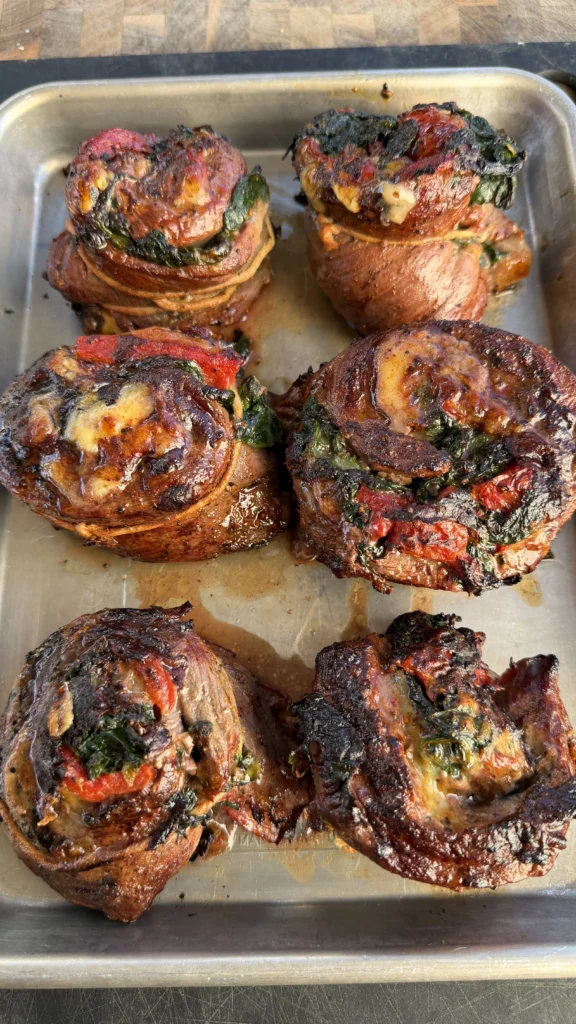
Flank steak pinwheels use a 1.5-2 lb flank steak butterflied if needed for even thickness, seasoned on both sides with salt, pepper, garlic powder, and Italian seasoning, then layered with provolone cheese slices, cooked spinach squeezed completely dry, and roasted red bell pepper strips from a jar. Roll tightly from the long side, tie with butcher’s twine every 1.5 inches, and slice into 1.5-2 inch thick pinwheels. Sear both sides on a hot cast-iron griddle or pan to build crust and color, then move to indirect heat on the grill and cook until internal temperature reaches 130-135°F for medium-rare. Rest for 10 minutes, remove twine, and serve as-is or with chimichurri or garlic butter. These stuffed flank steak pinwheels deliver restaurant-quality presentation with visible spiral of cheese, spinach, and peppers in every slice, perfect for impressive dinners, special occasions, or anytime you want elegant beef that looks as good as it tastes.
The whole process takes about 45 minutes from start to finish. Spend 20 minutes butterflying (if needed), seasoning, layering filling, rolling, and tying. Sear for 3-4 minutes per side to develop crust. Finish on indirect heat for 5-8 minutes until internal temperature reaches target. Rest for 10 minutes while juices redistribute. The two-stage cooking method ensures you get both caramelized exterior and perfectly cooked interior without overcooking the lean flank steak. The visual impact of sliced pinwheels showing colorful spiral makes this ideal for date nights, dinner parties, or holiday meals where presentation matters.
How Do You Butterfly a Flank Steak?
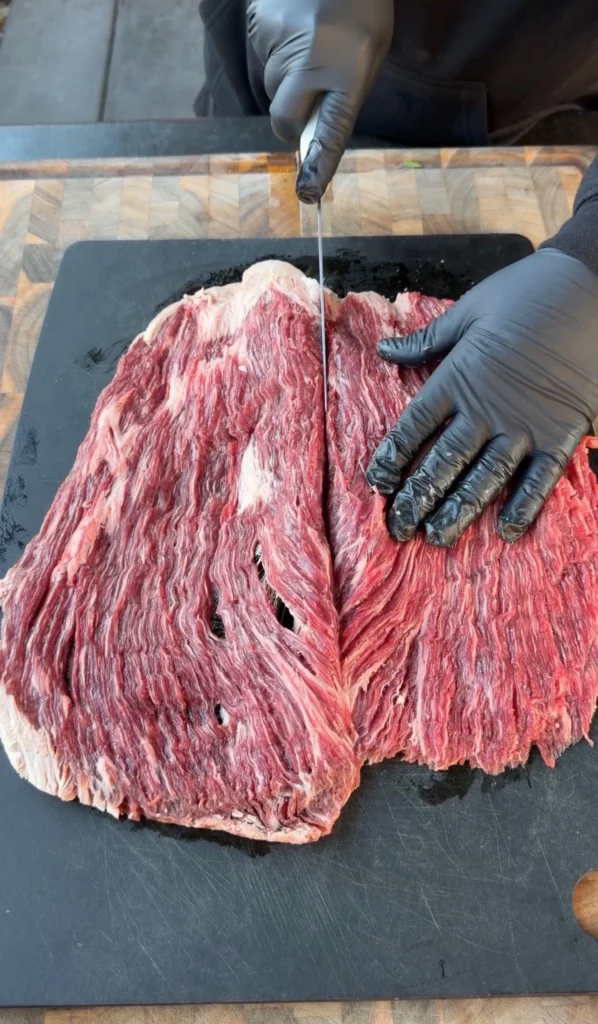
Butterflying flank steak means cutting it horizontally to create a thinner, more even piece of meat that rolls easier. Place the steak on a cutting board with one hand flat on top to hold it steady. Using a very sharp knife held parallel to the cutting board, start cutting into the thick edge of the steak about 1/2 inch from the bottom. Slice horizontally through the meat, stopping about 1/2 inch before you cut all the way through the other side.
Open the butterflied steak like a book. It should now be twice as wide and half as thick as it started. If there are still thick spots, you can make additional shallow horizontal cuts to even out the thickness, but don’t cut all the way through. The goal is creating a relatively uniform thickness of about 1/2 inch across the entire steak so it rolls evenly and cooks at the same rate throughout.
Some flank steaks are already thin enough that butterflying isn’t necessary. If your steak is 3/4 inch thick or less and relatively uniform, you can skip butterflying and just use it as-is. The key is having consistent thickness so the pinwheels cook evenly. Uneven thickness creates some pinwheels that are overcooked while others are undercooked.
If you’re not comfortable butterflying yourself, ask your butcher to do it when you buy the steak. Most butchers will butterfly it for free if you ask. This ensures professional results without risk of cutting through the meat accidentally. Just specify you want it butterflied for rolling pinwheels so they know how thin to make it.
What Temperature Should Flank Steak Pinwheels Reach?
Flank steak pinwheels should reach 130-135°F internal temperature for perfect medium-rare to medium. Flank steak is a lean cut without much marbling, so cooking it past medium results in tough, dry meat. At 130-135°F, the steak is pink throughout with tender texture that slices easily. The cheese inside will be completely melted and the vegetables heated through at this temperature.
Insert an instant-read thermometer horizontally into the side of a pinwheel to check temperature. The probe should go into the center of the rolled meat, not just the filling. Check multiple pinwheels since they may cook at different rates depending on size and position on the grill. When the coolest pinwheel reaches 130°F, remove all of them from heat.
The temperature will rise another 5 degrees during the 10-minute rest through carryover cooking. If you pull at 130°F, the final temperature will be 135°F after resting. This brings the pinwheels to perfect medium-rare/medium without overcooking. Don’t cook flank steak to 145°F or higher unless you want chewy, tough results.
For people who insist on more doneness, 140°F is the absolute maximum before flank steak becomes unpleasantly tough. Beyond this temperature, the lean meat dries out completely and no amount of sauce or resting will fix the texture. If your guests prefer well-done beef, use a different cut like ribeye or chuck and save flank steak for those who appreciate proper doneness.
How Tight Should You Roll Flank Steak Pinwheels?
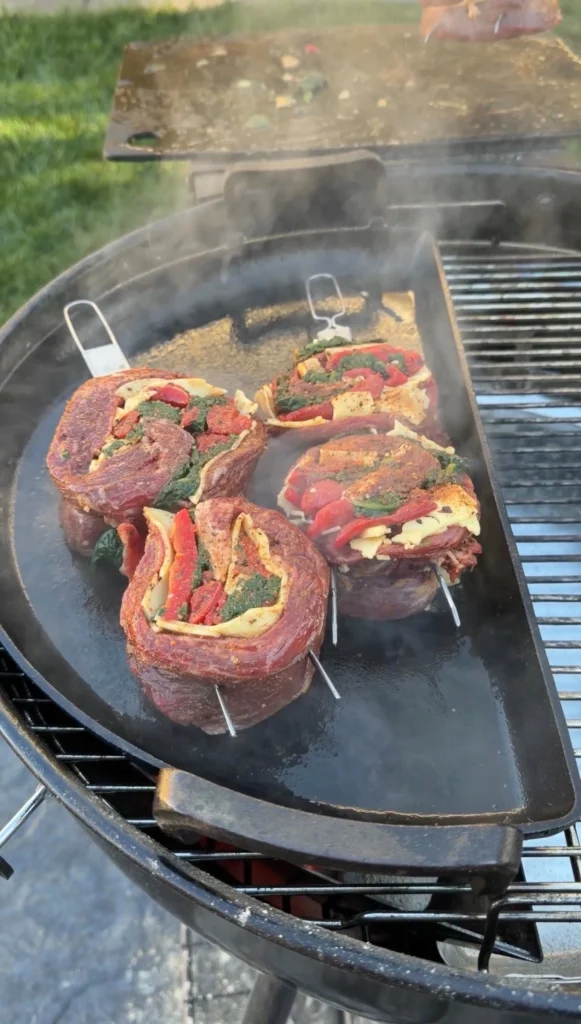
Roll flank steak pinwheels as tight as possible without squeezing filling out the sides. Tight rolling creates compact spirals that hold together during cooking and slice into attractive pinwheels with defined layers. Loose rolling creates gaps where filling falls out and pinwheels that unravel or fall apart when you try to slice them.
As you roll, use your hands to compress the steak around the filling, squeezing gently to remove air pockets. The steak should wrap tightly around the cheese, spinach, and peppers with no visible gaps. Think of rolling it like a tight sleeping bag rather than a loose burrito. The tighter you roll initially, the easier it is to tie securely with butcher’s twine.
Don’t overstuff with filling or the pinwheel will be impossible to roll tight. A thin, even layer of each ingredient works better than thick piles. Leave about 1 inch of bare steak along the edge you’re rolling toward – this gives you room to seal the roll and prevents filling from squeezing out the end. Too much filling makes messy pinwheels that leak during cooking.
Once rolled, tie immediately before the steak has a chance to unroll. The butcher’s twine holds everything in place during the rest of prep and cooking. Without tight rolling and proper tying, the pinwheels will fall apart when you try to sear them. The effort you put into rolling tight pays off with professional-looking results.
Do You Remove Butcher’s Twine Before or After Cooking?
Remove butcher’s twine after cooking and resting, not before. The twine holds the pinwheels together during the entire cooking process including searing and indirect heat. If you remove it before cooking, the pinwheels will unroll or fall apart when you try to flip them on the grill. The filling will spill out and you’ll end up with a mess instead of neat pinwheels.
The twine can withstand grill temperatures without burning or melting as long as you don’t leave the pinwheels over direct high heat for extended time. The brief searing won’t affect the twine. Some slight charring of the twine is normal and doesn’t matter since you’ll remove it before serving. Just make sure to tie with natural cotton butcher’s twine, not synthetic string that could melt.
After the 10-minute rest, use kitchen shears or a sharp knife to cut and remove each piece of twine carefully. Pull the twine away from the pinwheel rather than trying to slide it out, which can tear the meat. Cut between each piece of twine rather than trying to pull one long piece through all the pinwheels. Work carefully so you don’t disturb the spiral structure.
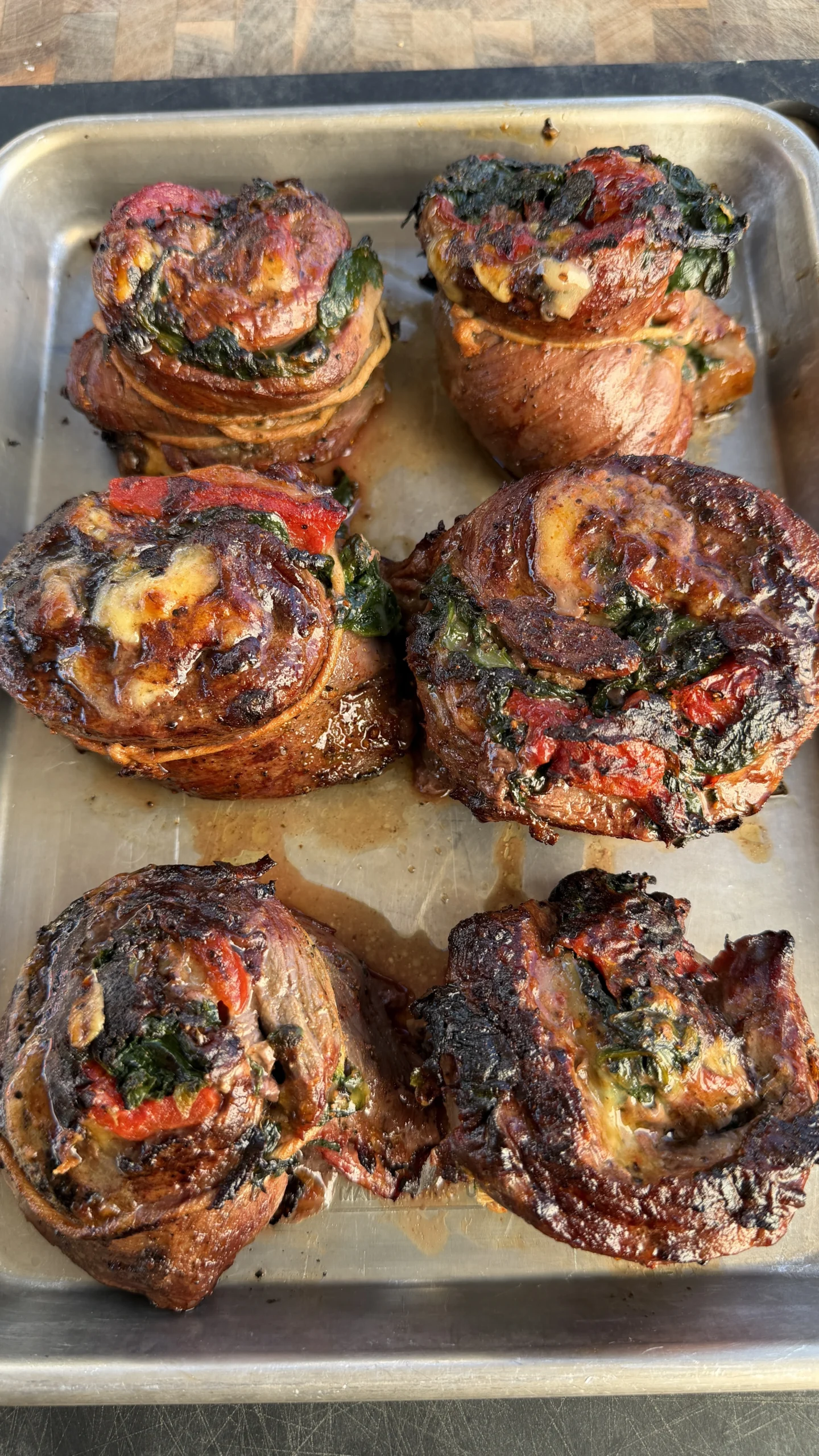
Some of the twine may have created slight indentations in the meat from compression during cooking. This is normal and actually helps define the pinwheel shape. Once you remove the twine, the pinwheels will expand slightly as the meat relaxes. This makes them look fuller and more appealing for serving.
Flank Steak Pinwheels
Provolone, spinach, and roasted red peppers
Ingredients
Flank Steak
- 1 large flank steak (1.5-2 lbs)
- Salt and black pepper
- Garlic powder
- Italian seasoning
- Butcher’s twine
Filling
- Slices of provolone cheese (6-8 slices)
- Cooked spinach, squeezed dry (1 cup)
- Roasted red bell peppers from jar, sliced (1/2 cup)
Squeeze the cooked spinach completely dry using paper towels or a clean kitchen towel. Wet spinach makes the pinwheels soggy and causes the filling to slide out during rolling and cooking. Dry spinach stays in place and creates clean spiral slices.
Step-by-Step Instructions
Step 1: Prepare and Butterfly the Flank Steak
Place the 1.5-2 lb flank steak on a large cutting board. If the steak is thicker than 3/4 inch in some spots, you’ll need to butterfly it for even rolling. Hold the steak flat with one hand on top. Using a very sharp knife held parallel to the cutting board, slice horizontally into the thick edge, starting about 1/2 inch from the bottom.
Cut through the meat horizontally, stopping about 1/2 inch before you reach the opposite edge so the two halves remain connected. Open the butterflied steak like a book. It should now be twice as wide and about half as thick. If there are still thick spots, make additional shallow horizontal cuts to even things out, but don’t cut all the way through.
Pat the butterflied steak completely dry with paper towels on both sides. Moisture prevents seasonings from sticking and creates steam instead of browning during searing. The steak should feel dry to the touch. Position it on the cutting board with the grain running left to right so you’ll be rolling perpendicular to the grain for more tender slices.
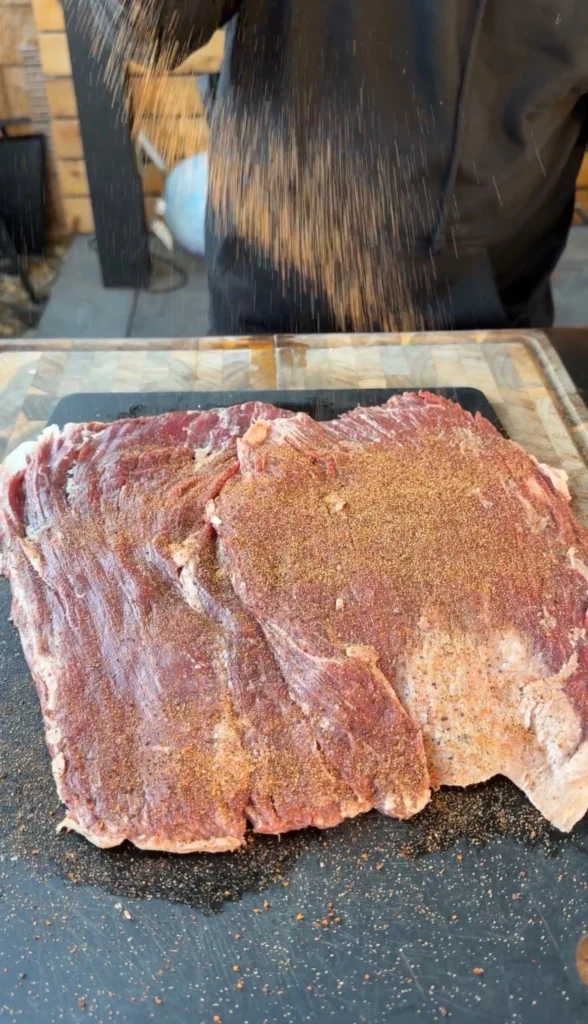
Season both sides generously with salt, black pepper, garlic powder, and Italian seasoning. Use enough seasoning that you can see it coating the surface. Don’t use oil – the natural moisture in the beef is enough to help seasonings stick. The seasoning should be visible and fragrant. Let the seasoned steak sit while you prepare the filling.
Step 2: Prepare the Filling Ingredients
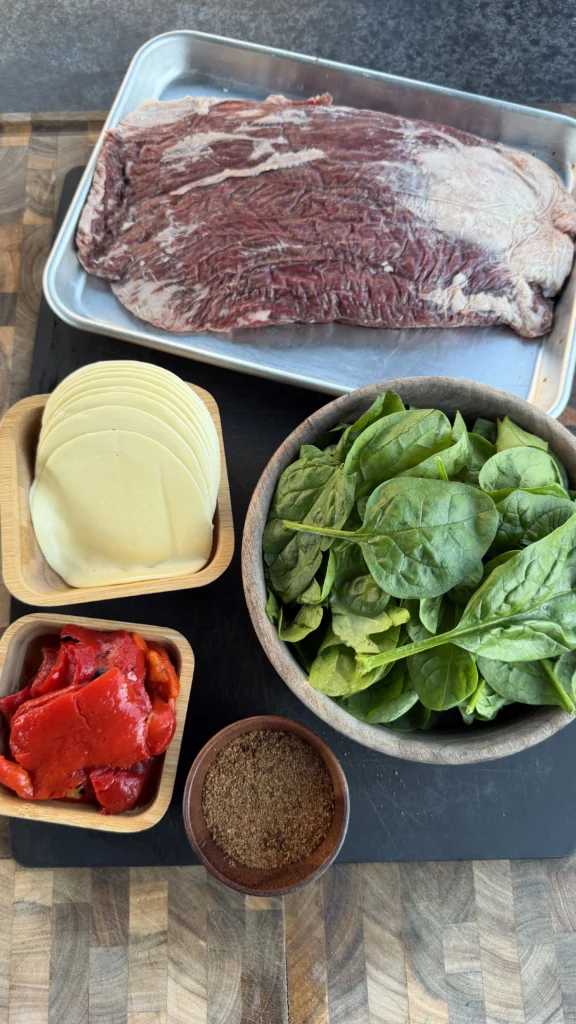
If using fresh spinach, cook it in a pan over medium heat until completely wilted, about 2-3 minutes. If using frozen spinach, thaw it completely. Either way, the critical step is squeezing the spinach completely dry. Place the cooked spinach in several layers of paper towels or a clean kitchen towel and squeeze hard to remove all moisture. You should end up with a fairly dry, compacted ball of spinach.
The spinach must be dry or it will make the pinwheels soggy and cause the filling to slide out during rolling. Wet spinach also steams the meat during cooking instead of allowing proper browning. Keep squeezing until no more liquid comes out. You need about 1 cup of squeezed-dry spinach for filling.
Drain the roasted red bell peppers from the jar. Pat them dry with paper towels to remove excess moisture and oil. Slice them into strips about 1/4 inch wide. You need roughly 1/2 cup of sliced roasted red peppers. The jarred roasted peppers work perfectly for this recipe since they’re already cooked and have concentrated flavor. Fresh bell peppers would be too watery and crunchy.
Have 6-8 slices of provolone cheese ready. Provolone melts smoothly and has mild flavor that complements the spinach and peppers without overpowering the beef. You can use other melty cheeses like mozzarella or fontina, but provolone is classic for Italian-style pinwheels. Room temperature cheese spreads easier than cold cheese.
Step 3: Layer the Filling on the Steak

Lay the provolone cheese slices evenly across the seasoned flank steak, leaving about 1 inch of bare meat along the edge you’ll roll toward (the edge farthest from you). The cheese should cover most of the surface in a single layer with minimal gaps. Overlap the cheese slices slightly so there are no bare spots. The cheese acts as the base layer that helps bind everything together.
Spread the squeezed-dry spinach evenly over the cheese layer. Break it up with your fingers to distribute it uniformly rather than leaving it in clumps. The spinach should be visible but not piled thick. A thin, even layer works better than thick patches. Press the spinach lightly into the cheese so it adheres and doesn’t roll around.
Distribute the roasted red pepper strips evenly over the spinach. Arrange them in a single layer, spacing them out so every bite gets some pepper flavor. Don’t pile them thick or they’ll squeeze out when you roll. The red peppers add color, sweetness, and slight acidity that balances the rich cheese and beef.
Check that you have about 1 inch of bare steak along the far edge with no filling. This bare edge will seal the roll when you finish rolling. Make sure the filling layers are even and not too thick. Too much filling makes rolling difficult and causes leaking during cooking.
Step 4: Roll and Tie the Pinwheels
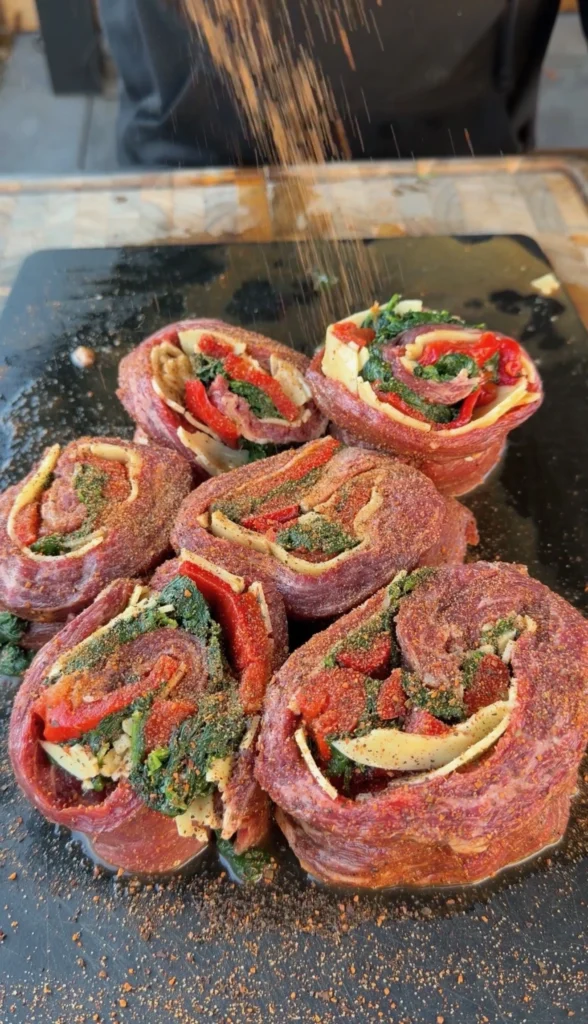
Starting from the long side closest to you, begin rolling the steak tightly around the filling. Use your hands to compress as you roll, squeezing gently to eliminate air pockets and create a tight cylinder. The steak should wrap snugly around the filling with no gaps. Roll all the way to the far edge where you left the 1 inch of bare steak.
The finished roll should be a tight, uniform cylinder about 3-4 inches in diameter. Press the bare edge firmly against the roll to seal it. The roll will want to unwind slightly, so hold it together with one hand while you prepare to tie it. Work on a cutting board that gives you space to maneuver.
Cut several pieces of butcher’s twine about 12 inches long. Starting 1 inch from one end of the roll, wrap twine around the roll and tie it very tight with a square knot. The twine should compress the meat noticeably. Move 1.5 inches along the roll and tie another piece of twine. Continue tying every 1.5 inches along the entire length of the roll. You should have 5-7 pieces of twine holding the roll together.
Using a sharp knife, slice between each piece of twine to create individual pinwheels 1.5-2 inches thick. Each slice should have twine on both sides holding it together. You should get 4-6 pinwheels depending on the length of your original steak. The pinwheels should hold their shape with the filling visible in a spiral pattern. If any filling squeezes out, tuck it back in.
Step 5: Sear the Pinwheels
Heat a cast-iron griddle, large cast-iron skillet, or grill over high heat until very hot. You want the surface at 450-500°F for proper searing. The pan should be hot enough that water drops sizzle and evaporate immediately. Don’t add oil to the pan – the steak has enough fat and the seasoning provides flavor.
Place the pinwheels flat-side down on the hot surface. They should sizzle loudly on contact. Don’t crowd them – leave space between each pinwheel so they sear rather than steam. Let them cook undisturbed for 3-4 minutes. Don’t move or flip them during this time. The high heat is creating a brown, caramelized crust.
After 3-4 minutes, use tongs to flip each pinwheel to the other flat side. The first side should be deep brown with some charred spots. If it’s pale, your heat wasn’t high enough. Sear the second side for another 3-4 minutes until equally browned. The edges will look cooked while the center is still raw, which is perfect.
The searing creates flavor and color but doesn’t cook the pinwheels through. The interior is still rare at this point. Don’t try to cook them completely over high heat or the outside will burn before the center cooks. After searing both sides, they’re ready to move to indirect heat for finishing.
Step 6: Finish on Indirect Heat
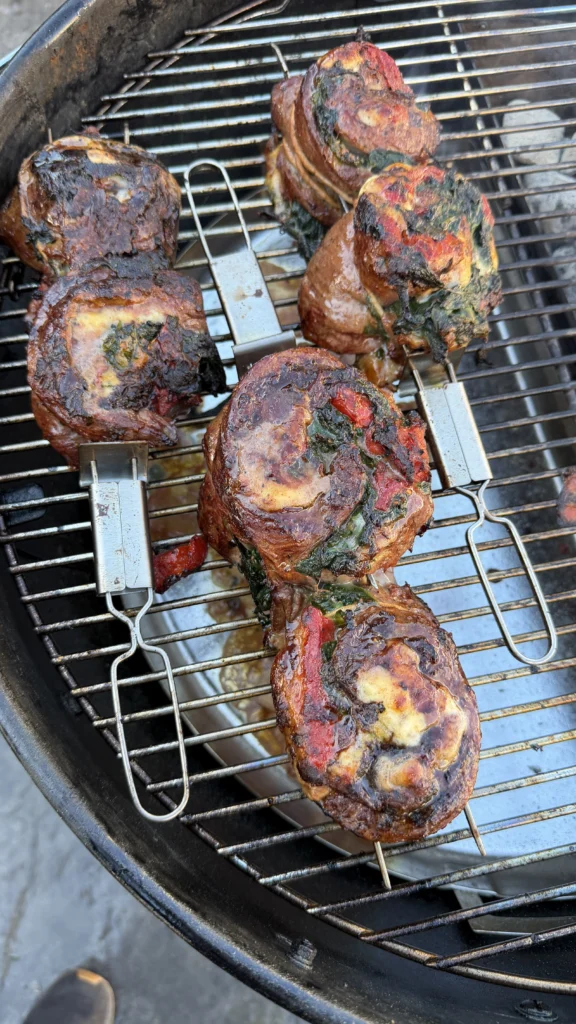
If using a grill, move the seared pinwheels to the cool side away from direct heat. If using a stovetop, reduce heat to medium-low or transfer to a 350°F oven. The goal is gentle heat that brings the internal temperature up without burning the exterior. Close the grill lid if using a grill to create an oven-like environment.
Cook for 5-8 minutes, checking internal temperature starting at 5 minutes. Insert an instant-read thermometer horizontally into the side of a pinwheel, making sure the probe reaches the center of the rolled meat. You’re looking for 130°F for medium-rare. Different pinwheels may reach temperature at different times depending on their exact size.
When the coolest pinwheel reaches 130°F, remove all pinwheels from heat. Some may be at 132-135°F which is fine. The temperature will continue rising during rest. Don’t cook past 135°F or the lean flank steak will become tough. The cheese should be completely melted and bubbly, and the vegetables heated through.
Step 7: Rest and Remove Twine
Transfer the cooked pinwheels to a cutting board or plate. Tent loosely with aluminum foil and let rest for 10 minutes. During rest, the internal temperature will rise to 135-140°F final and the juices will redistribute. The cheese will also firm up slightly, making the pinwheels easier to handle.
After resting, use kitchen shears or a sharp knife to carefully cut and remove each piece of butcher’s twine. Cut between the twine pieces rather than trying to pull one long piece through. Pull the twine away from the pinwheel gently so you don’t tear the meat or disturb the spiral. Work carefully around all the pinwheels until all twine is removed.
The pinwheels may have slight indentations where the twine compressed the meat. This is normal and actually helps define the shape. Once the twine is removed, the pinwheels will relax slightly and look fuller. They should hold together perfectly on their own at this point since the cooked filling acts as glue.
Serve the pinwheels as-is showing the beautiful spiral, or drizzle with chimichurri, garlic butter, or balsamic glaze if desired. The pinwheels look impressive on a platter with the colorful filling spirals visible. Serve immediately while warm for best texture and flavor.
Flank Steak Pinwheels with Provolone and Spinach
Ingredients
Method
- Butterfly flank steak if thicker than 3/4 inch by slicing horizontally almost all the way through, then opening like a book. Pat completely dry.
- Season both sides with salt, pepper, garlic powder, and Italian seasoning. No oil needed.
- Layer provolone cheese slices over steak, leaving 1 inch bare along far edge. Spread squeezed-dry spinach evenly over cheese. Distribute roasted red pepper strips over spinach.
- Roll steak tightly from long side closest to you toward bare edge. Tie with butcher’s twine every 1.5 inches. Slice between twine pieces to create 1.5-2 inch thick pinwheels.
- Heat cast-iron griddle or pan over high heat. Sear pinwheels 3-4 minutes per flat side until deep brown crust forms.
- Move to indirect heat on grill (or reduce to medium-low on stovetop). Cook 5-8 minutes until internal temperature reaches 130°F for medium-rare.
- Rest 10 minutes loosely tented with foil. Remove butcher’s twine carefully. Serve as-is or with chimichurri or garlic butter.
Notes
Tried this recipe?
Let us know how it was!Frequently Asked Questions
Can I use a different cut of beef instead of flank steak?
Skirt steak works excellently as a substitute since it has similar texture and grain structure. It’s slightly more tender than flank and rolls just as well. Hanger steak also works though it’s harder to find. Avoid thick cuts like ribeye or sirloin which don’t roll easily and don’t benefit from this preparation method.
Flank steak is ideal for pinwheels because of its flat, rectangular shape, prominent grain that you can roll perpendicular to, and lean texture that stays tender when cooked to medium-rare. Fattier cuts don’t need the moisture from cheese and vegetables. The flat shape and uniform thickness of flank make it the best choice for rolling.
How do I keep the filling from falling out?
Squeeze the spinach completely dry before adding it to prevent moisture that makes filling slide. Don’t overstuff – use thin, even layers of each ingredient rather than thick piles. Leave 1 inch of bare steak along the rolling edge to seal the roll. Roll as tight as possible, squeezing as you go to eliminate air pockets.
Tie the butcher’s twine very tight every 1.5 inches to hold everything in place. The tight tying is what really prevents filling from escaping during cooking. Some minor leakage is normal, but proper rolling and tying minimizes it. The cheese melts during cooking and acts like glue, helping hold the filling inside.
Can I make pinwheels ahead of time?
You can roll, tie, and slice the pinwheels up to 24 hours ahead. Store them in the refrigerator covered tightly with plastic wrap. Let them sit at room temperature for 20-30 minutes before cooking so they’re not ice cold when they hit the grill. Cold pinwheels cook unevenly with cold centers.
Don’t cook them ahead and reheat. Flank steak doesn’t reheat well since it’s lean and becomes tough and dry. Cook fresh immediately before serving for best texture. The prep work can be done ahead, but the actual cooking should happen right before eating.
What else can I stuff in flank steak pinwheels?
Sun-dried tomatoes, pesto, different cheeses (mozzarella, feta, blue cheese), sautéed mushrooms, caramelized onions, or fresh herbs all work well. Keep components relatively dry since wet ingredients make messy pinwheels. Combine flavors that complement each other – Mediterranean (feta, sun-dried tomato, spinach), Italian (mozzarella, pesto, roasted peppers), or Spanish (manchego, chorizo, peppers).
The key is using ingredients that melt, bind together, and don’t release much liquid during cooking. Avoid raw vegetables like fresh tomatoes or bell peppers which are too watery. Cooked, drained, or dry ingredients create the cleanest pinwheels with best structural integrity.
How do I slice pinwheels for serving?
The pinwheels are already sliced before cooking when you cut between the twine pieces. After cooking and resting, remove the twine and serve the pinwheels whole showing the spiral cross-section. Each person gets 1-2 whole pinwheels depending on appetite. Don’t slice them thinner after cooking or they’ll fall apart.
The dramatic presentation comes from seeing the intact spiral of cheese, spinach, and peppers in each pinwheel. Arrange them on a platter spiral-side up so everyone can see the colorful layers. This is finger food or fork food depending on how formal your meal is.
Ready to Take Your Cooking to the Next Level?
This is where I keep all my most-used products, gear, and favorite cooking tools — check it out:
🔥 View My Cooking Gear & ToolsRecipe Categories
If you loved this recipe, you’ll find more to savor across our diverse categories. From beef to pork, chicken to turkey, seafood to appetizers, there’s a wealth of flavors waiting for you. Explore them all at CWFeats.